

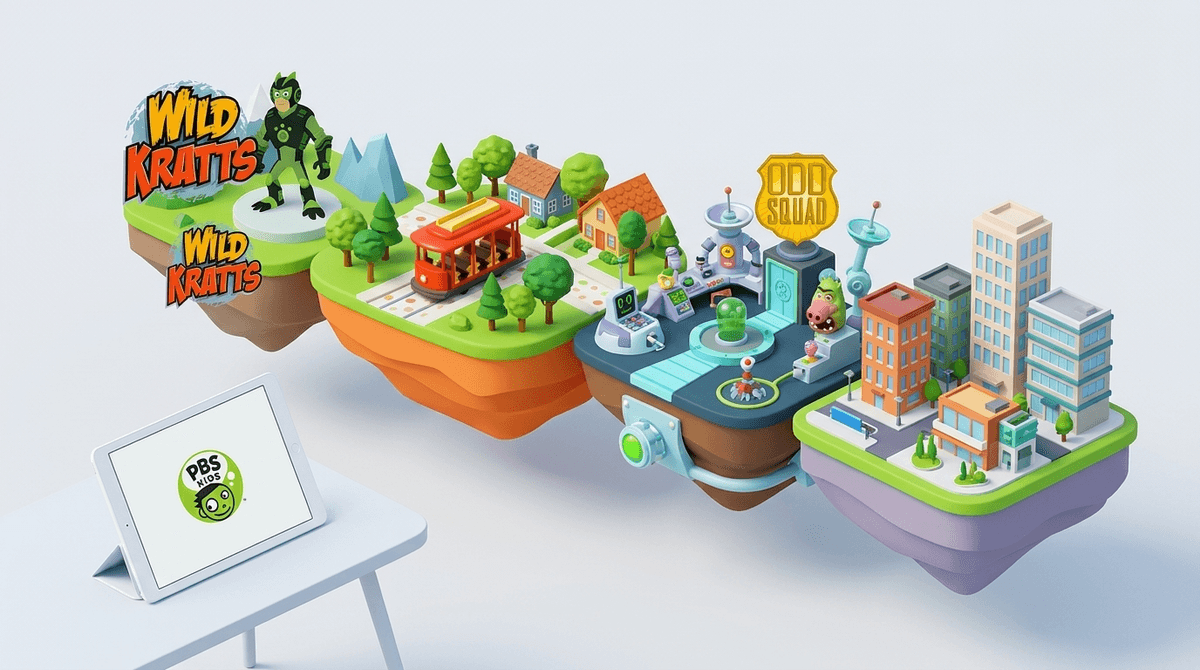
TL;DR: If you’re exhausted by the "brain rot" of algorithmic YouTube and the constant "Ohio" memes, PBS Kids remains the gold standard for digital wellness in 2026. It’s the only platform where the content is actually designed by child development experts rather than engagement-obsessed engineers.
Top Recommendations for 2026:
- The New Essential: Phoebe & Jay (Perfect for building emotional intelligence in a high-tech world)
- The Logic Builder: Lyla in the Loop (Teaches computational thinking without a screen-time hangover)
- The Science Standard: Wild Kratts (Still the king of biology and zoology)
- The Social-Emotional MVP: Daniel Tiger's Neighborhood (The OG for a reason)
- The Best "Game" Alternative: PBS Kids Games (Actual learning, zero predatory micro-transactions)
We’re living in an era where "Skibidi Toilet" has more cultural capital with our kids than most actual educators. Between the hyper-stimulating "neon-and-noise" of modern YouTube and the gambling-adjacent mechanics of Roblox, parents are essentially in a defensive crouch.
Enter PBS Kids. In 2026, it’s not just "the channel with the cartoons"; it’s a sanctuary. While Netflix and Disney+ are busy chasing the next viral hit, PBS is still doing the slow, boring, incredibly important work of making sure shows are actually good for a child’s developing brain.
The "smart funny" movement is the secret sauce here. Shows like Odd Squad proved that educational TV doesn't have to be a drag. It can be weird, dry, and genuinely hilarious for the parents sitting on the couch, too. When we talk about "quality programming," we’re talking about content that respects a child's intelligence instead of just trying to hijack their dopamine receptors.
This is the standout of the 2025-2026 season. It follows a young girl and her eccentric, slightly-too-literal robot best friend as they navigate everyday social hurdles. What makes it brilliant is how it tackles "digital life" for the preschool set. It’s not anti-tech; it’s about how to stay human in a world full of gadgets. If your kid is starting to ask about AI or why everyone is staring at their phones, this is your entry point.
If you want your kid to understand the logic behind coding without actually sticking them in front of a Python tutorial at age five, Lyla is your girl. It’s all about computational thinking—breaking big problems into small pieces. It’s practical, it’s diverse, and it’s one of the few shows that actually models the "try, fail, try again" loop without making it look like a scripted miracle.
Created by Sonia Manzano (Maria from Sesame Street), this show is a masterclass in critical thinking. Alma literally pauses to "think through" her problems. In a world of impulsive, 5-second-attention-span content, watching a character model internal reflection is practically a revolutionary act.
This is for the younger end of the spectrum (Ages 3-5). It’s colorful and fast-paced enough to keep them engaged, but it’s grounded in "design thinking." It’s basically a preschool version of an engineering degree, taught by marsupials.
Get a watchlist based on your kid's interests
I get this question at every birthday party: "Is Roblox teaching my kid to be a businessman?"
Here’s the no-BS take: Roblox teaches kids how to spend money. PBS Kids teaches kids how communities actually function. While your kid is grinding for Robux (which, let’s be honest, is usually just a drain on your bank account), shows like Carl the Collector or the classic Arthur explore the actual mechanics of social exchange, empathy, and value.
If you want your kid to have a healthy relationship with "stuff" and money, you’re better off letting them play the PBS Kids Games than letting them loose in a "Tycoon" game on Roblox where the only goal is to buy a virtual mansion with a credit card.
PBS Kids is generally safe across the board, but there are definitely "sweet spots" for different ages:
- Ages 2-4: Stick to Daniel Tiger's Neighborhood and Donkey Hodie. These shows have a slower pacing that won't overstimulate a toddler's brain.
- Ages 5-7: This is the golden era for Wild Kratts, Molly of Denali, and Cyberchase. They start introducing more complex themes like environmental science and geometry.
- Ages 8+: By this age, many kids feel they've "outgrown" PBS, but Odd Squad and the PBS Kids Podcasts (like The Arthur Podcast) still hold up.
The real reason PBS Kids is the ultimate screen time hack isn't just the content—it's the delivery.
When your child watches the PBS Kids Video App, there are:
- No Ads: No one is trying to sell your kid a plastic toy that will be in a landfill by Tuesday.
- No Autoplay Traps: While it will play the next episode, it doesn't use the same aggressive "suggested video" algorithms that lead kids down the YouTube rabbit hole into weird, AI-generated "Elsagate" territory.
- Data Privacy: They aren't harvesting your child's data to build a consumer profile before they hit kindergarten.
Learn more about the difference between PBS Kids and YouTube Kids
We need to talk about "smart funny." There’s a trend in modern kids' media—especially on YouTube—to be loud, chaotic, and nonsensical. Kids call it "brain rot" themselves. It’s fine in small doses, but it doesn't leave them with anything.
PBS Kids content is research-backed. Every episode of Rosie's Rules or Elinor Wonders Why has a specific curriculum goal. When your kid watches 20 minutes of PBS, they usually come away with a "strategy song" or a new fact about honeybees. When they watch 20 minutes of a random "unboxing" channel, they usually come away with a tantrum because they want a new toy.
How to Talk About It: If your kid complains that PBS is "for babies," don't argue. Instead, point them toward the "big kid" shows like Odd Squad. Acknowledge that while the "weird" YouTube stuff is funny, PBS is where the "cool facts" live.
In 2026, intentional parenting isn't about banning screens—it's about curation. You wouldn't feed your kid nothing but Skittles for dinner, so why give them a digital diet of nothing but algorithmic noise?
PBS Kids remains the only major platform that treats your child as a student and a citizen rather than a product or a consumer. It’s the guilt-free "yes" in a world of digital "nos."
Next Steps:
- Audit the Tablet: Delete the generic "free" game apps that are full of ads and replace them with the PBS Kids Games App.
- Try a Podcast: If you’re in the car, swap the radio for Brains On! or Wow in the World (both have deep PBS ties).
- Use the Tools: Check the PBS Kids for Parents website for activity ideas that link the shows to real-life play.