

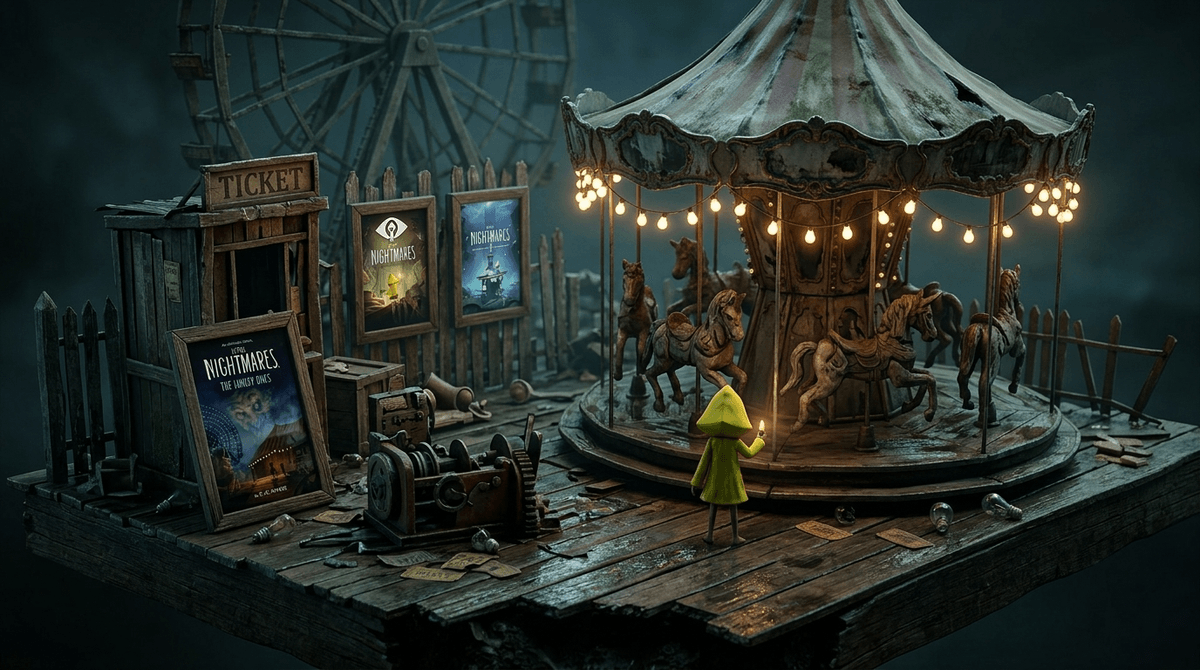
If your kid is asking for Little Nightmares: The Lonely Ones, they aren't looking for a bedtime story—they’re looking for a way to test their own limits. This isn't the "safe" horror of a goose-stepping skeleton or a campy vampire; it’s a masterclass in psychological dread, body horror, and the specific, crushing loneliness of being a small person in a world designed by and for monsters.
Little Nightmares: The Lonely Ones is a psychological horror novel set in the same universe as the popular Little Nightmares video games. It trades jump scares for a persistent sense of unease and heavy themes of abandonment, making it a perfect fit for middle-grade readers (ages 10+) who have outgrown "baby" horror and want something that actually sticks with them.
If you aren't familiar with the franchise, the vibe of Little Nightmares is "Studio Ghibli meets a fever dream." It’s beautiful, but everything is slightly off-proportion, damp, and threatening. The Lonely Ones takes this aesthetic and plants it in a carnival setting—historically the creepiest place on earth—and follows a group of children trying to navigate a world that wants to consume them, literally and figuratively.
This isn't a book where a plucky group of kids defeats the monster with the power of friendship in chapter twelve. It’s a book about survival. The "monsters" here are often distorted versions of adults or authority figures, which is why it resonates so hard with kids. It taps into that universal childhood anxiety: the feeling that the grown-ups in charge are actually grotesque, unpredictable, and not looking out for you at all.
We tend to use the term "kid-friendly" to mean "sanitized." The Lonely Ones is not sanitized. It’s "kid-friendly" only in the sense that there’s no graphic sexuality or four-letter words on every page. But in terms of emotional weight? It’s heavy.
The book deals with:
- Body Horror: Not "saw-style" gore, but things like elongated limbs, melting faces, and the terrifying idea of being transformed into something else.
- Psychological Isolation: The title isn't a metaphor. The characters are profoundly alone, and the book doesn't shy away from the sadness of that.
- The Illusion of Safety: The carnival setting uses things that should be fun (carousels, treats, games) and turns them into traps.
For an intentional parent, the move here isn't to gatekeep the book because it’s "too dark." It’s to recognize that kids crave this kind of exploration. Horror is a safe sandbox for them to practice being brave. If they can handle the psychological pressure of a nightmare carnival in a book, they’re building the emotional muscles to handle real-world anxieties.
If your kid finishes The Lonely Ones and wants more of that "beautifully miserable" vibe, don't just hand them another slasher novel. Look for stories that prioritize atmosphere and "the uncanny."
This is the gold standard for modern middle-grade horror. It involves a creepy book, a school bus breakdown, and scarecrows that move when you aren't looking. It hits that same "trapped" note as Little Nightmares but feels a bit more grounded in reality.
If the carnival theme in The Lonely Ones was what hooked them, this is the essential follow-up. It’s about a "Holiday House" where every day has all four seasons and every wish is granted—but there’s a massive, soul-sucking price to pay. It’s sophisticated horror for younger readers that doesn't talk down to them.
The "Other Mother" is the spiritual ancestor to the monsters in Little Nightmares. If they haven't read the book (which is significantly creepier than the movie), it’s the perfect companion piece for exploring themes of "be careful what you wish for" and distorted parental figures.
For kids who are more into the "ghostly/lonely" aspect than the "monster/carnival" aspect, this is a classic. It’s a ghost story that is actually about grief and blended family dynamics.
The hardest part of Little Nightmares: The Lonely Ones isn't a specific scene; it’s the ending. Without spoiling it, the Little Nightmares universe isn't known for "happily ever afters." It’s known for "I survived for now" or "the cycle continues."
If your kid is used to Disney endings where everything is wrapped up in a bow, this might be their first encounter with "The Downer Ending." That’s a great conversation starter. Ask them: Does a story have to have a happy ending to be good? Why do you think the author chose to end it that way?
Instead of asking "Was it too scary?", try these:
- "Which of the carnival 'attractions' felt the most like a trap to you?"
- "The monsters in this world are all based on things adults do (like the Janitor or the Teacher in the games). What do you think the monsters in this book represent?"
- "If you were stuck in that world, what’s the one item you’d want to have with you?" (In the games, it’s often a lighter or a flashlight—it’s about small bits of light in a lot of darkness.)
Q: Is Little Nightmares: The Lonely Ones okay for a 9-year-old? It depends on the 9-year-old. If they’ve played Little Nightmares or Little Nightmares II, they already know the score. If they are sensitive to themes of child endangerment or "creepy" imagery (think button eyes or distorted faces), you might want to read a chapter together first.
Q: Do you need to play the games to understand the book? No. The book stands on its own as a carnival-themed horror novel. However, playing the games definitely adds a layer of "Oh, I know why the world works this way" that fans will appreciate.
Q: How much gore is in the book? Very little actual "blood and guts." The horror is mostly "internal" and "existential." It’s the threat of what might happen to the kids that provides the scares, rather than a description of a wound.
Little Nightmares: The Lonely Ones is a top-tier pick for kids who want to feel something other than "amused" by their media. It’s dark, it’s artistic, and it respects a kid’s ability to handle complex, frightening themes. If they love it, they aren't "weird"—they’re just developing a taste for atmosphere and storytelling that doesn't pull its punches.
- Check out our best books for kids list for more age-appropriate horror.
- If they want to see the world in action, look at our guide to the Little Nightmares games.
- Find more "creepy but cool" recommendations
