

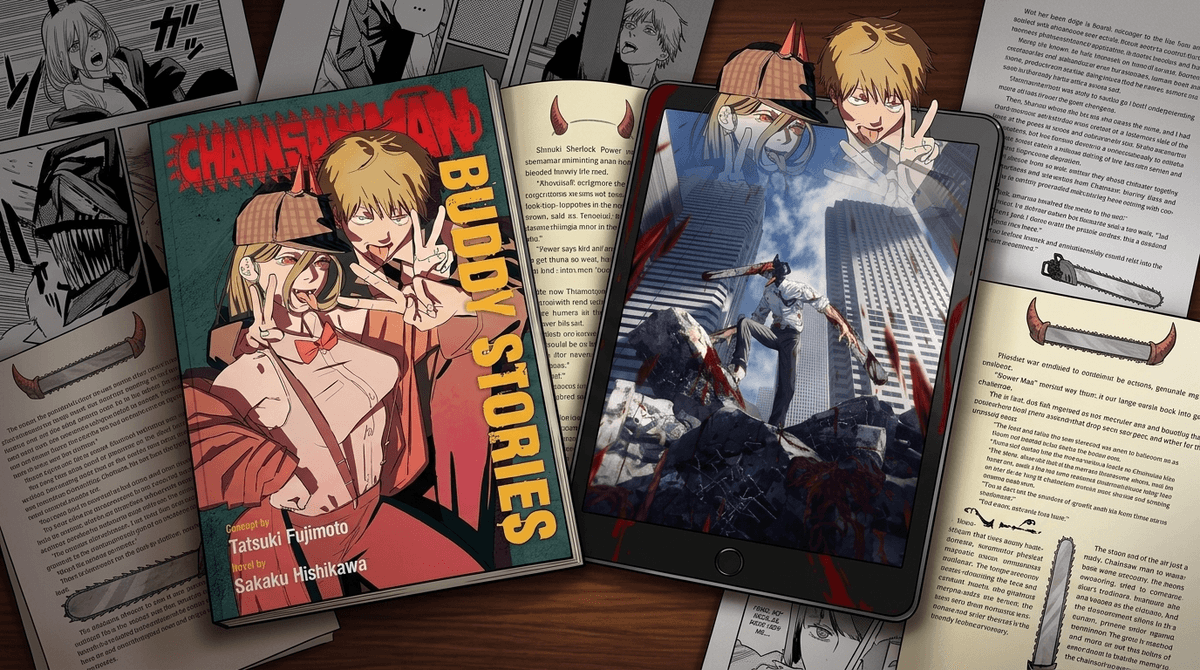
Chainsaw Man: Buddy Stories is not a "junior" version or a sanitized spin-off. If you’re wondering if the transition from the screen to the page means the series has lost its edge, the answer is a firm no. This light novel captures the exact same chaotic, bloody, and surprisingly heartfelt energy of the original manga and anime. Don't let the title fool you—it’s "buddy" in the way a Tarantino movie is a "buddy" movie.
Chainsaw Man: Buddy Stories is a collection of three prose stories that dive deeper into the series' most popular character pairings. It maintains the franchise's signature blend of visceral gore, crude humor, and existential dread. If your teen is already a fan of the Chainsaw Man show, they’ll find this to be a satisfying, character-driven expansion of that world. For more mature-leaning recommendations, check out our digital guide for high schoolers.
When most Western media uses the word "buddy," we think of something wholesome. In the world of Chainsaw Man, a "buddy" is usually the person you’re partnered with to hunt lethal devils—and the person most likely to watch you die a horrific death.
The book is a "light novel," which is a Japanese style of novella that includes a few manga-style illustrations. It’s written by Sakaku Hishikawa but heavily supervised by the original creator, Tatsuki Fujimoto. It doesn't skip a beat. The three stories focus on:
- Power and Denji: A self-proclaimed "master detective" story that is mostly an excuse for their chaotic, bickering sibling energy.
- Kishibe and Quanxi: A prequel about the early days of two high-level devil hunters.
- Aki and Himeno: A look at their first mission together, which hits hard if you know where their story goes in the main series.
Parents often assume that books are "safer" than visual media because the reader has to imagine the violence rather than see it. While that's true to an extent, Buddy Stories is quite descriptive. It doesn't shy away from the series' trademark body horror.
The prose describes the smell of blood, the sound of tearing flesh, and the grotesque appearances of the devils with the same clinical detachment and occasional dark whimsy that makes the anime so distinct. If your kid is sensitive to graphic descriptions of injury or gore, the shift to a book format isn't going to solve that problem.
Denji is a teenage boy driven by very basic, often hormonal, motivations. Power is a "Blood Fiend" who doesn't understand human hygiene or social norms. Their dynamic is the heart of the first story, and it’s predictably messy.
Expect jokes about not flushing toilets, "crude" language, and the kind of irreverent banter that makes Chainsaw Man a favorite among older teens. It isn't "refined," but it is honest to the characters. If you’ve already cleared the anime for your household, nothing in the book’s tone will surprise you.
Beyond the chainsaws and the blood, Buddy Stories does something the fast-paced anime sometimes skips: it slows down. It explores the "found family" aspect of these characters—people who have lost everything and are forced to rely on each other in a world that wants them dead.
For an intentional parent, this is the "hook." It’s a great entry point for talking about why we care about these characters. Is it just because they're "cool," or is it because we see them struggling with loneliness and the need for connection?
If your kid is diving into this, they’re likely already a fan of the franchise. Instead of focusing on the gore, pivot to the character dynamics.
- The Power/Denji Dynamic: Ask them why they think Denji puts up with Power despite her being, well, a nightmare. It’s a great way to talk about friendship vs. shared trauma.
- The Prequel Stories: Ask which version of the characters they prefer—the hardened veterans they see in the main series or the slightly more "human" versions in these side stories.
- The Medium: If this is their first light novel, talk about the difference between reading prose and reading manga. Do they find the descriptions more or less "gross" than the drawings?
The biggest friction point here isn't actually the content—it's the context. Buddy Stories assumes the reader knows the world of Chainsaw Man. It doesn't explain what a "Devil" is or why Denji has a pull-cord in his chest. If your kid hasn't read the manga or seen the show, they’ll be lost. This is a "for the fans" book.
If your kid is into the dark, weird, and slightly philosophical vibe of Chainsaw Man, they might be looking for more stuff that treats them like an adult.
- Jujutsu Kaisen: The natural next step. It’s got the supernatural battles and high stakes but with a slightly more traditional "shonen" structure.
- Hell’s Paradise: If they like the "misfits on a mission" vibe and don't mind a high body count.
- Blue Period: A total curveball. It’s not about devils; it’s about a high schooler discovering a passion for art. But it shares that same "raw," honest internal monologue that makes Denji so relatable.
- Kaiju No. 8: Great for fans who like the "human turns into a monster to fight monsters" trope but want something a bit more action-focused and a little less "weird."
Q: Is Chainsaw Man: Buddy Stories appropriate for a 13-year-old? It depends entirely on their experience with the main series. If they’ve watched the Chainsaw Man show and handled it fine, the book is no more intense. If they haven't seen the show, start there (or with the manga) first. Generally, it lands best for the 14+ crowd.
Q: Are there sexual scenes in the book? No graphic sexual content, but there is the same "teen boy" horniness found in the series. Denji’s motivations often revolve around wanting to touch a girl or get a girlfriend, and the dialogue reflects that. It’s more "crude" than "explicit."
Q: Is it better to read the manga before this book? Yes. Buddy Stories is a supplement. It fills in the gaps between the main plot points. Reading it without knowing the main story would be like watching a "Behind the Scenes" documentary for a movie you haven't seen.
Q: How much gore is actually in the prose? A fair amount. It describes blood splatter, severed limbs, and the "squelching" sounds of devils in detail. It’s not a medical textbook, but it’s definitely not Harry Potter.
Chainsaw Man: Buddy Stories is a high-quality expansion of a very specific, very popular world. It’s dark, it’s gross, and it’s weirdly moving. If your kid is already in that world, this is a great way to encourage actual reading over just passive watching. It’s a "yes" for fans, but not a "tamer" shortcut for younger kids.
- Check out our best shows for kids list for more anime recommendations.
- Explore our digital guide for middle schoolers if you're looking for the line between "kid" and "teen" content.
- Find more light novels for teens
