

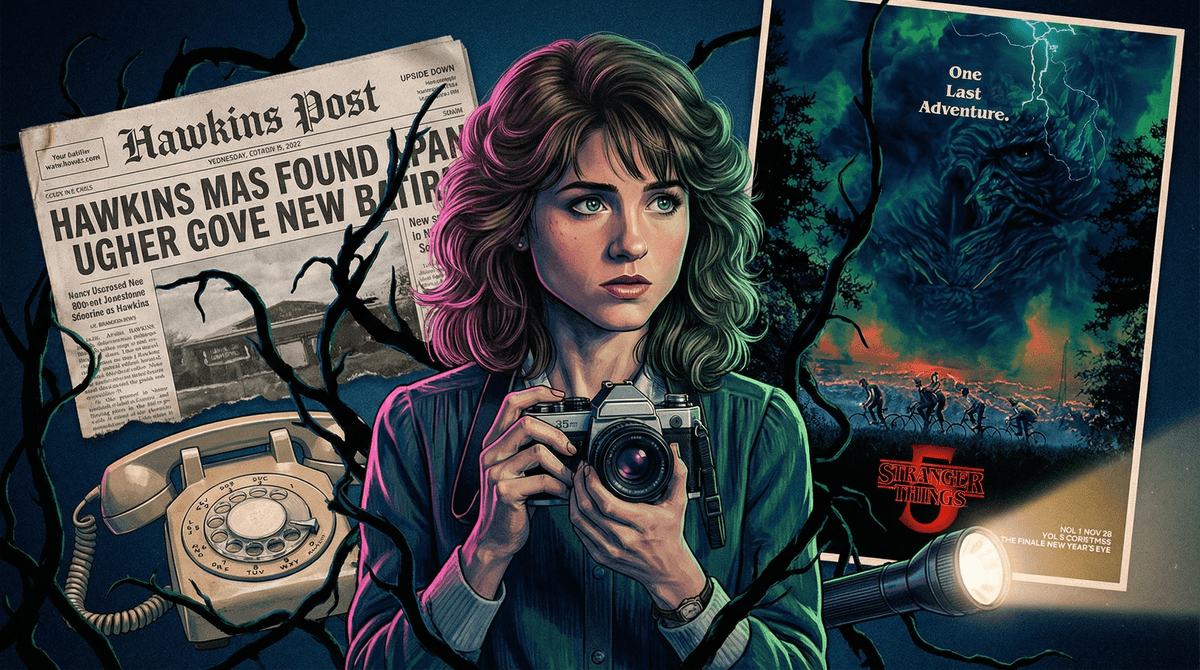
Nancy Wheeler: What Parents Should Know About Stranger Things' Teen Hero
TL;DR: Nancy Wheeler transforms from popular high schooler to trauma survivor to badass investigative journalist across Stranger Things' four seasons. She's brave, flawed, complicated, and deals with real grief, guilt, survivor's remorse, relationship drama, and finding her voice. If your teen is watching the show, Nancy's arc offers incredible conversation starters about trauma, ambition, and standing up for what's right—even when it costs you everything.
Nancy Wheeler (played by Natalia Dyer) is the older sister of Mike Wheeler, one of the core kids in Stranger Things. When we meet her in Season 1, she's a typical popular high school junior—studying hard, dating the hot guy (Steve Harrington), and mostly annoyed by her nerdy younger brother and his friends.
Then her best friend Barb disappears. And dies. And Nancy's entire trajectory changes.
Over four seasons, Nancy evolves from the girl worried about being seen at the right parties to someone who risks her life repeatedly to save Hawkins, investigates government conspiracies, and fights interdimensional monsters with whatever weapon she can find. She becomes the character who will not stop until she gets answers and justice—even when everyone tells her to let it go.
Nancy is arguably the most realistically written teenage girl in the entire show. She's not just "the girl" or "the love interest"—she's ambitious, smart, sometimes selfish, often brave, and deeply affected by trauma in ways the show doesn't shy away from.
She deals with real grief and guilt. Barb's death haunts Nancy for seasons. She blames herself. She can't move on. She becomes obsessed with making Barb's death mean something. This is incredibly realistic trauma response, and the show treats it seriously rather than as a plot device.
She faces sexism head-on. In Season 3, Nancy interns at the Hawkins Post and gets dismissed, patronized, and sexually harassed by the male reporters. Instead of just taking it, she investigates the story they won't touch—and she's right. It's a fantastic storyline about being underestimated and proving everyone wrong.
Her relationships are messy. Nancy's love triangle with Steve and Jonathan isn't just romantic drama—it's about who she's becoming and what she wants from life. Steve represents her old life, safety, and conventional success. Jonathan represents her new self, someone who sees her ambition and matches her drive. Neither choice is wrong, and the show doesn't pretend it's simple.
She makes mistakes. Nancy can be self-righteous. She sometimes puts her mission above other people's feelings. She's not always a good girlfriend or sister. And that's what makes her feel real.
Season 1: Barb's Death and Survivor's Guilt
Nancy's best friend dies in the Upside Down while Nancy is upstairs having sex with Steve. The guilt is crushing and shapes everything Nancy does afterward. This is heavy stuff—your kid is watching a character deal with the fact that her friend died while she was losing her virginity.
Conversation starter: "Nancy clearly blames herself for what happened to Barb. Do you think that's fair? What would you say to her if you could?"
Season 2: Seeking Justice
Nancy teams up with Jonathan to expose Hawkins Lab and get justice for Barb's family. She gets drunk at a party and calls their relationship "bullshit" in front of Steve (ouch), then leaves town with Jonathan to meet a conspiracy journalist. She's determined to make Barb's death mean something, even if it means burning bridges.
What's great: Nancy takes action instead of just grieving. She uses her anger productively.
What's complicated: She's not always honest with Steve about her feelings, and she puts herself in danger without thinking through consequences.
Season 3: Sexism at Work
Nancy faces constant dismissal and condescension at her newspaper internship. The male reporters literally call her "Nancy Drew" mockingly and send her for coffee. When she investigates a real story about diseased rats, they laugh her off. She quits and investigates anyway—and uncovers the Russian conspiracy under Starcourt Mall.
This is gold for conversations about: workplace sexism, trusting your instincts, the cost of standing up for yourself, and what happens when you're right but no one will listen.
Season 4: Trauma, Guns, and the Upside Down
Nancy gets trapped in the Upside Down and experiences visions from Vecna that force her to relive Barb's death and confront her guilt. She also becomes incredibly proficient with guns (a sawed-off shotgun is basically her signature weapon by this point).
The gun thing is worth noting: Nancy is shown as capable, careful, and deadly accurate. She's not reckless with firearms—she's a sharpshooter who saves lives. But she's also a teenager carrying serious weapons, which might be uncomfortable depending on your family's views on gun violence in media .
.
Stranger Things is rated TV-14, but let's be real—it's intense. Nancy's storylines specifically include:
- Death of a close friend (shown on screen, violent)
- Survivor's guilt and trauma (ongoing, realistic)
- Sexual content (Season 1 shows Nancy and Steve having sex, not explicit but clear what's happening)
- Alcohol use (Nancy gets drunk at a party in Season 2)
- Violence (Nancy fights monsters, shoots guns, gets covered in blood)
- Workplace sexual harassment (Season 3, not graphic but uncomfortable)
My take: Nancy's storylines are appropriate for ages 14+ who can handle horror/suspense and are ready for conversations about trauma, sex, relationships, and standing up to authority. Younger teens (12-13) might be ready depending on maturity, but you'll want to watch together and be prepared for questions.
If your kid is watching Stranger Things, they're already seeing intense content. Nancy's character actually offers some of the most valuable teaching moments in the show.
About trauma and guilt: "Nancy can't let go of what happened to Barb. Why do you think she feels so responsible? Have you ever felt guilty about something that wasn't really your fault?"
About ambition and sexism: "What did you think about how Nancy was treated at the newspaper? Have you ever felt like adults didn't take you seriously because of your age?"
About relationships: "Nancy's caught between Steve and Jonathan. What do you think she's really choosing between? Is it just about which guy she likes more?"
About standing up for what's right: "Nancy keeps investigating even when everyone tells her to stop. When is it worth it to keep pushing, and when should you let something go?"
Look, Nancy Wheeler is not perfect. She's sometimes selfish, occasionally self-righteous, and makes questionable decisions. But she's also:
- Brave without being fearless: Nancy is clearly scared but does dangerous things anyway
- Smart and resourceful: She figures things out, asks questions, and doesn't wait for adults to save her
- Driven by justice: She wants to make things right, expose the truth, and protect people
- Allowed to be complicated: She's not just "the smart girl" or "the love interest"—she's a full person with contradictions
In a show full of kids fighting monsters, Nancy stands out because she's fighting on multiple fronts: against literal monsters, against a system that dismisses her, against her own trauma, and for a future where she gets to be taken seriously.
Nancy Wheeler is one of the best-written teenage characters on TV right now. Her journey from popular girl to trauma survivor to investigative journalist is compelling, realistic, and offers tons of opportunities for meaningful conversations with your teen.
If your kid is watching Stranger Things, pay attention to how they respond to Nancy. Do they relate to her guilt? Her ambition? Her anger at not being taken seriously? Those reactions can tell you a lot about what your kid is processing in their own life.
And if you're watching together, Nancy's storylines are perfect for hitting pause and asking "What would you do?" Because that's what good TV does—it makes us think about who we'd be when things get hard.
Next steps:
- Watch Stranger Things together if you haven't already
- Check out how to talk to kids about trauma in media
- Explore other shows with complex female teen characters
- Read our full Stranger Things parent guide for more on the show's themes and age-appropriateness