

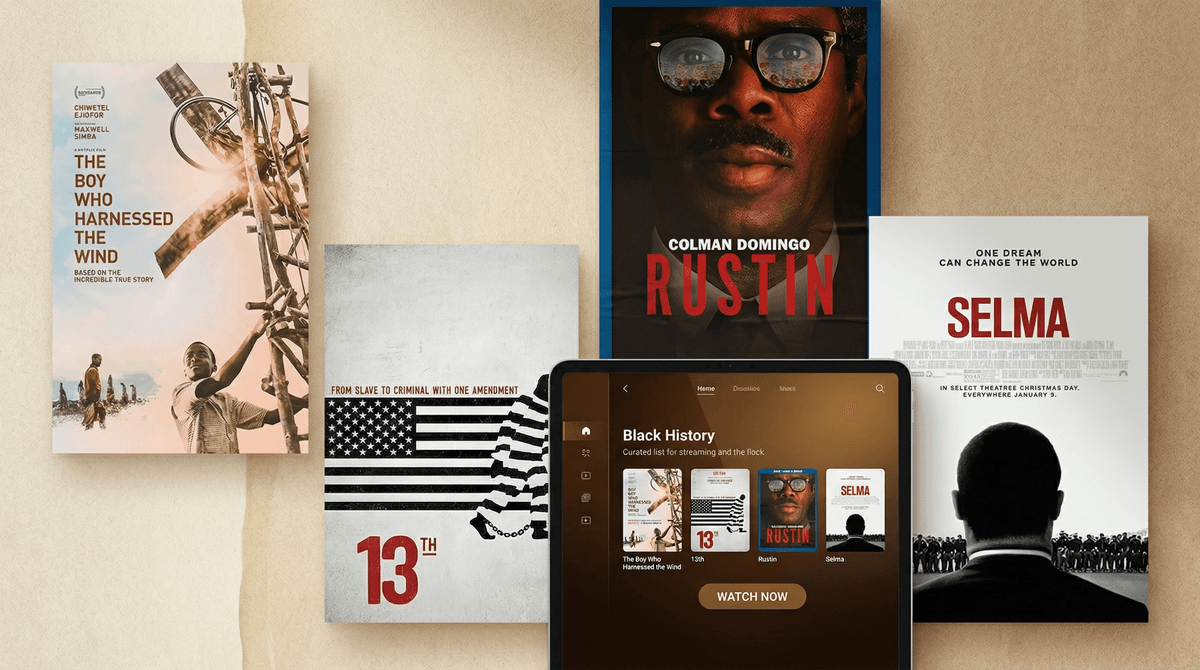
Must-Watch Films on Black Experience on Netflix
TL;DR: Netflix has a solid collection of films that explore Black history, identity, and culture — from documentaries that'll give your middle schooler actual historical context to powerful dramas that spark real dinner table conversations. Here are the ones worth your time, organized by what your family needs right now.
Look, we're not here to tell you how to parent or what values to instill. But if you want your kids to understand American history beyond the sanitized textbook version, or if you're looking for films that show the full spectrum of Black life and achievement — not just struggle — you need to be intentional about what they watch.
Screenwise Parents
See allThe good news? Netflix actually has some excellent options. The bad news? They're buried under a mountain of mediocre content, and not every "important" film is actually watchable for kids.
This guide cuts through the noise with age-appropriate recommendations that are actually good films, not just educational vegetables.
Ages 10+
This one's a gem. It's the true story of William Kamkwamba, a 13-year-old in Malawi who built a windmill from scrap to save his village from famine. Directed by Chiwetel Ejiofor, it's beautifully shot and genuinely inspiring without being cheesy.
Why it works: Kids see a teenager using actual problem-solving and persistence to change his community's future. It's about innovation, education, and determination — themes that resonate without feeling preachy. Plus, it's a nice counter-narrative to the "Africa needs saving" trope. This kid saved himself.
Parent note: There are scenes of hunger and drought that might be intense for sensitive younger kids, but nothing graphic. Good conversation starter about global inequality and climate.
Ages 8+
The story of the Antetokounmpo family — Greek-Nigerian immigrants whose sons became NBA stars, including Giannis, the "Greek Freak." It's a Disney production, so yes, it's polished and feel-good, but it's also genuinely moving.
Why it works: It's about family, immigration, and the grind of pursuing dreams while dealing with systemic barriers. Kids who play sports will especially connect with it, but you don't need to care about basketball to appreciate the story.
Parent note: Very family-friendly. Some tension around immigration status and racism, but handled gently enough for elementary-aged kids.
Ages 13+
Ava DuVernay's documentary about mass incarceration and the 13th Amendment is essential viewing. It traces the line from slavery to Jim Crow to the modern prison industrial complex with clarity and devastating evidence.
Why it matters: Your high schooler is learning about the Civil War and Reconstruction in history class. This film shows them why those events still matter today. It's not subtle, but it's meticulously researched and powerfully argued.
Parent note: This is heavy. There's archival footage of violence against Black Americans, discussion of systemic racism, and frank talk about police brutality. Watch it with your teen and expect questions. If they're in high school, they can handle it — and honestly, they should see it.
Conversation starters: How do laws that seem neutral on paper create racial disparities? What's the difference between individual prejudice and systemic racism? What does "law and order" mean to different communities?
Ages 13+
Colman Domingo is phenomenal as Bayard Rustin, the brilliant organizer behind the 1963 March on Washington who was deliberately kept in the shadows because he was gay. This film finally gives him his due.
Why it works: It's not just a history lesson — it's a story about the messy reality of activism, the cost of being authentic, and the politics within social movements. Your teen will learn that the Civil Rights Movement wasn't a monolith, and that's actually more interesting than the simplified version they get in school.
Parent note: Deals with homophobia, both within and outside the Black community. Some period-appropriate slurs and discrimination. But it's handled with nuance and dignity. Great for sparking conversations about intersectionality before your kid learns that word in college.
Ages 14+
Chadwick Boseman's final performance, and it's absolutely gutting. Set in 1920s Chicago during a recording session, it's an explosive examination of art, exploitation, and rage.
Why it's powerful: This is August Wilson's writing brought to life — which means it's theatrical, intense, and doesn't pull punches. The film explores how Black artists were exploited by white producers, the dignity of creative control, and the pressure cooker of racism in America.
Parent note: Rated R for language and some intense confrontations. There's a lot of swearing and one particularly devastating monologue from Boseman about racial violence. Not for younger teens, but mature high schoolers can absolutely handle it. The language is part of the authenticity — this is how people talked, especially when white folks weren't around.
Real talk: This isn't an easy watch. It's claustrophobic and tense. But it's also brilliant filmmaking and an important look at Black excellence and exploitation existing simultaneously.
Ages 14+
A stylish, fictional Western featuring real historical figures — Black cowboys, outlaws, and sheriffs whose stories have been whitewashed out of the genre. Directed by Jeymes Samuel, with a killer soundtrack and a stacked cast (Jonathan Majors, Idris Elba, Regina King, Zazie Beetz).
Why it works: It's just a damn good action movie. But it also reclaims a genre that's been dominated by white narratives for decades. About 25% of cowboys were Black — you'd never know it from watching old Westerns.
Parent note: Rated R for violence and language. It's a Western, so there's gunfighting and some blood. If your teen can handle a Marvel moviee](https://screenwiseapp.com/guides/every-marvel-movie-age-rating-explained), they can handle this. The violence is stylized, not gratuitous.
Ages 13+
Ava DuVernay's film about the 1965 Selma to Montgomery voting rights marches, focusing on MLK's leadership and the brutal resistance they faced. David Oyelowo is phenomenal as King.
Why it's essential: Your kids know the "I Have a Dream" speech. They probably don't know about Bloody Sunday or the strategic brilliance behind the Selma campaign. This film shows the actual work of organizing and the real violence civil rights activists faced.
Parent note: The bridge scene is brutal and hard to watch. There's violence against peaceful protesters, including children. But this is American history, and high schoolers should see it. It's PG-13, but on the harder end of that rating.
Ages 15+
Set in rural Mississippi after WWII, following two families — one Black, one white — trying to farm the same land. It's a slow-burn drama about racism, PTSD, and the myth of the American Dream.
Why it matters: It's a nuanced look at how racism operated in the Jim Crow South — not just through obvious violence, but through economic exploitation, social codes, and the constant threat of violence. The friendship between two war veterans (one Black, one white) and how it's perceived by their community is heartbreaking.
Parent note: Rated R for racial violence and some disturbing scenes. There's a particularly brutal scene near the end that's hard to watch but historically accurate. Not for younger teens.
Ages 10+ (it's actually a series, not a film, but too good not to include)
Chef Stephen Satterfield traces African American cuisine from Africa to Texas, showing how Black cooks and farmers shaped American food culture while being systematically excluded from credit and profit.
Why kids like it: It's about food! Even picky eaters find this fascinating. Plus, it's a different entry point into history — through recipes, ingredients, and family traditions rather than dates and battles.
Parent note: Totally family-friendly and genuinely educational. You'll learn stuff too. Great for middle schoolers who are starting to care about food and culture.
Ages 13+ (also a series)
Will Smith (yes, that Will Smith) narrates this exploration of the 14th Amendment and how different groups have fought for equal rights. Each episode focuses on a different community's struggle.
Why it works: It connects historical struggles to current issues in a way that makes the Constitution feel relevant instead of dusty. The format is engaging — mixing historical footage, expert interviews, and dramatic readings.
Parent note: Some episodes deal with violence and discrimination, but it's presented in an educational context. Good for high schoolers who need to understand how civil rights movements are interconnected.
A few films that rotate on and off Netflix or are available elsewhere:
- Moonlight — If it comes back to Netflix, watch it. Period. (Currently on other platforms)
- Hidden Figures — The story of Black women mathematicians at NASA. Comes and goes from Netflix but worth tracking down.
- When They See Us — Ava DuVernay's miniseries about the Central Park Five. Heavy but important for older teens.
Check what's currently streaming if you want real-time availability.
Don't just press play and leave the room. These films are conversation starters, not babysitters.
For younger kids (8-12): Watch together and pause when they have questions. Films like The Boy Who Harnessed the Wind or Rise are accessible enough that you can discuss as you go.
For teens (13+): They might want to watch alone first, and that's fine. But follow up with a conversation. Ask what surprised them, what made them uncomfortable, what they want to know more about. Don't lecture — just listen and discuss.
For the heavy ones: Films like 13th or Selma deserve dedicated viewing time. Not on a Tuesday night when everyone's exhausted. Pick a weekend afternoon, watch together, and plan for a real conversation afterward.
These films aren't just "eat your vegetables" viewing. They're genuinely good movies that happen to tell important stories. Your kids will learn actual history, see experiences different from their own, and hopefully ask questions that lead to meaningful conversations.
The goal isn't to watch every film on this list — it's to find the ones that fit where your family is right now. A 10-year-old interested in science will connect with The Boy Who Harnessed the Wind. A high schooler studying the Civil Rights Movement needs to see 13th or Selma. A teen who loves Westerns deserves to see The Harder They Fall.
Start with one. Watch it together. Talk about it. That's the work.
Want more recommendations? Explore documentaries for teens or find films about social justice.