

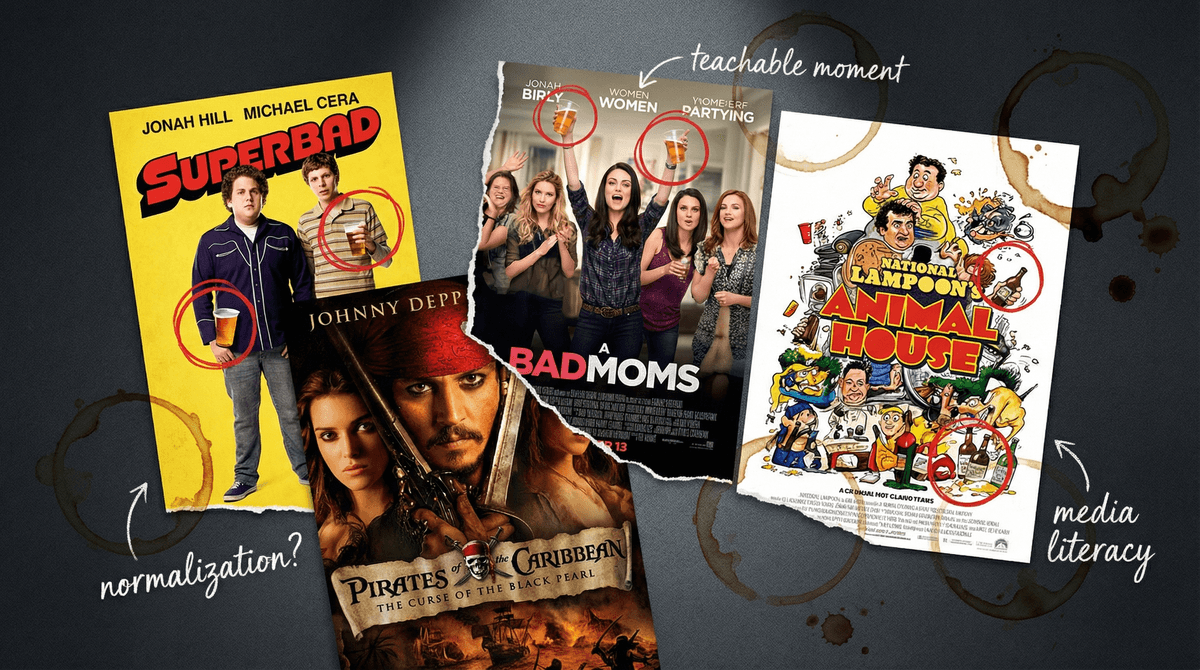
We're talking about films that portray alcohol consumption as effortlessly cool, consequence-free, or the key to having a good time. Think characters chugging beers to solve problems, wild party scenes where everyone's having the time of their lives, or protagonists who are somehow more charming and capable when they're drunk.
These aren't necessarily bad movies (some are genuinely great films), but they present alcohol in a way that can normalize heavy drinking for young viewers who are still forming their understanding of what "normal" adult behavior looks like.
The tricky part? This shows up in so many movies across different genres—comedies, action films, coming-of-age stories, even some animated films have drinking scenes that parents might not think twice about until their 10-year-old asks why the funny character is always holding a beer.
Here's the thing: kids are incredibly observant about what makes adults look cool, confident, or socially successful. Research shows that exposure to alcohol in media is linked to earlier drinking initiation and heavier consumption patterns among teens.
The American Academy of Pediatrics found that for each additional hour of screen time with alcohol content, there was a 9% increase in the likelihood that adolescents would start drinking. That's not nothing.
But beyond the statistics, there's a more subtle issue: normalization. When every college movie shows beer pong as the pinnacle of social success, when action heroes casually drink whiskey before saving the world, when comedies treat blackout drinking as hilarious rather than dangerous—it builds a worldview where alcohol is just... everywhere, always positive, never complicated.
And look, plenty of us enjoy a glass of wine or a beer. This isn't about demonizing alcohol. It's about helping kids understand that what they see in movies is often a fantasy version of drinking that skips over the hangovers, the poor decisions, the health impacts, and the very real risks.
Teen Comedies
The obvious culprits. Movies like Superbad, American Pie, and Project X essentially treat underage drinking as a rite of passage. The whole plot often revolves around getting alcohol, and the consequences are either non-existent or played for laughs.
The issue: These films can make teens feel like they're missing out if they're not participating in similar behavior.
Fraternity/College Movies
Animal House, Old School, Neighbors—the entire genre is basically built on the premise that college = constant drinking. Characters are rarely shown studying, going to class, or doing anything that doesn't involve a red Solo cup.
"Cool" Action Heroes
James Bond with his martinis. Tony Stark mixing drinks while building Iron Man suits. John Wick having a drink at the Continental. These characters are presented as the ultimate in sophistication and capability, and alcohol is part of their mystique.
The issue: It creates an association between alcohol and competence, confidence, and being effortlessly cool.
Rom-Coms and "Wine Mom" Culture
Bad Moms and similar films lean hard into the "wine is how moms cope" trope. While these movies are often funny and relatable about the stress of parenting, they can inadvertently normalize using alcohol as the primary stress-management tool.
Animated Films (Yes, Really)
Even some kids' movies include drinking references that might fly under the radar. The pirates in Pirates of the Caribbean are constantly drinking rum. Ratatouille includes wine as part of French culture. Shrek has bar scenes. These aren't necessarily problematic on their own, but they're worth being aware of.
Here are the red flags that a movie is glorifying rather than just depicting drinking:
No consequences: Characters drink heavily but never experience hangovers, poor judgment, health issues, or relationship problems as a result.
Drinking as problem-solving: Characters turn to alcohol when stressed, sad, or facing challenges—and it's portrayed as helpful rather than avoidance.
Underage drinking as normal: Teen characters drink and it's treated as typical adolescent behavior rather than risky.
Drunk = funny: Intoxication is played purely for laughs, with no acknowledgment of the potential dangers.
Alcohol as social lubricant: The message that you need to drink to have fun, be confident, or fit in socially.
Aspirational drinking: The "cool" characters drink; the uptight, boring ones don't.
Ages 5-10
At this age, kids are mostly just noticing that adults drink different beverages. If drinking comes up in a movie:
- Keep it simple: "That's alcohol, which is only for adults because it can be harmful to kids' growing bodies and brains"
- Point out when characters make poor choices while drinking
- Choose movies where alcohol isn't a major plot point
Ages 11-14
Middle schoolers are starting to encounter peer pressure and see drinking in their communities. They need more context:
- Talk about why movies show drinking differently than real life
- Discuss how marketing and media make drinking look more appealing than it actually is
- Share real information about how alcohol affects the developing brain (which continues developing until age 25)
- Learn more about talking to tweens about substance use

Ages 15-18
Teens need honest conversations, not lectures:
- Watch movies together and discuss what's realistic vs. fantasy
- Talk about the social pressure they might be experiencing
- Discuss how the movies skip over consequences like accidents, alcohol poisoning, sexual assault, and legal issues
- Share your family's values around alcohol without being preachy
- Acknowledge that they'll make their own choices, but you want them to have accurate information
Before watching: Check reviews on Common Sense Media or IMDb's parent guide to know what's coming. Decide if you want to watch together or if it's not appropriate for your kid yet.
During the movie: You don't need to pause and lecture every time someone takes a drink. But if there's a particularly egregious scene—like a character driving drunk with no consequences—a simple "hmm, that's not how that would actually go" can plant a seed.
After watching: Ask open-ended questions:
- "What did you think about how they showed drinking in that movie?"
- "Did anything seem unrealistic to you?"
- "How do you think that character would actually feel the next day?"
The key: Keep it conversational, not preachy. You're not trying to ruin the movie; you're helping them develop critical thinking skills about media messages.
If you're looking for movies that handle alcohol more realistically or avoid it altogether:
For laughs without glorification:
Coming-of-age without the beer pong:
- Lady Bird (shows drinking but with realistic consequences)
- The Perks of Being a Wallflower
- Eighth Grade
Action heroes who don't need whiskey:
You don't need to ban every movie with drinking scenes. That's not realistic, and it's not the goal. But being intentional about what your kids watch and having conversations about what they're seeing? That's powerful.
The goal is to help kids develop media literacy—to understand that movies are designed to entertain, not to provide a blueprint for healthy adult behavior. When they can watch a party scene and think "okay, but in real life that would end with someone in the ER," you've done your job.
And remember: your own relationship with alcohol is the most powerful teaching tool you have. Kids notice if you need wine to deal with stress, if you can have fun without drinking, and how you talk about alcohol in your own life.
- Check before you watch: Spend 2 minutes reading the Common Sense Media parent guide before family movie night
- Start conversations early: Don't wait until your teen is at their first party to talk about alcohol
- Watch together: Co-viewing gives you natural opportunities for discussion
- Be honest: Share your own experiences (age-appropriately) rather than pretending you were perfect
- Set clear expectations: Make sure your kids know your family's rules and values around alcohol
See whether specific movies are appropriate for your kid
The movies aren't going to change. But how we help our kids think about what they're watching? That's entirely in our control.