

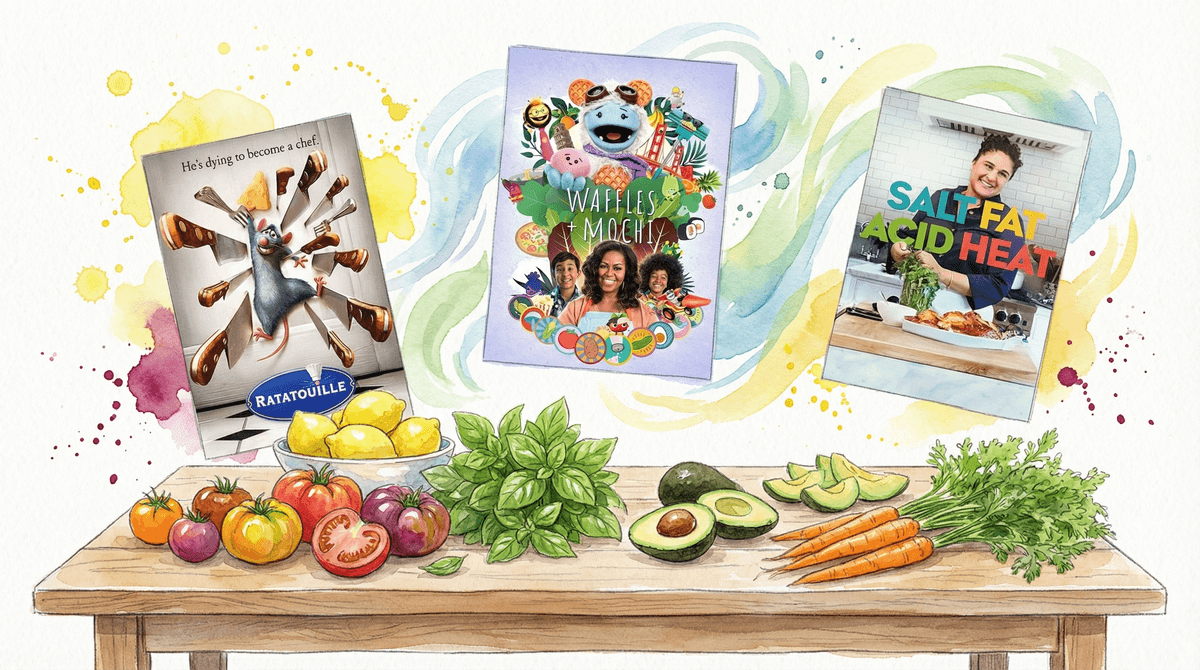
Look, I get it. You're trying to raise kids who understand that vegetables aren't punishment and that food can be both delicious AND good for you. But lecturing about nutrition is about as effective as explaining why they should limit screen time (which is to say: not very).
The good news? There's actually some genuinely engaging content out there that makes healthy eating look appealing without turning into an after-school special. We're talking movies and shows where food is celebrated, cooking is creative, and the message about nutrition sneaks in through the back door while kids are actually entertained.
With 92% of families in your community using TV services and 40% of families using Netflix regularly with their kids, you're probably already watching something. Might as well make it count.
Ratatouille (Ages 6+)
This Pixar classic is the gold standard. A rat who wants to be a chef in Paris? Sounds weird, plays beautifully. The movie celebrates fresh ingredients, creativity in the kitchen, and the idea that anyone can cook. Plus, that scene where the food critic tastes the ratatouille and is transported back to childhood? Chef's kiss. No lectures about eating your vegetables—just pure food joy.
Julie & Julia (Ages 10+)
For older kids who can handle a slower pace, this one's a gem. It's about cooking through Julia Child's cookbook and finding joy in the process. Yes, there's butter. Lots of butter. But the underlying message is about real food, cooking from scratch, and the satisfaction of making something yourself. Bonus: it might inspire your tween to actually want to help in the kitchen.
Salt Fat Acid Heat (Ages 8+)
This Netflix documentary series with Samin Nosrat is genuinely watchable for the whole family. Each episode focuses on one element of cooking, filmed in gorgeous locations around the world. It's not preachy about health, but it does emphasize fresh ingredients, traditional cooking methods, and understanding where food comes from. Your kids will learn something without realizing they're learning.
Chef's Table (Ages 10+)
Another Netflix documentary series, but this one's more artistic and contemplative. Each episode profiles a different world-renowned chef. Some episodes are more kid-friendly than others (preview first), but the ones that work show cooking as art, emphasize seasonal ingredients, and often highlight sustainable practices. The cinematography alone is worth it.
Waffles + Mochi (Ages 3-8)
Michelle Obama's Netflix show about two puppet friends learning about food around the world. It's educational without being boring, celebrates vegetables and whole foods, and manages to be genuinely entertaining for little kids. If you've got elementary-aged kids, this is your sweet spot.
Cooked (Ages 12+) - Michael Pollan's documentary series is fascinating but can be a bit academic. Good for teens who are actually interested in food systems and history.
The Magic School Bus Rides Again: Kids in the Kitchen (Ages 5-9) - It's fine. Educational, covers nutrition basics, but it's still the Magic School Bus, so your mileage may vary on the entertainment factor.
Most "healthy eating" content for kids falls into the trap of being either preachy or just plain boring. Cloudy with a Chance of Meatballs? Fun movie, but the food messaging is all over the place. Super Size Me? Too intense and frankly traumatizing for younger viewers—save it for high school health class, maybe.
Here's the thing: 50% of families in your community watch Disney+ together, and 40% of families use Netflix with their kids regularly. That's a lot of co-viewing time. Instead of just defaulting to whatever algorithm serves up next, you can be intentional about what messages your kids absorb during screen time.
Good food media doesn't just teach kids about nutrition—it teaches them that cooking can be creative, that food connects us to culture and family, and that eating well doesn't mean deprivation. These shows model curiosity about ingredients, respect for the cooking process, and joy in eating.
Watch together. Seriously. The research is clear that co-viewing dramatically increases the educational impact of any content. Plus, you can pause to talk about what you're seeing.
Follow up in the kitchen. After watching Ratatouille, make ratatouille together. After Salt Fat Acid Heat, experiment with adding acid to a dish and tasting the difference.
Don't force the lesson. If your kid just wants to enjoy the story about the rat chef, that's fine. The messages about fresh food and cooking with love are seeping in whether you lecture about them or not.
Screen time doesn't have to be "brain rot" (as the kids say). Content about food and cooking can actually inspire healthier habits—but only if it's genuinely engaging. Ratatouille has probably done more for getting kids interested in vegetables than a thousand lectures about eating your greens.
Start with what fits your kids' ages and interests. If they're little, try Waffles + Mochi. If they're older and can handle something more sophisticated, queue up Salt Fat Acid Heat or Chef's Table. Then actually cook something together.
And hey, if nothing else, at least it's not another Cocomelon binge.
Want to understand more about your family's streaming habits compared to your community? Take the Screenwise survey to get personalized insights and recommendations.
Looking for more screen time that actually adds value? Check out our guide to educational content that doesn't feel educational.