

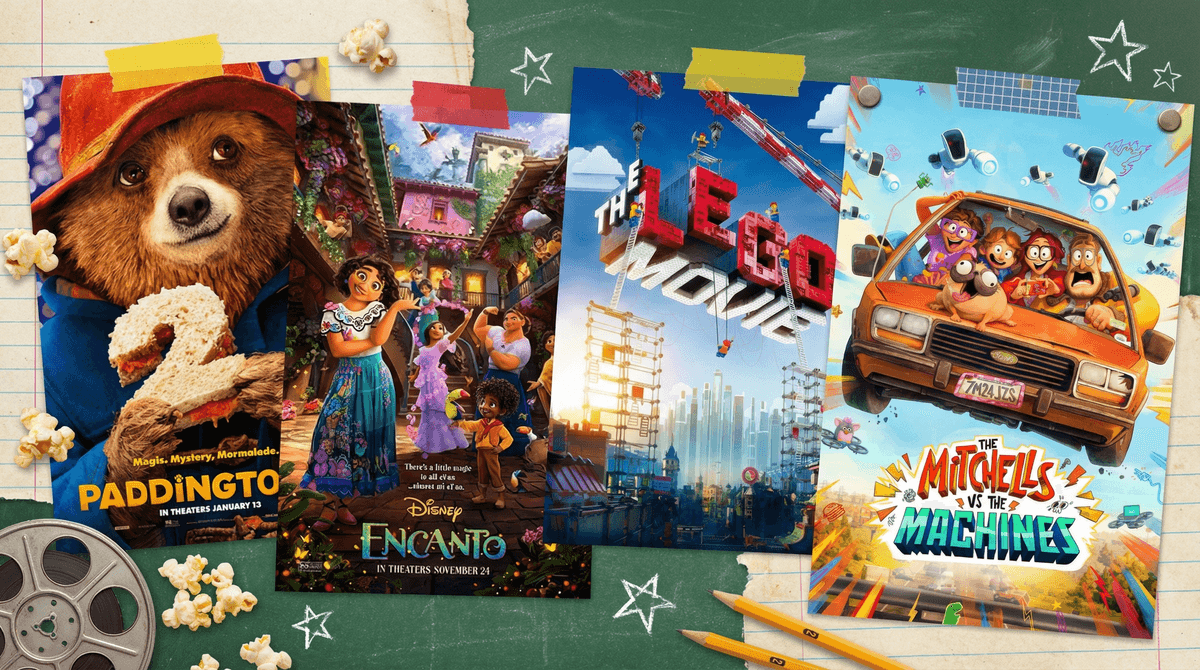
School movie nights are those beautiful moments when teachers get to press play instead of teach, and kids get to experience the communal joy of watching something on a screen bigger than an iPad. Whether it's a reward for good behavior, a rainy day backup plan, a pre-holiday wind-down, or an actual educational tie-in, these screenings need to thread a very specific needle: entertaining enough that kids don't riot, appropriate enough that no parent sends an angry email, and ideally—ideally—not something that makes the teacher want to gouge their eyes out after the third viewing.
The challenge? What works for kindergarteners will bore fifth graders into oblivion. What's hilarious to middle schoolers might have jokes that make elementary teachers sweat. And that movie you loved as a kid? Yeah, it might not hold up in 2026.
Here's the thing: a poorly chosen movie can derail an entire day. Too scary? You've got crying kids and parent phone calls. Too mature? You're explaining why the teacher showed a PG-13 movie to second graders. Too boring? Chaos. Pure chaos.
But a well-chosen movie? That's a shared cultural experience. It's the movie kids will reference for years. It's the one that sneaks in actual lessons about friendship, perseverance, or creativity while everyone's just trying to enjoy some popcorn.
Teachers are already doing the impossible every day. Parents are trying to make informed decisions about what their kids consume. A good school movie night pick respects both of those realities.
Kindergarten - 2nd Grade (Ages 5-8)
At this age, you need movies that are:
- Short (under 90 minutes, ideally closer to 75)
- Visually engaging (lots of color, movement, clear emotions)
- Not scary (no villains that give nightmares, no peril that feels too real)
- Simple plots (they're still learning to follow complex narratives)
The Gold Standard:
- Paddington and Paddington 2 – Genuinely delightful, funny for adults too, teaches kindness without being preachy
- Moana – Adventure, music, strong protagonist, nothing too scary
- Encanto – Catchy songs, family themes, beautiful animation
- The Lego Movie – Fast-paced, funny, surprisingly clever
Proceed With Caution:
- Frozen – Yes, kids love it. Yes, you'll hear "Let It Go" for weeks. Teachers, you've been warned.
3rd - 5th Grade (Ages 8-11)
This is the sweet spot. Kids can handle more complex plots, longer runtimes, and mild peril. They appreciate humor that's a bit more sophisticated but still age-appropriate.
The Gold Standard:
- The Iron Giant – Beautiful, emotional, teaches empathy and peace without being heavy-handed
- Ratatouille – Gorgeous, funny, about following your dreams even when it's hard
- Spider-Man: Into the Spider-Verse – Visually stunning, great messages about responsibility and identity
- Coco – Deals with death in a beautiful, age-appropriate way; cultural richness
- Matilda – Book adaptation, celebrates reading and standing up to bullies
Hidden Gems:
- Big Hero 6 – Deals with grief, celebrates STEM, has a robot that gives the best hugs
- The Mitchells vs. The Machines – Hilarious, modern, actually gets family dynamics right
Middle School (Ages 11-14)
Middle schoolers are tricky. They think they're too cool for "kid movies" but they're definitely not ready for most teen/adult content. They need something that respects their growing sophistication without crossing lines.
The Gold Standard:
- The Princess Bride – Timeless, quotable, adventure and romance without being inappropriate
- Hidden Figures – Inspiring, educational, celebrates unsung heroes (PG, perfect for this age)
- October Sky – True story about following dreams, STEM-focused
- The Sandlot – Nostalgia, friendship, baseball, summer
Modern Picks:
- Everything Everywhere All at Once – Wait, hear me out: it's R-rated, so this is only for 8th grade and with explicit parent permission. But it's become a cultural phenomenon, and some schools have successfully screened edited versions for mature 8th graders. Know what you're getting into.

The Permission Slip Reality
Most schools require permission slips for movies rated PG and above. This isn't just CYA—it's actually respectful of different family values. Some families have stricter media guidelines. Some kids are more sensitive to scary content. The permission slip gives parents agency.
If you're a teacher: Send the slip home with the movie's title, rating, and a one-sentence description. Give parents 48 hours notice. Offer an alternative activity for kids who don't have permission.
If you're a parent: Actually read the permission slip. If you're not familiar with the movie, look it up. Common Sense Media has age ratings and detailed content warnings. Don't just sign because everyone else is.
The "But It's Educational!" Trap
Some movies get a pass because they're "educational"—historical dramas, biopics, documentaries. But educational doesn't automatically mean age-appropriate.
Schindler's List is educational. It's also R-rated and absolutely not for elementary school, even with parent permission. Selma is powerful and PG-13, but the violence might be too intense for younger middle schoolers.
The rule: Educational value doesn't override age-appropriateness. Find the right educational movie for the right age.
What About Streaming at Home?
Here's where it gets interesting: the movie your kid watches at school might become the movie they want to watch at home. On repeat. For weeks.
This is actually a feature, not a bug. Shared cultural experiences are valuable. When your kid references Ratatouille at dinner or quotes The Princess Bride with their friends, that's connection. That's literacy. That's the good stuff.
A great school movie night pick is one that:
- ✅ Matches the age and maturity level of the audience
- ✅ Holds kids' attention without being overstimulating
- ✅ Doesn't create parent complaints or kid nightmares
- ✅ Ideally sneaks in some actual value (empathy, creativity, perseverance)
- ✅ Doesn't make the teacher want to quit their job
The movies listed above hit all these marks. They're tested, approved, and have survived the crucible of actual classroom screenings.
For Teachers:
- Check your school's media policy before selecting anything
- Send permission slips home early
- Preview the movie yourself (yes, even if you've seen it before—you might catch something you missed)
- Have a backup plan for kids without permission
- Consider creating a classroom movie rotation so you're not scrambling last-minute
For Parents:
- Actually read those permission slips
- If you're not familiar with a movie, look it up before signing
- Talk to your kid after the movie—ask what they liked, what they learned, what they thought was funny
- Use it as a springboard for family movie night at home
School movie nights don't have to be stressful. With the right pick, they can be the highlight of the week—for everyone.