

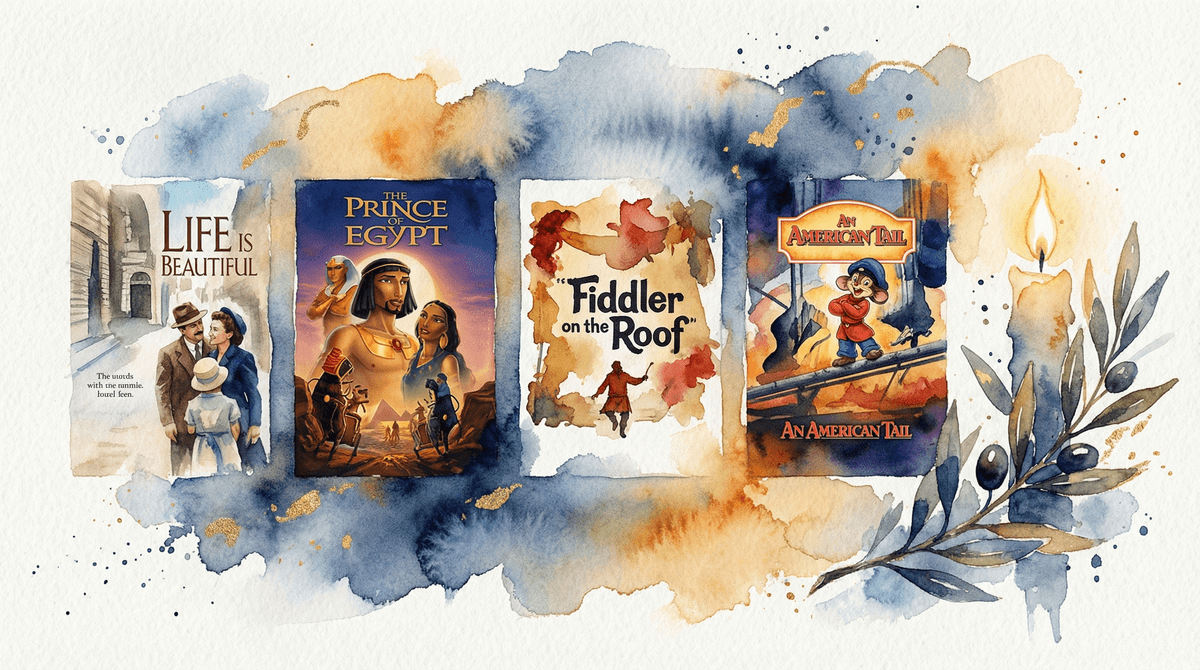
Look, this is a category that spans everything from heavy Holocaust dramas to quirky coming-of-age comedies about bat mitzvahs. We're talking about films that explore Jewish identity, history, culture, tradition, family dynamics, and yes—the really hard stuff too. Some are explicitly about being Jewish, others just happen to feature Jewish families living their lives (which, honestly, is also representation that matters).
The range is huge. You've got historical films like Schindler's List and animated stories like An American Tail, family comedies and serious dramas about faith and identity. The challenge isn't finding these movies—it's figuring out which ones are right for your kid at their particular age and emotional maturity level.
Whether your family is Jewish or not, these films offer something valuable. For Jewish families, they're a way to see your culture, history, and traditions reflected on screen—which frankly doesn't happen enough in mainstream media. They can spark conversations about heritage, help kids understand their own family stories, and create a sense of connection to something bigger.
For families who aren't Jewish, these movies are windows into experiences and histories that are essential to understand. Antisemitism is real and rising, and kids need context for what they're going to encounter in the world. Plus, stories about identity, belonging, and resilience are universal—even when they're told through a specific cultural lens.
Ages 5-8: Start with the Light Stuff
For younger kids, stick with animated films and gentle stories. An American Tail works beautifully here—it's about immigration and family separation, told through mice fleeing persecution in Russia. The metaphor is there, but it's not overwhelming.
The Prince of Egypt is stunning and tells the Passover story with incredible music and animation. Fair warning: there are some intense scenes (the plagues, the parting of the Red Sea), so preview it if your kid is sensitive to peril.
Ages 9-12: Building Context
This is when you can introduce more complex themes. Fiddler on the Roof is long but beloved—it's about tradition, change, and pogroms in early 1900s Russia. The music is iconic, and it opens up conversations about why Jewish families had to leave their homes.
Hocus Pocus—wait, hear me out. While not explicitly about Jewish experience, it's become a cultural touchstone for many Jewish families, and the Sanderson sisters' backstory touches on persecution themes. It's a fun entry point for talking about scapegoating and othering in history.
For something more direct, The Diary of Anne Frank (the 1959 version is less intense than some later adaptations) can work for mature tweens. But honestly, read the room—or rather, read your kid. This requires emotional readiness.
Ages 13+: The Harder Conversations
Middle and high school is when you can tackle the weightier films. Schindler's List is the obvious one—it's powerful, important, and absolutely brutal. It's rated R for a reason. Don't just throw this on; watch it together and be ready to pause and process.
Defiance tells the true story of Jewish resistance fighters in Belarus—it's a good counterpoint to the narrative that Jews went passively to their deaths (which is both inaccurate and harmful). Also rated R, also intense.
For something lighter but still meaningful, The Chosen (1981) explores the friendship between two Jewish boys from very different backgrounds in 1940s Brooklyn. It's about tradition, modernity, and what it means to choose your own path.
More recent options: Jojo Rabbit is a satire about a German boy whose imaginary friend is Hitler, and who befriends a Jewish girl. It's darkly funny and surprisingly moving, but it's definitely for older teens who can handle the tonal complexity.
Not all Holocaust films are created equal. Some are educational and age-appropriate with guidance. Others are traumatizing. Life Is Beautiful tries to soften the horror through a father's imagination, but it's still devastating. The Boy in the Striped Pajamas has an ending that will wreck you and your teen. Preview everything.
Jewish experience ≠ only trauma. Yes, the Holocaust is a massive part of Jewish history and needs to be taught. But Jewish culture is also about joy, humor, food, music, debate, and resilience. Balance the heavy with films like Fiddler on the Roof or even Keeping the Faith (a rom-com about a rabbi and a priest—it's cute and for older teens).
Context is everything. Don't just press play and walk away. These films work best when you're there to answer questions, provide historical context, and help process emotions. "Why did people hate Jewish people?" is a question you should be prepared to answer (and if you need help with that conversation, start here ).
).
Representation matters, but it's complicated. Some of these films were made by Jewish creators telling their own stories. Others were made by non-Jewish filmmakers, sometimes with more sensitivity than others. The Prince of Egypt, for example, was made by DreamWorks (co-founded by Jeffrey Katzenberg) with significant input from religious scholars. It matters who's telling the story.
Movies about the Jewish experience can be incredible tools for education, empathy, and connection—but they're not all appropriate for all ages, and they shouldn't be your only source of education about Jewish culture and history.
Start light and age-appropriate. Build context gradually. Watch together. Talk about what you're seeing. And remember: these aren't just "issue movies." They're stories about real people, real families, and real resilience. That's what makes them powerful.
If you're looking for more specific recommendations: Check out our guide to Holocaust education by age or films about immigration and identity.
If you want to balance screen time with other learning: Consider pairing these films with books, museum visits (the Holocaust Museum has excellent online resources for kids), or conversations with family members about your own heritage.
Not sure where to start? Get movie recommendations about the Jewish experience for your family based on your kids' ages and what you're hoping to teach or explore.