

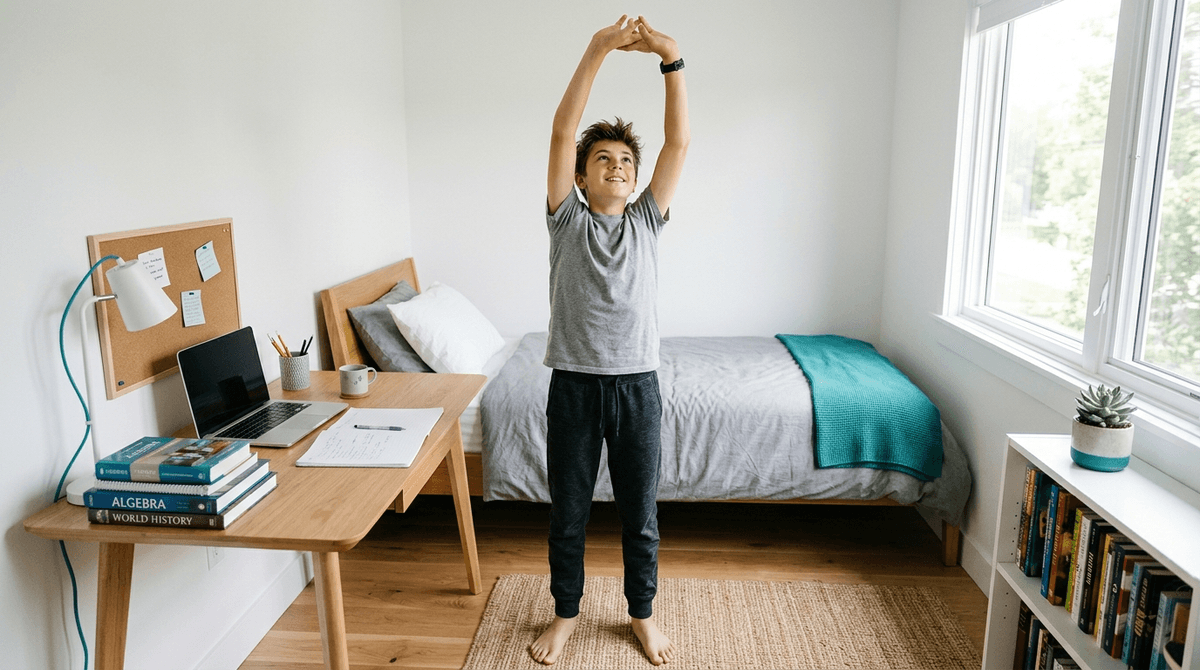
Ten minutes of movement in a long study session fixes the "zoom-out" effect, making students more alert and less sedentary without losing lesson time.
Short movement breaks boost focus and cut sitting time
Inserting a 5-to-10-minute movement break into long lectures significantly improves students' focus and energy while reducing sedentary time. This simple intervention helps students sit less and feel more alert without disrupting the lesson flow.
Active breaks during long sessions reduce total sitting time
Students who took a 5-to-10-minute break sat for an average of 13 fewer minutes during a two-hour class compared to those who sat straight through. These active breaks added an average of 834 steps to the students' daily movement totals, proving that small interruptions can meaningfully shift activity levels.
Scheduled activity increases concentration and student enjoyment
Classes that included movement breaks scored significantly higher in self-reported alertness and overall classroom experience than those that did not. This suggests that physical movement directly combats the mental "slump" that occurs during long periods of cognitive effort.
Students prefer competitive or outdoor breaks over basic stretching
High-energy intervals and outdoor steps are more popular and effective for mental restoration than stationary exercises. Students expressed a strong preference for breaks that involved light competition or fresh air rather than simple, passive stretching.
What this means for your family
- Build a 5-to-10-minute active "reset" into every 30 minutes of deep study to restore your child's mental stamina.
- Use quick outdoor walks or gamified movement challenges—like a one-minute dance-off or a backyard sprint—instead of just standing up.
- Advocate for active intervals in your child’s classroom, as the data shows these breaks improve focus without derailing the curriculum.
Honest caveats
The study size was small, tracking only 85 students and 6 tutors, which limits the universality of the results. Because the participants were young adults (average age 23), younger children might not display the same level of self-regulation or response to these specific breaks. Additionally, the data on concentration and alertness was based on subjective self-reporting rather than objective cognitive testing or long-term academic grades.
Where this comes from
Peiris CL, O'Donoghue G, Rippon L et al. (2021). Classroom Movement Breaks Reduce Sedentary Behavior and Increase Concentration, Alertness and Enjoyment during University Classes: A Mixed-Methods Feasibility Study. International journal of environmental research and public health. doi:10.3390/ijerph18115589 — https://pubmed.ncbi.nlm.nih.gov/34073761/