

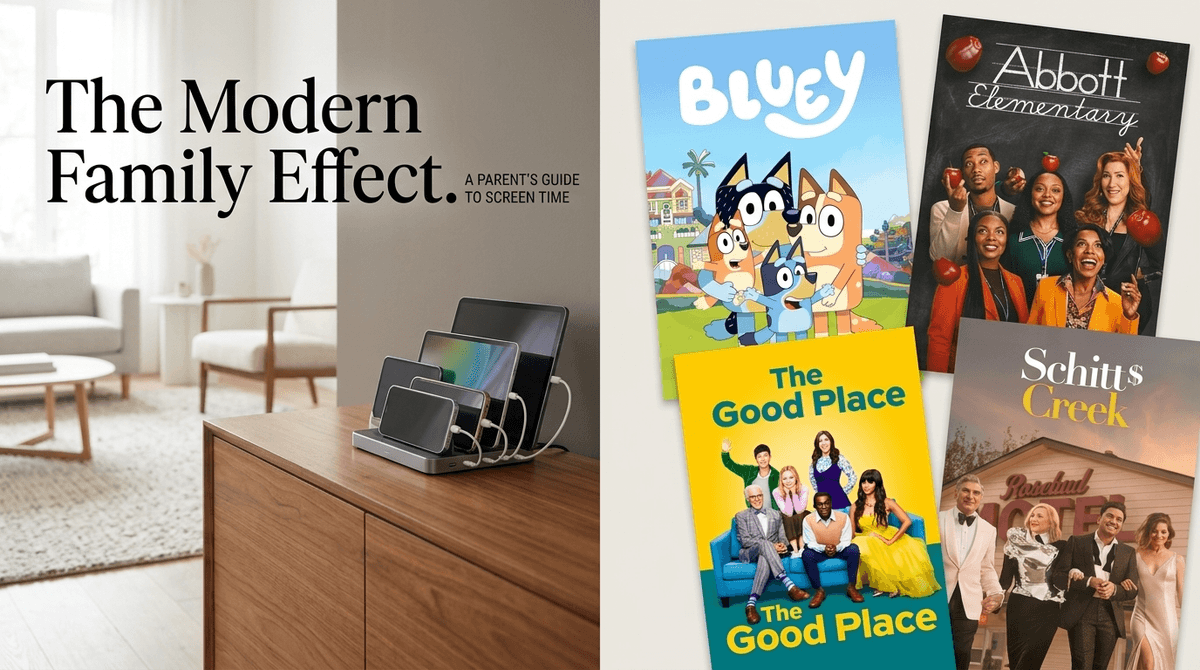
TL;DR: The Best Modern Comedies for Every Age
If you’re looking for a show that won’t make you want to scroll through your phone the entire time, here are the heavy hitters:
- Best for the Whole Family: Bluey (Yes, even if your kids are "too old" for it, Bandit is the dad we all aspire to be).
- Best for Tweens/Middle School: Abbott Elementary (Hilarious, wholesome, and handles real-world issues without being "cringey").
- Best for Neurodiversity & Inclusion: Atypical (A deep dive into life on the spectrum with actual heart).
- Best for Big Life Questions: The Good Place (Ethics, philosophy, and the literal afterlife, but make it funny).
- Best for Older Teens: Schitt’s Creek (The gold standard for "no-big-deal" LGBTQ+ representation).
Find show recommendations based on your kids' ages
We’ve all been there: you finally get everyone on the couch, you open Netflix or Hulu, and you spend forty-five minutes scrolling through "Recommended for You" until someone starts crying (usually you).
For a long time, family sitcoms followed a pretty tired blueprint. You had the "bumbling dad" who couldn't figure out how to use a toaster, the "nagging mom" who held everything together but never had any fun, and kids whose only personality trait was "sassy."
But things have changed. We’re in a bit of a golden age for family comedies that actually reflect what our lives look like in 2026. Today’s best shows aren't just background noise; they’re handling neurodiversity, complex grief, digital ethics, and diverse family structures with a level of nuance we didn't see twenty years ago. They’ve moved past "brain rot" and into territory that actually helps us be better parents.
The "Modern Family Effect" isn't just about the show Modern Family—though that show certainly kicked off the trend of the mockumentary style and more inclusive casting. It’s about a shift in how media portrays the "ideal" family.
In the past, sitcoms were often about maintaining a status quo. Today, they’re about growth. When a character in Abbott Elementary messes up, they actually learn something. When the parents in Black-ish argue about how to talk to their kids about systemic issues or the internet, it feels like a conversation you’ve actually had in your kitchen.
These shows give us a "third-party" way to talk to our kids about hard stuff. It’s much easier to say, "What did you think about how Sam handled that?" than to ask, "So, are you feeling misunderstood lately?"
For the Littles (and the Parents Who Love Them)
I know, I know—it’s a show about cartoon dogs. But if you haven't watched it, you’re missing out on the most realistic depiction of modern parenting on television. Bandit and Chilli are intentional parents. They play, they get tired, they make mistakes, and they apologize to their kids. It’s basically a masterclass in how to play with your kids without losing your mind.
- Ages: 2 to 102 (seriously).
For Tweens and Middle Schoolers
This is the show that brought back the "must-watch" sitcom. It’s set in an underfunded Philadelphia public school, and it is brilliant. It handles the generational gap between older teachers and younger ones, the realities of the digital divide, and why kids sometimes act out. It’s safe for the whole family but smart enough that your 12-year-old won't think it's "for babies."
- Ages: 9+
This reboot of the classic sitcom focuses on a Cuban-American family led by a single-mom veteran. It tackles PTSD, coming out, and cultural identity with incredible humor and warmth. It’s a great way to introduce kids to the idea that a "family" can look many different ways.
- Ages: 11+
For Teens (and Intentional Co-Watching)
If you want to talk about neurodiversity, start here. The show follows Sam, a teenager on the autism spectrum, as he navigates high school, dating, and independence. It doesn't treat Sam like a "lesson" to be learned; he’s a fully realized, funny, and sometimes frustrating person. It’s a huge win for representation of neurodivergent kids in media.
- Ages: 13+ (some mature themes and language).
This is arguably the smartest comedy of the last decade. It starts as a show about a woman who accidentally ends up in "Heaven" and turns into a deep dive into moral philosophy. If you want to talk to your kids about what it means to be a "good person" in a world of social media, global warming, and complex choices, this is your show.
- Ages: 12+
Created by Mindy Kaling, this show follows Devi, a first-generation Indian-American teen. It’s fast-paced, uses a lot of current slang (yes, you’ll hear "mid" and maybe some "Ohio" vibes), and handles the grief of losing a parent with surprising depth. It’s very "Gen Z" in its pacing, which makes it highly watchable for teens.
- Ages: 14+ (heavy on the teen romance/high school drama).
One of the biggest shifts in modern comedies is how they handle tech. In the early 2010s, "the internet" was usually just a plot device for someone to get catfished or for a "phones are bad" lecture.
Now, we see characters using TikTok or Instagram as a normal part of their social fabric. Shows like Black-ish or Grown-ish actually explore the anxiety of "cancel culture" or the pressure of maintaining an online persona.
When you see a character on screen struggling with their screen time or a viral post gone wrong, use it! It’s way more effective than a lecture. You can say, "Man, I felt for Devi when that photo went viral. Do people at your school worry about that kind of stuff?"
While these shows are "family" comedies, the definition of family has matured.
- TV-PG vs. TV-14: Don't just trust the rating. A lot of TV-14 shows are totally fine for a mature 11-year-old, while some TV-PG shows might have "humor" that feels a bit mean-spirited.
- Language: Modern sitcoms use more "real" language. Expect more "hells," "damns," and the occasional bleeped-out word.
- Themes: Shows like Schitt’s Creek or Sex Education (which is more of a dramedy) deal with sexuality openly. In Schitt’s Creek, the pansexuality of the main character is treated with zero judgment—it’s just a fact of his life. For many intentional parents, this is a feature, not a bug, but it’s worth knowing before you hit play.
The biggest "danger" with these shows isn't the content—it's the delivery. Because these are often on streaming platforms like Netflix or Hulu, the "auto-play next episode" button is the real enemy.
Modern comedies are designed to be addictive. They use "cliffhanger" endings even in 22-minute sitcoms.
- The Screenwise Tip: Set a "two-episode" rule before you start. It’s much harder to stop once the next episode has already started playing.
If you’re watching these with your kids, you don't need to turn it into a seminar. Just be present.
- Acknowledge the funny: If something is hilarious, laugh! Don't be the "screen time police" the whole time.
- Ask about the tech: "Is that really how kids use Snapchat these days?" (They will love telling you how wrong the show got it).
- Validate the emotions: "That scene where they felt left out of the party looked rough. Is that a thing that happens in your group?"
Modern family comedies have moved past the "bumbling dad" and the "perfect family" to give us something much better: reality with a punchline. Whether it’s the inclusive world of Schitt’s Creek or the ethical puzzles of The Good Place, these shows offer a bridge between our world and our kids' worlds.
So, grab some popcorn, put the phones in the charging station, and actually watch with them. You might find that you’re not just "monitoring" their media—you’re actually enjoying it.
- Audit your watchlist: Pick one show from the list above that matches your kid's age and interests.
- Check the WISE scores: Before diving in, check the Screenwise media page for a breakdown of themes and "watch-outs."
- Start a "Family Show Night": Make it a ritual. One night a week, no phones, just a show you all actually like.
Learn more about how to choose age-appropriate shows for your family