

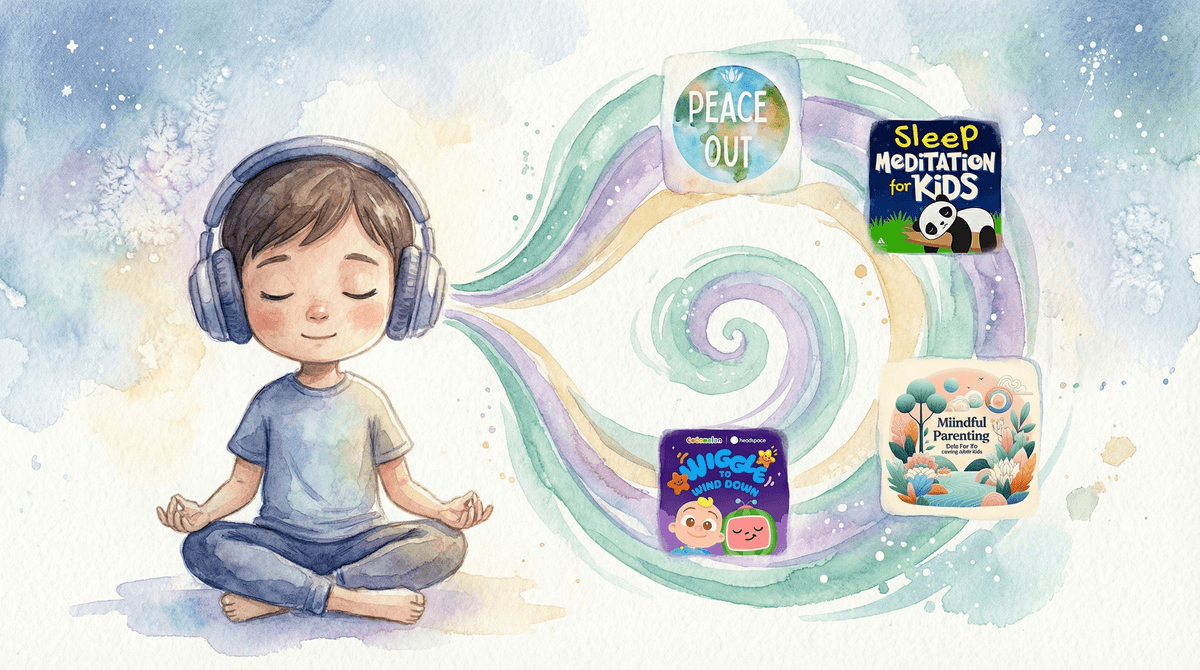
Mindfulness podcasts for kids are audio programs designed to teach children meditation, breathing exercises, body awareness, and emotional regulation skills—all without requiring them to stare at yet another screen. Think of them as guided mental workouts that help kids learn to pause, notice their feelings, and respond rather than react.
These aren't your typical "sit still and clear your mind" adult meditation apps (because let's be real, that's hard enough for grown-ups). Kid-focused mindfulness podcasts use storytelling, visualization, sound effects, and age-appropriate language to make concepts like "being present" and "noticing your breath" actually accessible to young minds.
The best part? They're audio-only, which means they're genuinely screen-free. Your kid can listen while lying in bed, sitting in the car, or even during that chaotic homework meltdown moment when everyone needs to reset.
If you're reading this, you probably don't need me to tell you that kids today are dealing with a lot. Between academic pressure, social media anxiety (even for kids not yet on social platforms—they still feel the cultural impact), constant stimulation, and a world that never stops moving, children are experiencing stress and overwhelm at rates we've never seen before.
The stats are sobering: anxiety and depression rates in kids have been climbing steadily, and the American Academy of Pediatrics has declared a national emergency in child and adolescent mental health. Meanwhile, our kids' brains are being shaped by rapid-fire TikTok videos, YouTube shorts, and games designed to hijack their attention systems.
Mindfulness isn't a cure-all, but it is a proven tool. Research shows that regular mindfulness practice can help kids:
- Improve focus and attention span
- Better regulate emotions (fewer meltdowns, better recovery)
- Reduce anxiety and stress
- Improve sleep quality
- Build self-awareness and empathy
And here's the thing: audio-based mindfulness practices can actually be more effective for kids than app-based ones because they remove the visual stimulation and screen dependency. It's one less thing competing for their attention, and it teaches them that calming down doesn't require a device—just their own breath and awareness.
For Younger Kids (Ages 4-8)
Peace Out is the gold standard for this age group. Created by bedtime meditation expert Chanel Tsang, each episode combines guided relaxation with imaginative storytelling. Kids might journey to a magical garden or float on a cloud while learning breathing techniques. Episodes are 5-15 minutes, perfect for bedtime or transition times.
Cosmic Kids Zen Den (yes, they have an audio-only version!) offers short mindfulness moments specifically designed for young children. If your kid already loves Cosmic Kids Yoga on YouTube, this is a great screen-free alternative.
For Elementary Kids (Ages 7-12)
Mindful Moments for Kids offers practical, kid-friendly mindfulness exercises that don't feel too "woo-woo." Episodes tackle specific situations like dealing with test anxiety, handling friendship drama, or managing big emotions.
The Mindfulness for Kids Podcast by Kirsten Rudberg combines guided meditations with discussions about feelings, stress, and self-awareness. It's particularly good for kids who want to understand why they're doing these practices, not just how.
For Tweens and Teens (Ages 10+)
Headspace for Kids offers age-appropriate content that doesn't talk down to older kids. The meditations are slightly longer and address issues like school stress, social pressure, and self-doubt.
Sleep Meditation for Kids by Christiane Kerr is technically for all ages, but the longer-form content works especially well for older kids who struggle with bedtime anxiety or racing thoughts.
Let's be honest: telling your kid "here, listen to this calming podcast" might get eye rolls. Here's what actually works:
Start at bedtime. This is the easiest entry point. Frame it as part of the bedtime routine, not as something "wrong" that needs fixing. "We're trying something new to help your brain wind down."
Listen together first. Do a few episodes with your kid, especially younger ones. It normalizes the practice and shows you value it too.
Don't make it a punishment. Mindfulness shouldn't be the thing you force on them when they're dysregulated. Instead, practice during calm times so they have the tools before they need them.
Keep it optional but available. After the initial introduction, let kids choose whether to listen. Having agency over the practice makes it more effective. "Do you want to do a Peace Out episode tonight, or just regular bedtime?"
Use it strategically. Car rides, homework breaks, post-sports wind-down—these are all great times to suggest a quick mindfulness moment.
Mindfulness isn't magic. Don't expect one podcast episode to transform your anxious kid into a zen master. Like any skill, it takes practice and consistency.
Shorter is better at first. Start with 3-5 minute episodes. Kids (especially younger ones) will check out if it's too long.
Some kids won't vibe with it. And that's okay. If your kid genuinely hates guided meditation, there are other mindfulness practices: mindful coloring , breathing exercises, or even just quiet time with music.
It's not a replacement for therapy. If your child is struggling with serious anxiety, depression, or other mental health concerns, mindfulness can be a helpful tool alongside professional support—but it's not a substitute.
Watch for the app trap. Many mindfulness "podcasts" are actually apps with subscription paywalls and... you guessed it, screens. Stick with true audio podcasts available through Apple Podcasts, Spotify, or other podcast players to keep it genuinely screen-free.
In a digital world that constantly demands our kids' attention, teaching them to tune in to themselves rather than out to screens is a genuinely valuable skill. Mindfulness podcasts offer a screen-free, accessible way to build emotional regulation and focus—two things every kid needs more of right now.
The key is starting small, staying consistent, and not making it weird. Think of it like teaching them to brush their teeth: it's just another healthy habit for their brain.
This week: Pick one podcast from the list above based on your kid's age. Download 2-3 episodes to your phone.
Tonight: Introduce it at bedtime as something new you're trying together. Listen to one short episode.
This month: Aim for 3-4 episodes per week. Notice if you see any changes in bedtime resistance, emotional regulation, or focus.
Long-term: If it's working, keep it in rotation. If not, try a different podcast or explore other mindfulness activities.
Want more screen-free content ideas? Check out our guides on educational podcasts for kids and audiobooks that kids actually want to listen to.