

Eleven from Stranger Things: What Parents Should Know About Millie Bobby Brown's Iconic Character
TL;DR: Eleven (played by Millie Bobby Brown) is the telekinetic heart of Stranger Things, Netflix's wildly popular sci-fi horror series. She's a powerful, complex character who resonates deeply with tweens and teens navigating identity, friendship, and belonging. The show is rated TV-14 for good reason—it's genuinely scary, occasionally gory, and deals with trauma, government experimentation, and '80s-level profanity. But it's also a masterclass in friendship, loyalty, and finding your people. If your kid is asking to watch it (or already is), here's what you need to know about why Eleven matters and whether Stranger Things is right for your family.
Eleven—"El" to her friends—is a teenage girl with psychokinetic abilities who escapes from a secret government lab in the show's first episode. She's been experimented on since birth, has a shaved head in Season 1, barely speaks, and can move objects with her mind (and occasionally make people's heads explode when threatened).
Millie Bobby Brown was just 12 when she landed this role, and her performance is genuinely remarkable. El starts as a traumatized, nearly feral child who doesn't understand friendship, pop culture, or basic social norms. Over four seasons (with a fifth and final season coming), we watch her learn to trust, love, navigate teenage relationships, stand up to bullies, and figure out who she is beyond being a weapon.
She's the emotional anchor of the show, the character most kids root for, and honestly? She's become a cultural icon for Gen Z and younger millennials.
The outsider who finds her people. El's story is fundamentally about belonging. She's been told she's a monster, a freak, an experiment—and then she meets Mike, Dustin, Lucas, and Will, a group of nerdy kids who accept her completely. For tweens and teens who feel like outsiders (which is basically all of them), this hits hard.
She's genuinely powerful. In a genre that often sidelines female characters, El is the most powerful person in the show. She's not waiting to be rescued—she's doing the rescuing. She's flipping vans with her mind, closing interdimensional portals, and taking on literal monsters. Kids love watching her tap into her rage and power.
The friendships feel real. The core group—Mike, Will, Dustin, Lucas, El, and later Max—have the kind of ride-or-die friendships that kids aspire to. They fight, make up, protect each other, and show up when it matters. The show takes these relationships seriously, which is why kids are so invested.
It's scary but not hopeless. Stranger Things is genuinely frightening—there are jump scares, body horror, and a pervasive sense of dread. But it's not nihilistic. The kids (and teens, and adults) work together, use their brains, and generally win. There's hope, humor, and heart alongside the horror.
The '80s nostalgia is actually fun. Even though most viewers weren't alive in the '80s, the show's retro aesthetic—the music, the fashion, the Spielberg-esque adventure vibe—feels fresh and appealing. It's a world without smartphones and constant surveillance, where kids ride bikes everywhere and have actual autonomy.
The Scary Stuff Is Real
This is not a kid-friendly show pretending to be scary. Stranger Things has genuine horror elements: people die (sometimes graphically), there's a monster dimension called the Upside Down that's nightmare fuel, and the show doesn't shy away from body horror, possession, and psychological terror.
Season-by-season breakdown:
- Season 1: Demogorgon attacks, kids in peril, a child's "death" (he's actually trapped in another dimension, but still), government agents shooting people
- Season 2: A kid gets possessed and slowly taken over, more creature attacks, a character's trauma-induced episodes
- Season 3: Body horror ramps up significantly—people get "melted" and merged together in genuinely disturbing ways, plus a major character death
- Season 4: The darkest season. Vecna (the villain) kills by breaking people's bones and removing their eyes. Multiple brutal deaths. Themes of depression, trauma, and suicide. This season earned its TV-14 rating and then some.
If your kid is sensitive to scary content, this might be too much. If they're already watching horror content on YouTube or playing Five Nights at Freddy's, they can probably handle it—but watch together first.
Language and Mature Themes
The show is set in the '80s, and the characters talk like '80s characters. That means regular use of profanity (including the f-word, though not constantly), some sexual references and innuendo, and teen characters navigating romantic relationships. There's underage drinking, smoking, and in later seasons, some drug references.
The mature themes go deeper: government experimentation on children, parental abuse and neglect, PTSD, depression, and in Season 4, pretty direct references to suicidal ideation. These aren't handled flippantly—the show takes trauma seriously—but they're present and heavy.
The Age Question
Netflix rates Stranger Things TV-14, and that feels about right for most kids. But "14" is a wide range depending on the kid:
Ages 11-12: Some mature 6th-7th graders can handle it, especially if they're already into horror and you're watching together. Expect nightmares and lots of questions. Season 4 might be too much.
Ages 13-14: This is the sweet spot. Most 8th-9th graders can handle the scares and process the themes, though sensitive kids might still struggle with Season 4's intensity.
Ages 15+: Totally fine for most high schoolers, though the emotional weight of later seasons can still hit hard.
Under 11: Probably not, unless they're unusually mature and you're very intentional about co-viewing and processing. The first season is the most age-appropriate, but even that has genuine scares.
The Representation Piece
El's character arc is fundamentally about a girl reclaiming her identity and autonomy after trauma and abuse. She learns she's not defined by her powers or her past, that she deserves love and friendship, and that she can choose who she wants to be. This is powerful stuff, especially for girls navigating their own identity formation.
The show also features a diverse cast (Lucas and his family, Erica as a standout character in later seasons), LGBTQ+ representation (Robin comes out in Season 3, Will's sexuality is explored in Season 4), and generally treats its characters with respect and nuance.
If you're considering letting your tween watch Stranger Things, co-viewing is your friend—especially for the first few episodes and definitely for Season 4.
Start with Season 1, Episode 1. If they can't handle the first episode (which includes a kid being chased by a monster and a teen character dying), they're not ready for the rest.
Check in after scary scenes. Pause and ask: "How are you feeling? Is this too much?" Give them an out without shame.
Talk about the themes. El's story opens up conversations about trauma, healing, identity, friendship, and what it means to be "different." These are valuable discussions for tweens and teens.
Watch for behavioral changes. If your kid is having nightmares, seems anxious, or is suddenly afraid of the dark, pump the brakes. The show will still be there when they're older.
Use it as a gateway to other content. If they love the '80s adventure vibe but the horror is too much, try The Goonies or [E.T.](https://screenwiseapp.com/media/e-t-the-extra-terrestrial-movie. If they love El's character arc, point them toward other stories about strong female protagonists finding their power.
It's worth noting that Millie Bobby Brown herself has become a massive celebrity and role model for young fans. She's been open about the challenges of growing up in the public eye, has launched her own beauty and fashion lines, and is generally seen as a positive influence.
That said, she's also dealt with intense scrutiny, inappropriate sexualization by fans and media (especially when she was underage), and the pressures of fame. If your kid is following her on social media, it's worth having conversations about celebrity culture, parasocial relationships, and the difference between a character and the actor who plays them.
Stranger Things is a cultural phenomenon for a reason—it's genuinely good television with compelling characters, strong performances, and a story that resonates across generations. Eleven is a powerful, complex character who gives kids (especially girls) a hero who's vulnerable, strong, and deeply human.
But it's also legitimately scary, emotionally heavy, and not appropriate for younger or more sensitive kids. The TV-14 rating is earned, and Season 4 pushes that boundary hard.
If your kid is asking to watch it, start with Season 1 and watch together. Pay attention to how they handle the scares and themes. Use it as an opportunity to talk about friendship, identity, trauma, and resilience. And if it's too much? There's no shame in saying "not yet"—the show will still be there when they're ready.
For families where it's a good fit, Stranger Things can be a shared cultural experience and a springboard for meaningful conversations. Just go in with your eyes open about what you're signing up for.
- Want to preview the show yourself first? Watch Season 1, Episodes 1-3 to get a sense of the tone and content.
- Looking for similar but less intense options? Check out Ghostbusters, The Goonies, or A Series of Unfortunate Events on Netflix.
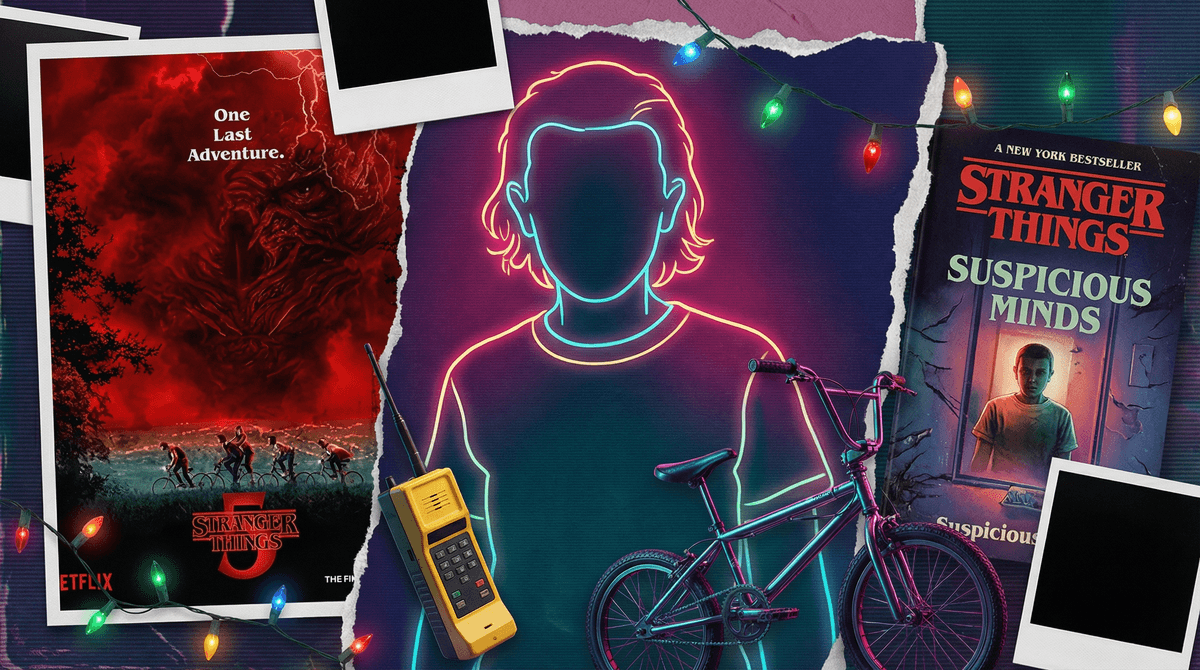
- Interested in books with similar themes? Try Stranger Things: Suspicious Minds (the official prequel novel) or other sci-fi books for tweens and teens.
- Have questions about specific scenes or themes? See answers about specific Stranger Things content concerns
 .
.