

A memoir is basically someone's real life story—or a slice of it—told in their own voice. Unlike biographies (which are about someone else) or autobiographies (which try to cover a whole life), memoirs zoom in on specific experiences, periods, or themes. Think less "I was born on a Tuesday in 1987" and more "Here's what it was like being the only kid who looked like me in my school" or "This is how I survived middle school with an anxiety disorder."
For kids and teens, memoirs offer something screens often can't: deep, sustained attention to one person's interior world. They're like the opposite of TikTok—slow, reflective, and focused on the messy complexity of being human.
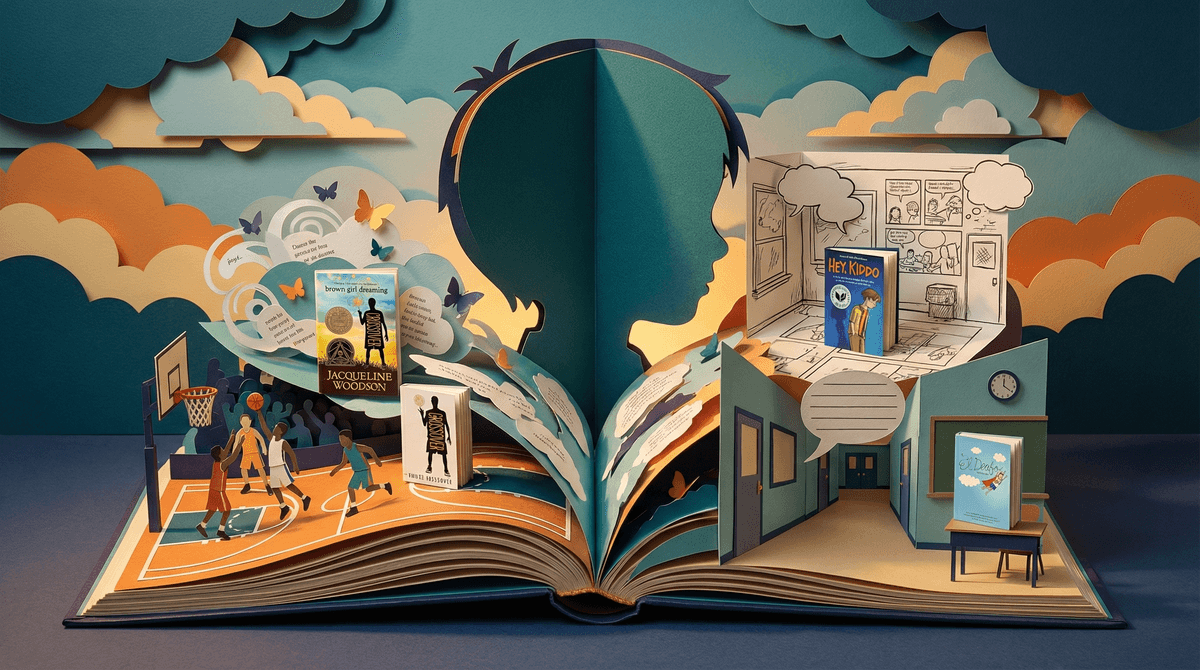
The genre has exploded in recent years, with incredible books like The Crossover (told in verse!), Brown Girl Dreaming by Jacqueline Woodson, and Hey Kiddo (a graphic memoir about growing up with a parent struggling with addiction). These aren't your typical "inspirational survivor stories"—they're nuanced, honest, and often funny despite covering hard topics.
Here's the thing about memoirs: they do something that algorithm-driven content simply cannot. They build sustained empathy. When your kid spends 200 pages inside someone else's actual lived experience—not a character, but a real person—something shifts. They start to understand that other people's interior lives are just as complex and valid as their own.
Research on reading and empathy is pretty clear: narrative transportation (that feeling of being "lost in a book") activates the same neural pathways as real social interaction. Your kid reading about a refugee's journey or a trans teen's coming out isn't just "learning about diversity"—their brain is literally practicing what it feels like to be that person.
Plus, memoirs model something incredibly valuable: reflective thinking. The narrator is looking back, making sense of what happened, connecting dots. In a digital landscape that rewards instant reaction over reflection, this is huge. Memoirs show kids that experiences don't just happen TO you—you get to decide what they mean.
Ages 8-10: Entry Points
Start with memoirs that feel accessible and not too heavy. El Deafo by Cece Bell (about growing up deaf) and Smile by Raina Telgemeier (about dental drama and friendship) are graphic memoirs that feel like reading comics but pack real emotional depth.
At this age, kids are just starting to understand that other people have full interior lives. Memoirs about relatable struggles—fitting in, family stuff, physical differences—work well.
Ages 11-13: Going Deeper
Middle schoolers can handle more complexity and heavier topics, especially if presented with care. Brown Girl Dreaming is stunning and covers race, family, and identity without being overwhelming. Hey Kiddo tackles addiction and family dysfunction but with warmth and even humor.
This is also when kids start wondering "am I normal?" Memoirs that show the messiness of adolescence—Awkward by Svetlana Chmakova, Real Friends by Shannon Hale—can be incredibly validating.
Ages 14+: The Full Range
Teens can handle pretty much anything, but that doesn't mean everything is right for every teen. The Poet X by Elizabeth Acevedo deals with sexuality, religion, and family conflict. All Boys Aren't Blue by George M. Johnson is a powerful memoir about being Black and queer (note: it's been challenged in some school districts, so know your teen and your community).
At this age, the question isn't "can they handle it?" but "is this the right time for THIS book?" A memoir about eating disorders might be incredibly helpful for one 15-year-old and triggering for another.
Content vs. Context
Memoirs deal with real life, which means real problems: abuse, addiction, mental illness, discrimination, trauma. Unlike fiction where you can dismiss it as "just a story," memoirs ask readers to sit with the fact that this actually happened to a real person.
This is a feature, not a bug—but it means you should probably read them too, or at least read reviews. Common Sense Media is solid for content warnings. Check out our guide to age-appropriate books with tough topics if you want more framework for these conversations.
The "Is This Too Sad?" Question
Parents often worry about exposing kids to heavy content. Here's my take: kids are already aware that hard things happen. They see it in the news, hear it from friends, encounter it on social media. Memoirs provide context, processing, and perspective that doomscrolling never will.
That said, timing matters. If your kid is actively struggling with anxiety, a memoir about someone else's panic disorder might be helpful OR might be too much right now. You know your kid.
Graphic Memoirs Are Real Books
Some parents dismiss graphic memoirs as "not real reading." This is nonsense. Books like Hey Kiddo and El Deafo are doing sophisticated narrative work—they're just using images AND words to do it. Plus, they're often gateways for reluctant readers.
Identity and Representation
One beautiful thing about the current memoir landscape: there are SO many voices. Kids can find memoirs by people who share their identity and memoirs by people whose lives are completely different. Both matter.
If your kid only reads memoirs by people exactly like them, gently expand their range. If they only read about people different from them, make sure they also see their own experience reflected.
Memoirs are one of the best tools we have for building the exact skills that infinite scroll is eroding: sustained attention, deep empathy, reflective thinking, and understanding that real humans are complex and contradictory.
They're also just... good. Like, actually enjoyable to read. The Crossover is a page-turner. Brown Girl Dreaming is gorgeous. Hey Kiddo will make you laugh and cry, sometimes on the same page.
Start here:
- Ask your kid's teacher or librarian for recommendations based on your kid's interests and reading level
- Check out our guide to getting reluctant readers hooked if your kid isn't naturally drawn to books
- Read a memoir yourself and talk about it at dinner—model that reflective thinking
Make it social:
- Start a parent-kid book club with one other family
- Let your teen pick a memoir and you read it too, then discuss
- Ask "What do you think the author wants readers to understand?" rather than "What happened in the chapter?"
And hey, if your kid reads one memoir and hates it, that's fine. Not every book is for every person. The goal isn't to force-feed literature—it's to help them discover that other people's real stories can be just as compelling as any algorithm's feed.