

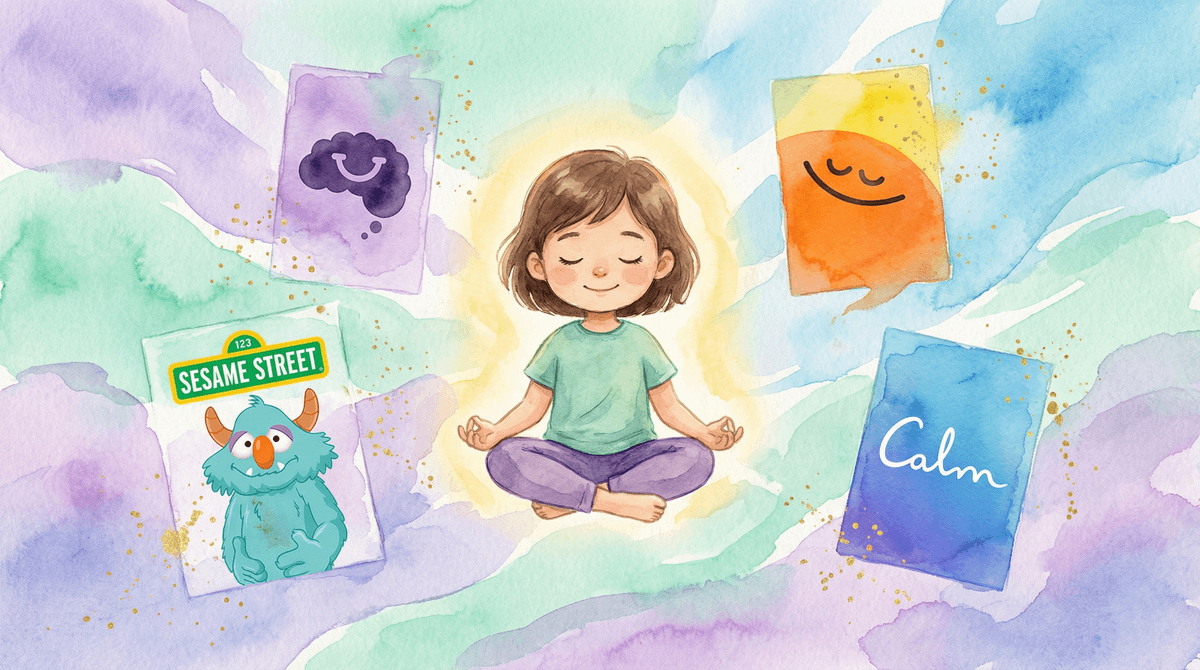
Meditation apps for kids are basically what they sound like: digital tools designed to teach children mindfulness, breathing exercises, and relaxation techniques. The big names you've probably heard of are Headspace and Calm, but there's also Smiling Mind, Stop, Breathe & Think Kids, and a bunch of others.
These apps typically offer guided meditations, breathing exercises, sleep stories, and sometimes movement activities—all packaged in kid-friendly language with colorful interfaces. Most have specific content for different age groups, ranging from preschoolers to teens.
The pitch is compelling: in a world where our kids are constantly stimulated, stressed about school, and doom-scrolling before they hit middle school, wouldn't it be great if an app could teach them to actually calm down?
Let's be real—many of us are looking at our anxious, overstimulated kids and thinking "there has to be something that helps." Anxiety rates in children have skyrocketed over the past decade. According to CDC data, approximately 9.4% of children aged 3-17 have been diagnosed with anxiety, and that number keeps climbing.
So when you see an app promising to help your kid manage stress, improve focus, and sleep better? That sounds pretty good. Especially when the alternative might be medication or expensive therapy sessions (though honestly, real therapy is irreplaceable for kids who genuinely need it—an app is not a substitute for professional mental health care).
The appeal is also practical: these apps are accessible, relatively affordable (though many require subscriptions), and can be used anytime, anywhere. Your kid melting down before a test? There's a 3-minute breathing exercise for that. Can't sleep? Here's a bedtime story narrated in the most soothing voice imaginable.
Here's where it gets interesting. The research on meditation apps for kids is... mixed, but cautiously optimistic.
The good news: Studies show that mindfulness practices in general can help kids with emotional regulation, focus, and anxiety reduction. A 2019 review of mindfulness interventions for children found modest but meaningful benefits for attention and emotional control.
The "but": Most of the solid research has been done on in-person, guided mindfulness programs (like in schools with trained instructors), not specifically on apps. The app-specific research is still pretty limited, though what exists is promising.
Headspace has actually funded some of its own research (yes, take that with a grain of salt), and one study found that kids ages 6-12 who used Headspace showed improvements in attention and emotional regulation. Smiling Mind, developed by psychologists and educators in Australia, has some research backing showing positive effects on wellbeing and resilience.
The real answer? These apps can be helpful tools, but they're not magic. They work best when:
- Used consistently (not just when your kid is already having a meltdown)
- Integrated into a broader approach to mental health and wellbeing
- Age-appropriate and actually engaging for your specific kid
- Not positioned as a replacement for human connection, therapy, or addressing underlying issues
Ages 4-7: At this age, kids need super short sessions (3-5 minutes max) with lots of visual elements and simple language. Stop, Breathe & Think Kids is particularly good for this age group with its emoji-based mood check-ins and animated exercises. Headspace has a kids section with content as short as 1 minute.
Ages 8-12: This is probably the sweet spot for meditation apps. Kids are old enough to understand the concepts but still young enough to be receptive. They can handle 5-10 minute sessions and appreciate more variety in content. Calm has great sleep stories for this age (the celebrity-narrated ones are actually pretty entertaining).
Ages 13+: Teens can use the adult versions of these apps, though some might find them cheesy. Headspace and Calm both have teen-specific content that addresses anxiety, stress, and sleep issues without talking down to them.
The subscription model is real: Most of these apps are free to download but require a subscription for full access. Headspace and Calm both run around $70/year. Smiling Mind is actually completely free, which is pretty remarkable.
You might need to do it with them: Especially for younger kids, this isn't a "hand them the iPad and walk away" situation. The most effective use of these apps involves parents participating, at least initially. Yes, I know that defeats part of the purpose of having an app do the work, but that's parenting for you.
Screen time paradox: There's something inherently funny about using screen time to combat the effects of... screen time. It's not lost on me. That said, 5 minutes of guided breathing is qualitatively different from 5 minutes of TikTok. But if your kid is already maxed out on screens, adding another app might not be the answer. Learn more about finding balance with wellness apps .
.
Not all kids will vibe with it: Some kids love the structure and guidance of these apps. Others find them boring or annoying. If your kid is rolling their eyes at the soothing voice telling them to "imagine they're a tree," that's okay. There are other ways to practice mindfulness—going for walks, doing art, even just sitting quietly together.
Data and privacy: These apps collect data. Headspace and Calm both have reasonable privacy policies, but they do track usage and may collect personal information. Smiling Mind is a non-profit and generally has better privacy practices. Read the policies before signing up.
If you're not sold on apps, or want to supplement them:
- Cosmic Kids Yoga on YouTube combines movement, mindfulness, and storytelling (free!)
- Physical books like "Breathe Like a Bear" or "Sitting Still Like a Frog" come with guided exercises
- In-person classes: Check if your community center, library, or school offers kids' yoga or mindfulness programs
- Good old-fashioned breathing exercises: You don't need an app to teach your kid to take three deep breaths
Meditation apps for kids can be genuinely helpful tools, especially for children dealing with anxiety, stress, or sleep issues. They're not going to solve everything, and they're definitely not a replacement for addressing underlying problems or seeking professional help when needed.
Headspace and Calm are both solid, well-designed options with good content for various ages. If you want to avoid the subscription cost, Smiling Mind is completely free and evidence-based.
The real question isn't "do these apps work?" but rather "will this work for my kid?" Try a free trial, do a few sessions together, and see if it clicks. If your kid finds it helpful and actually uses it? Great. If they'd rather learn breathing exercises from you or find calm through other activities? That's great too.
The goal is helping kids develop tools to manage their emotions and stress—whether that comes from an app, a book, a yoga class, or just talking things through together matters a lot less than finding something that actually works for your family.
- Start with a free option like Smiling Mind or a free trial of Headspace or Calm
- Try doing the first few sessions with your kid to model engagement
- Set realistic expectations: 5 minutes a day is plenty to start
- Check in after a week or two: Is your kid actually using it? Does it seem helpful?
- Remember that meditation apps are just one tool in the toolbox—not a magic solution
Want to explore more ways to help kids manage screen time and stress?