

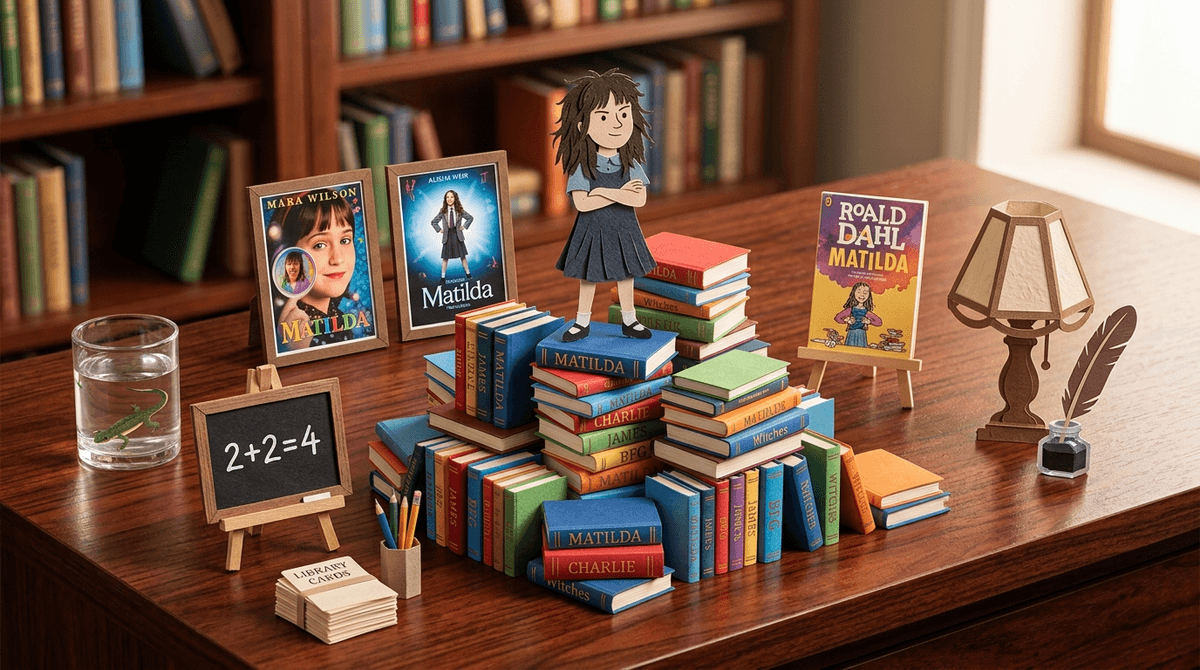
TL;DR: Matilda is a rare "double-threat" story that works as both a 90s nostalgia trip and a modern musical masterpiece. It deals with heavy themes like neglect and bullying, but balances them with the ultimate childhood power fantasy: being smarter (and more magical) than the adults in charge.
Quick Links:
- Classic Version: Matilda (1996)
- The New Musical: Matilda the Musical (2022)
- The Source Material: Matilda by Roald Dahl
- Similar Vibe: A Series of Unfortunate Events
If you grew up in the 90s, you probably have a visceral memory of the "Bruce Bogtrotter" chocolate cake scene. It was disgusting, it was triumphant, and it perfectly captured the essence of Roald Dahl: the world is often cruel to children, but children are remarkably resilient (and occasionally, they have telekinetic powers).
Today, Matilda is having a major second life. Between the 1996 Danny DeVito-directed classic and the high-energy 2022 Netflix musical, this story is a staple in the "intentional parent" rotation. It’s the antithesis of "brain rot." While some modern kids' content feels like it was designed by an algorithm to keep eyes glued to YouTube Shorts, Matilda celebrates the slow, deliberate act of reading and the sharp edge of critical thinking.
At its core, Matilda is a power fantasy. Kids spend 90% of their lives being told what to do, where to go, and what to eat by people who are much larger than them. Matilda Wormwood takes that dynamic and flips it.
Whether she’s gluing her dad’s hat to his head or tipping over a glass of water with her mind, she represents the "underdog" in the most literal sense. It’s the same reason kids gravitate toward Harry Potter or Percy Jackson. There’s a deep satisfaction in seeing a child use their intellect (and a little magic) to outmaneuver a bully, especially when that bully is a parent or a headmistress.
Depending on your kid's age and "scare-tolerance," you might choose one version over the other.
This is the version most of us know. It’s quirky, stylized, and features a truly unhinged performance by Pam Ferris as Miss Trunchbull. It feels like a storybook come to life. It’s slightly more grounded than the musical, focusing heavily on Matilda’s relationship with her library and her eventual bond with Miss Honey. It’s a great entry point for kids ages 6-10.
The Netflix musical is a different beast entirely. It’s vibrant, loud, and the choreography is world-class. It leans harder into the "rebellion" aspect of the story. The song "Naughty" has become a modern anthem for kids, teaching them that "even if you’re little, you can do a lot." This version is fantastic for kids who love Hamilton or Encanto, but be warned: the Trunchbull in this version (played by Emma Thompson) is arguably even more intimidating.
If you’re trying to encourage more "analog" time, the book is a must. Roald Dahl’s prose is famously unsentimental. He doesn’t talk down to kids. He acknowledges that some adults are just mean, which kids actually find very validating. Reading this together is a great way to bridge the gap between "screen time" and "page time."
One of the biggest questions parents have about Matilda is the "naughtiness" factor. Matilda plays pranks. She’s technically "disobedient." In a world where we’re trying to raise respectful kids, how do we handle a protagonist who puts hair dye in her dad’s tonic?
The musical addresses this head-on with the lyric: "If you sit around and let them get on top, you might as well be saying you think that it's okay, and that's not right."
Matilda isn’t being "bad" for the sake of it; she’s engaging in righteous rebellion. She is standing up against injustice. In a digital world where kids are often pressured to conform to "likes" and "trends" on TikTok, the message of Matilda—that you have the agency to change your story—is incredibly powerful. It’s about teaching kids the difference between "rules for safety" and "rules that are unfair."
While Matilda is generally considered a family classic, there are a few things to keep in mind:
- Emotional Intensity: Both movies feature significant child neglect and verbal abuse. The Wormwoods are cartoonishly mean, but for a sensitive child, the "Chokey" (a spiked closet used for punishment) can be nightmare fuel.
- The Trunchbull: She is a legitimately scary villain. She throws children by their pigtails and treats the school like a prison. If your child is prone to school anxiety, you might want to watch this with them to keep it in perspective.
- The "Magic" Factor: Some very conservative circles have historically pushed back on the "witchcraft" elements of Matilda’s telekinesis. However, in 2026, most families view this simply as a metaphor for the "power of the mind."
Recommended Ages:
- Book: Ages 7+ (Great for independent reading or read-alouds)
- 1996 Movie: Ages 6+
- 2022 Musical: Ages 8+ (The themes feel a bit more mature and the pacing is faster)
Matilda is a "conversation starter" movie. Instead of just letting the credits roll and handing back the iPad, try hitting these points:
- The Library as a Superpower: Matilda’s "magic" only shows up after she has read almost every book in the local library. Talk about how knowledge gives you an advantage that physical strength doesn't.
- Found Family: Miss Honey and Matilda choose each other. This is a beautiful way to talk about how "family" isn't just the people you're born to, but the people who support and love you for who you are.
- Standing Up to Bullies: The Trunchbull is a bully, but so are Matilda’s parents. How does Matilda handle them differently? (Hint: She uses her brain, not just her powers).
- Media Literacy: If you watch the 1996 version, talk about the Wormwoods' obsession with the "telly." It’s a hilarious (and slightly convicting) look at how mindlessly consuming TV can make people dull.
Matilda is the "anti-brain rot" movie we need right now. It celebrates literacy, bravery, and the idea that even the smallest person can change their destiny. Whether you’re watching the 90s version for the nostalgia or the new musical for the "Revolting Children" dance number, it’s a win for intentional families.
It’s not just about a girl with magic powers; it’s about a girl who realized that "nobody but me is gonna change my story." That’s a lesson every kid—and parent—can get behind.
Check out our full list of empowering movies for girls
Get a weekend watch list based on your kids' ages
Next Steps:
If your kids loved Matilda, they’ll probably also enjoy:
- The BFG — Another Dahl classic about a "small" person in a big world.
- James and the Giant Peach — For more "escape from mean relatives" vibes.
- Pippi Longstocking — The original "naughty" girl who doesn't follow the rules.
- The Mysterious Benedict Society — For kids who like "smart kids solving puzzles" stories.