

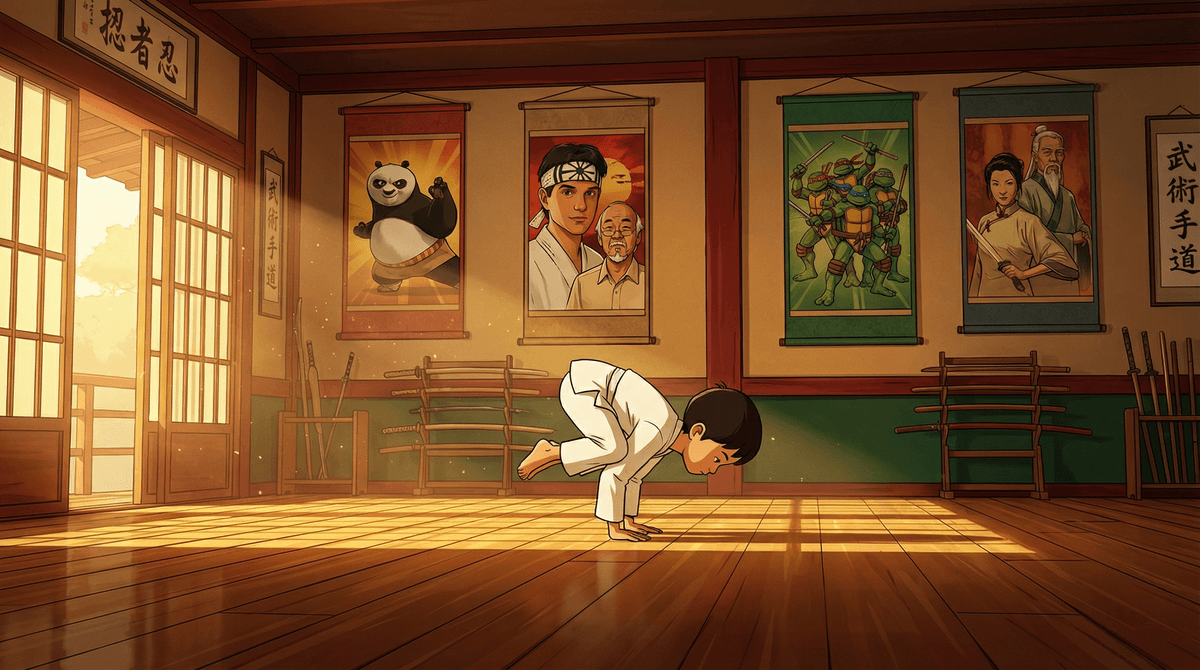
Look, martial arts movies have been a staple of childhood for generations. From the Bruce Lee films that captivated kids in the '70s to The Karate Kid defining the '80s, to today's Kung Fu Panda franchise — there's something universally appealing about watching someone master discipline, overcome obstacles, and yes, execute a perfectly choreographed fight scene.
But here's the thing: not all martial arts movies are created equal, especially when it comes to what's appropriate for kids. Some are genuinely inspiring tales about perseverance and respect. Others are just... violent action flicks with a thin veneer of "honor" painted over brutal fight sequences.
The challenge for parents is finding that sweet spot: films that showcase the artistry and philosophy of martial arts without glorifying violence or turning every conflict into a beatdown.
Kids are drawn to martial arts movies for reasons that actually make a lot of sense:
The underdog story. Most martial arts films follow someone who starts weak or inexperienced and becomes powerful through dedication. Kids get this. They're literally living it — trying to master everything from multiplication tables to skateboarding.
Clear rules and progression. There's something satisfying about watching someone advance through belt colors or master specific techniques. It's visual, measurable progress in a way that resonates with how kids understand achievement.
Physical mastery. Kids are fascinated by bodies doing incredible things. The acrobatics, the precision, the control — it's like watching a superpower that feels almost achievable.
The mentor relationship. Mr. Miyagi, Master Shifu, Splinter from Teenage Mutant Ninja Turtles — these wise teacher figures represent what a lot of kids are looking for: someone who believes in them and pushes them to be better.
Let's address this head-on: martial arts movies contain fighting. That's kind of the point. But there's a massive difference between stylized, consequence-aware combat and gratuitous violence.
Good martial arts movies for kids:
- Show fighting as a last resort, not the first solution
- Emphasize discipline, respect, and self-control
- Include consequences for violence (injuries hurt, winning doesn't solve everything)
- Focus on the training and philosophy as much as the fights
- Use choreography that's more dance than brutality
Red flags:
- Glorifying revenge or "getting even"
- Graphic violence, blood, or realistic injury depiction
- Fighting as entertainment or sport without deeper meaning
- Disrespect toward opponents or teachers
- Violence solving all problems neatly
The question isn't "should my kid watch people fight?" It's "what message is this movie sending about when and why fighting happens?"
Ages 5-8: Animation and Fantasy
Kung Fu Panda (all three films) — Honestly, this is the gold standard. Po's journey from noodle-slinging panda to Dragon Warrior is hilarious, heartfelt, and packed with genuine martial arts philosophy. The action is cartoony enough to not be scary, but the themes about finding your inner strength and respecting your teachers are real.
TMNT (2007 animated version) — The CGI animated film is surprisingly good and focuses more on the brothers' relationships than on violence. The newer Nickelodeon series is also solid for this age.
Ages 8-12: Live Action with Heart
The Karate Kid (1984) — Yes, it's old. Yes, your kids might roll their eyes at the '80s vibes. But this movie gets it. The focus is overwhelmingly on Daniel's training, his relationship with Mr. Miyagi, and learning that karate is about balance and defense, not aggression. The tournament fights are tame by modern standards.
Karate Kid (2010) — The Jaden Smith remake is actually quite good and might be more accessible for modern kids. Set in China, it's technically about kung fu, and the training sequences are beautiful. Some of the bullying scenes are intense, though.
Surf's Up — Wait, hear me out. This animated surfing mockumentary has a penguin learning from a zen master and follows the martial arts movie structure perfectly: young student, wise teacher, learning discipline, overcoming ego. It's just with waves instead of punches.
Ages 12+: The Real Deal
Crouching Tiger, Hidden Dragon — This is where you graduate to actual artistry. The fight choreography is breathtaking — people literally flying through bamboo forests. Yes, there's violence, but it's so stylized and balletic that it reads more as dance. The story is complex, about honor, duty, and forbidden love. Definitely for mature tweens/teens.
Cobra Kai — The Netflix series that continues the Karate Kid story decades later. It's surprisingly thoughtful about legacy, redemption, and how the "good guys vs. bad guys" narrative is more complicated than we thought. Some language and teen relationship drama, but it's become a genuine family watch for many households with older kids.
Ip Man — The biographical film about Bruce Lee's teacher. Beautiful wing chun demonstrations, but definitely for older teens only. There's real violence here, including some brutal scenes involving Japanese occupation of China. Not for everyone, but for families interested in martial arts history, it's powerful.
Most American martial arts movies from the '80s and '90s. Look, I love a good Jean-Claude Van Damme movie as much as the next person, but films like Bloodsport or Kickboxer are basically violence porn with a tournament structure. Not what we're going for here.
Most anime martial arts series. Dragon Ball Z and similar shows have their place, but they're more about power escalation than actual martial arts philosophy. Fights go on for literally dozens of episodes. It's a different vibe entirely.
Newer "gritty" martial arts films. The John Wick series is incredible cinema, but it's absolutely not for kids. Same with most modern martial arts-adjacent action films — they've gone full realistic violence.
Here's what's interesting: kids who watch martial arts movies often want to do martial arts. And honestly? That's not a bad outcome.
Actual martial arts classes teach:
- Discipline and focus (no, really — the difference in my friend's ADHD kid after six months of karate was remarkable)
- Respect for teachers and peers (bowing isn't just ceremony)
- Physical confidence without aggression
- Goal-setting and achievement (those belt progressions are real)
- De-escalation and when not to fight
If your kid is obsessed with martial arts movies, finding a good local dojo might be worth exploring. Just make sure the school emphasizes philosophy and discipline, not just competition and trophies.
Martial arts movies can be genuinely inspiring for kids — but only if you're selective. The best ones teach that true strength comes from discipline, that violence is a last resort, and that the real battle is often with yourself.
Start with animation like Kung Fu Panda for younger kids, graduate to the Karate Kid films for elementary ages, and save the artistry of films like Crouching Tiger for teens who can appreciate the complexity.
And if your kid starts practicing crane kicks in the living room? Well, that's what you signed up for. Just maybe move the coffee table first.
Want to dig deeper? Check out our guide on action movies for kids or explore shows that teach resilience.