

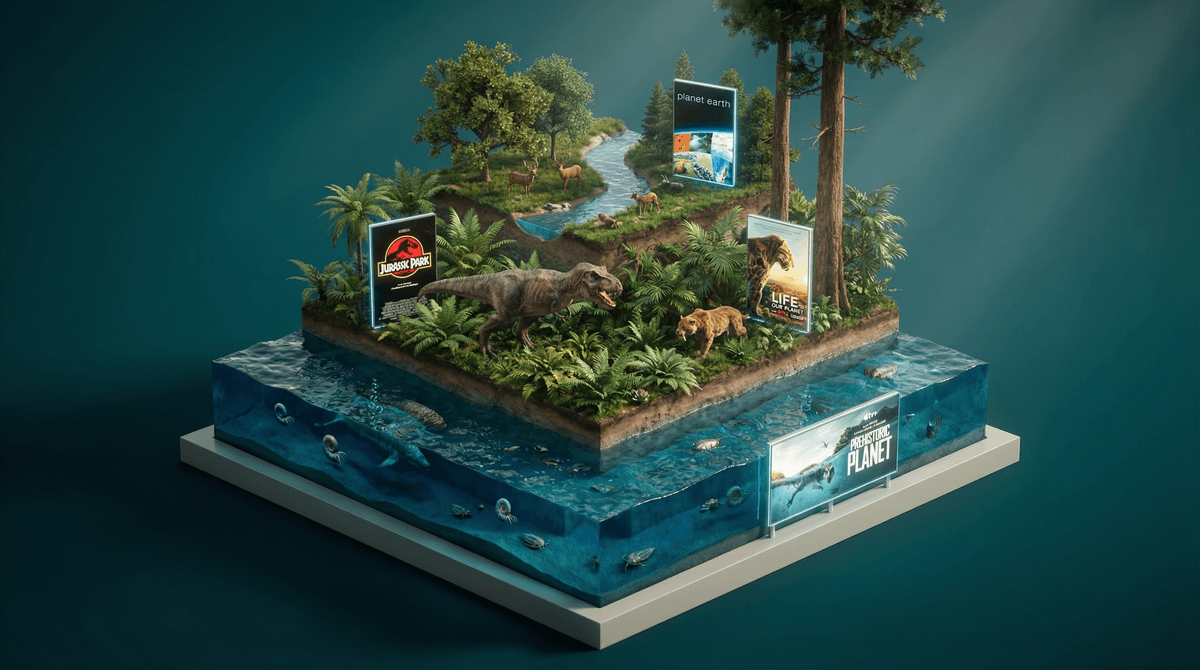
Life on Our Planet is Netflix's 2023 nature documentary series that takes viewers on a 4-billion-year journey through Earth's history. Narrated by Morgan Freeman, this eight-episode series uses cutting-edge CGI to bring extinct creatures to life alongside stunning footage of modern animals. Think Planet Earth meets Jurassic Park, but with actual science.
The series covers everything from the first single-celled organisms to the rise and fall of dinosaurs to the ice age mammals that eventually gave way to humans. It's visually spectacular, scientifically grounded, and—here's the thing parents need to know—occasionally pretty intense when it comes to showing the harsh realities of survival.
The CGI creatures are genuinely impressive. We're talking photorealistic dinosaurs, giant sea scorpions, and saber-toothed cats that look like they could walk off the screen. For kids who grew up on Dinosaur Train or are currently obsessed with Prehistoric Planet, this is the natural next step—more sophisticated, more dramatic, more "grown-up."
Morgan Freeman's narration doesn't hurt either. The man could make a grocery list sound profound, and here he's explaining mass extinctions and evolutionary adaptations with that signature gravitas.
The pacing is also solid. Each episode is around 50 minutes, which is long enough to really dig into an era but not so long that younger viewers lose interest. And unlike some nature documentaries that can feel like beautiful screensavers, this series has genuine narrative momentum—you're watching the story of life itself unfold.
This isn't Blue Planet. While it's educational and beautifully made, Life on Our Planet doesn't shy away from nature's brutality. There are multiple predator-prey sequences that show animals hunting, killing, and eating other animals. We see dinosaurs ripping into flesh, mammals being taken down by predators, and creatures dying from starvation, disease, and environmental catastrophe.
Netflix rates it TV-PG, which feels about right, but that PG is doing some heavy lifting. The violence is all nature-documentary style—no gore for gore's sake—but it's still intense. Younger kids who get upset seeing animals in distress will struggle with parts of this series.
The extinction events are heavy. The series doesn't sugarcoat the five major mass extinctions that wiped out most life on Earth. We see creatures struggling to survive as their worlds literally collapse around them. The asteroid impact that killed the dinosaurs is particularly dramatic, and the episode dealing with the ice age shows animals freezing and starving.
There's also the climate change conversation. The final episode addresses how humans became the dominant species and our current impact on the planet. It's not preachy, but it's clear about the science: we're in the midst of a sixth mass extinction, and we're the cause. Depending on your kid's anxiety levels around environmental issues, this might spark some big feelings and bigger questions.
Ages 8-10: This is the youngest I'd go, and even then, know your kid. If they're sensitive to animals in peril or get nightmares easily, wait a year or two. Watch together and be ready to pause and discuss. The educational value is real, but so is the emotional impact.
Ages 11-13: Sweet spot. Most middle schoolers can handle the intensity and will genuinely appreciate the science and spectacle. This is great supplemental viewing for kids studying evolution, geology, or environmental science. It might even make their textbooks seem less abstract.
Ages 14+: Absolutely. Teens will get the most out of the series, understanding both the scientific concepts and the broader implications about extinction, adaptation, and humanity's role in Earth's future.
The series is actually a great conversation starter if you're ready for it. Questions like "Why did the dinosaurs die but some animals survived?" or "How do scientists know what these creatures looked like?" can lead to genuinely interesting discussions about paleontology, the scientific method, and how we piece together the past.
The climate change angle in the final episode is handled well—factual without being apocalyptic—but it's worth checking in with your kids afterward. Some might feel inspired to learn more or take action. Others might feel anxious or overwhelmed. Both reactions are valid.
Life on Our Planet is genuinely excellent television that happens to be educational. It's not Cocomelon-level background viewing, and it's not trying to be. This is appointment viewing that requires some emotional readiness and probably some parental guidance for younger viewers.
With about 40% of families in our community using Netflix regularly and kids averaging around 4 hours of screen time on weekdays, this is actually one of the better ways to spend some of those hours—assuming your kid is ready for it. It's the kind of show that might spark a genuine interest in science, lead to library books about prehistoric life, or inspire questions about how the natural world works.
Worth watching? Absolutely, with the right kid at the right age. Just go in knowing this is nature documentary as prestige drama, complete with high stakes, stunning visuals, and some genuinely tough moments. Watch an episode yourself first if you're unsure, and then decide if your family's ready for 4 billion years of life, death, and evolution.
- Preview it yourself: Watch the first episode to gauge the intensity level
- Check out alternatives: If this feels too intense, Our Planet or Night on Earth might be better starting points
- Make it interactive: Pause and discuss, look up additional information, or explore related topics about evolution and Earth's history

- Balance the screen time: Our community data shows kids average 4.2 hours daily—if you're watching this together, it's quality time that counts