

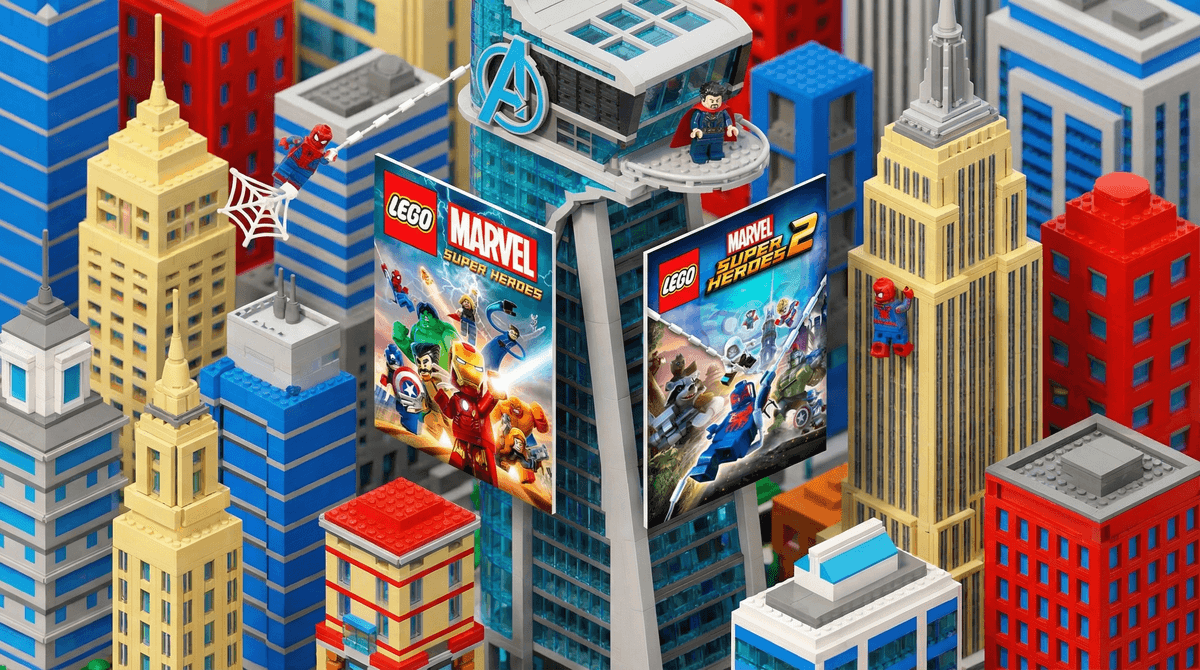
LEGO Marvel Super Heroes: A Parent's Guide to Smashing, Teamwork & Comic Book Fun
TL;DR: LEGO Marvel Super Heroes is a solid, family-friendly action-adventure game that's perfect for kids 9+ who love Marvel characters and cooperative play. It's rated E10+ for mild cartoon violence, supports local co-op for two players, and offers hours of puzzle-solving and superhero fun without gore or inappropriate content. The main things to watch: one brief jump-scare moment with Venom, and in-app purchases on mobile versions.
This is a 3D platform-action adventure where kids control LEGO-styled versions of their favorite Marvel heroes—Iron Man, Spider-Man, Hulk, Captain America, the X-Men, and dozens more—in an original story that has Nick Fury assembling the Avengers to stop a world-ending plot. Think Minecraft meets the MCU, but with LEGO's trademark humor and a lot of smashing things into colorful bricks.
The game blends light puzzle-solving (use Thor's hammer to activate this switch, then switch to Iron Man to blast through that wall) with combat that's more slapstick than violent. Players work through levels, unlock new characters, and explore an open-world Manhattan between missions. It's designed for 1-2 players locally, so it's a natural fit for siblings or parent-kid gaming sessions.
The appeal is pretty straightforward: you get to play as over 100 Marvel characters, each with unique abilities. Kids love experimenting with different hero combinations to solve puzzles—maybe you need Hulk's strength to move a boulder, then switch to Black Widow to hack a computer. The game rewards curiosity and trying different approaches.
The humor is classic LEGO—lots of visual gags, characters getting knocked apart into bricks, and silly animations. There's no dialogue that'll make you cringe, and the story is simple enough that kids don't need to have watched every Marvel movie to follow along. Plus, the satisfaction of smashing everything in sight and watching LEGO studs (the in-game currency) fly everywhere? That never gets old.
The ESRB rates this E10+ (Everyone 10 and up) for cartoon violence, and that feels about right. The Australian Council on Children and the Media recommends parental guidance for kids under 9, with a suggested age of 12, which is a bit more conservative but worth considering if your kid is sensitive to action sequences.
What "cartoon violence" actually means here: Characters punch, kick, and blast each other, but when they get hit, they just fall apart into LEGO pieces and reassemble. There's no blood, no realistic injury, no death. The explosions are colorful and exaggerated. It's closer to a Saturday morning cartoon than anything you'd see in an actual Marvel movie.
The one thing that might startle younger kids: There's a brief "screamer" moment with Venom that IMDb's parental guide flags—basically, Venom jumps out suddenly with a scary face. If your kid is easily spooked by jump scares, you might want to give them a heads-up or play through that section first.
For kids under 9, consider co-playing the first few missions to gauge their comfort level. The game does require some reading for mission objectives and character descriptions, so if your kid is still working on reading fluency, they might need help or prefer to play with an older sibling or parent.
Cooperative play is the real strength here. The game supports local co-op, which means two players on the same screen working together. This is huge for teaching teamwork, communication, and patience (especially when Player 2 keeps running off-screen and forcing the camera to readjust). It's also a great way to spend quality time with your kid while they explain why Deadpool's healing factor makes him better than Wolverine.
In-app purchases on mobile versions: If your kid is playing on a tablet or phone rather than a console, be aware that the mobile version includes in-app purchases. These aren't aggressive or predatory like some mobile games, but it's worth setting up parental controls or having a conversation about not buying things without permission.
Screen time context: According to Screenwise community data, about 55% of families with kids are actively gaming, and 55% have a gaming console in the home. LEGO Marvel Super Heroes fits well into a balanced media diet because sessions have natural stopping points (you finish a level, you unlock a character, you solve a puzzle). It's not an endless-scroll situation like social media or a battle royale game where "just one more match" turns into three hours.
Educational value? Let's be real—this isn't a STEM learning tool. But it does encourage problem-solving (which character's abilities do I need here?), pattern recognition, and spatial reasoning. The game rewards exploration and experimentation, which are solid cognitive skills. Plus, if your kid is into Marvel lore, they'll pick up character names, powers, and relationships, which is... something? It's not books about game design, but it's also not brain rot.
If your kid likes this one, the LEGO games catalog is massive. LEGO Marvel Super Heroes 2 is the direct sequel and adds four-player co-op plus a "Reading Required" difficulty setting that can help gauge comprehension. There are also LEGO Star Wars, LEGO Harry Potter, LEGO DC Super-Villains, and more—all following the same formula of humor, puzzles, and smashing things.
The nice thing about LEGO games is they're consistently family-friendly. You can't really go wrong with any of them in terms of content. The main differences are theme (Marvel vs. Star Wars vs. Harry Potter) and quality-of-life improvements in newer releases (better camera controls, more characters, etc.).
Online play: The original LEGO Marvel Super Heroes is local co-op only—no online multiplayer, no chat, no strangers. This is actually a plus from a safety perspective. Your kid isn't going to encounter toxic gamers or inappropriate language.
Time limits: The game autosaves frequently, so you can enforce "finish this level, then we're done" without losing progress. That said, the open-world Manhattan between missions can be a time sink if your kid decides to collect every golden brick and unlock every character. Setting a timer or agreeing on a number of levels per session can help.
Content concerns: Beyond the one Venom jump-scare, there's a very mild flirtation line that IMDb mentions—most kids won't even notice it. No bad language, no sexual content, no substance use. It's about as clean as a superhero game gets.
LEGO Marvel Super Heroes is a great entry point for kids who are ready to move beyond simpler games like Animal Crossing or Kirby but aren't quite ready for the intensity of Fortnite or the open-ended chaos of Roblox. It's got structure, clear goals, and a difficulty curve that's forgiving enough for younger players but engaging enough to keep older kids interested.
If your kid loves Marvel, wants to play with a sibling or friend, and you're comfortable with mild cartoon action, this is a solid choice. Just watch out for that Venom screamer, set up parental controls if they're playing on mobile, and maybe prepare for a lot of "Can we unlock Deadpool now?" requests.
- Check out alternatives to Minecraft if you're looking for more creative, building-focused games
- Explore cozy games for kids if you want lower-stakes, less action-oriented options
- Read up on how to set up gaming parental controls to manage screen time and purchases across consoles
And if you're wondering whether this game is teaching entrepreneurship or just draining your wallet (spoiler: it's not a Robux situation), rest easy—LEGO Marvel Super Heroes is a one-time purchase on consoles, with no loot boxes or surprise charges. Just good old-fashioned superhero smashing.