

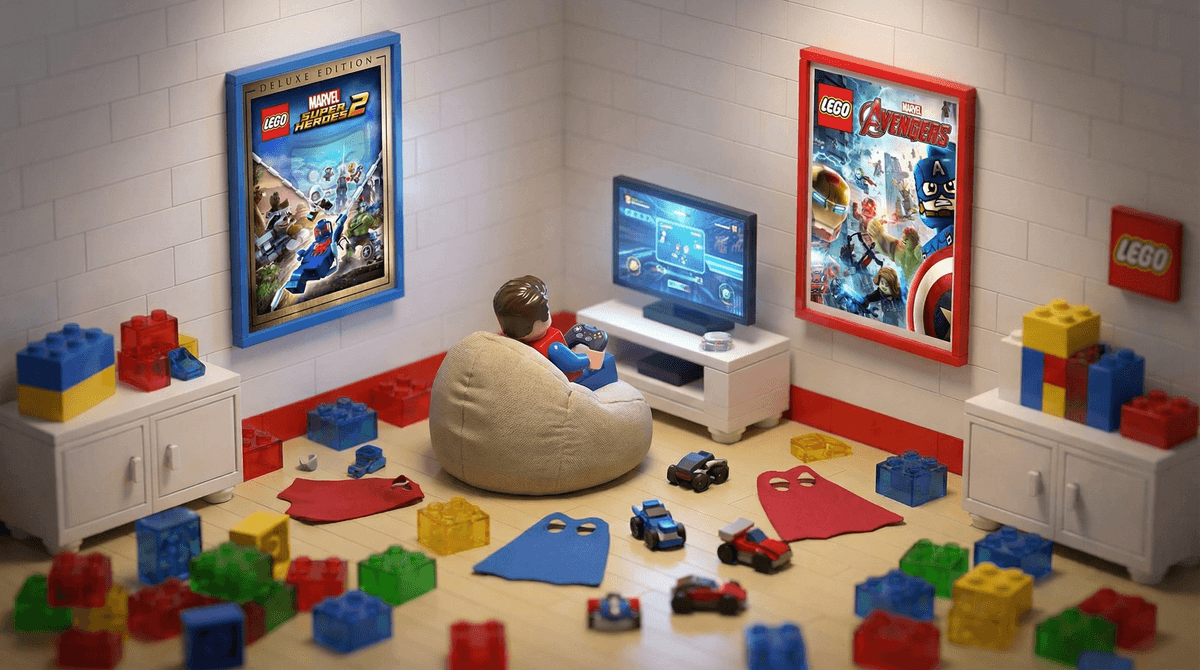
LEGO Marvel refers to a whole universe of video games that combine two things kids are already obsessed with: LEGO's building blocks and Marvel's superhero roster. The main games in the series include LEGO Marvel Super Heroes, LEGO Marvel Super Heroes 2, and LEGO Marvel's Avengers.
These are action-adventure games where players control Marvel characters—from Spider-Man to Iron Man to obscure heroes your kid somehow knows everything about—solving puzzles, fighting villains, and collecting approximately one million LEGO studs (the in-game currency). Everything is rendered in that signature LEGO aesthetic: blocky, colorful, and when things explode, they break apart into satisfying LEGO pieces.
The games are available on pretty much every platform: Nintendo Switch, PlayStation, Xbox, and PC. They're rated E10+ (Everyone 10 and up) by the ESRB, though many younger kids play them too.
It's Marvel, but make it funny. The LEGO games are known for their humor—they take the Marvel universe seriously enough to feel authentic, but add slapstick comedy and visual gags that keep things light. Characters grunt and gesture instead of having full voice acting in some versions, which somehow makes everything funnier.
The character roster is massive. We're talking 200+ playable characters across the games. Your kid can play as the big names from the MCU movies, but also deep-cut characters like Squirrel Girl or Howard the Duck. Unlocking new characters is genuinely exciting and gives kids a reason to replay levels.
Co-op play is built in. These games are designed for two players to team up on the same screen. It's one of the few gaming experiences where a younger sibling can actually participate meaningfully without dragging down the gameplay. The puzzles often require different character abilities, so there's actual cooperation happening.
It's forgiving. You can't really "die" in LEGO games—you just lose some studs and respawn. This makes them accessible for kids who are still building gaming skills and reduces the frustration factor significantly.
Ages 6-8: These kids can definitely play LEGO Marvel, especially with a parent or older sibling. The combat is cartoonish (characters just break apart into LEGO pieces), and the humor is silly rather than scary. That said, younger kids might need help with some puzzles and navigating the open-world sections. The reading level varies—some games have more text than others.
Ages 9-12: This is the sweet spot. Kids this age can handle the gameplay independently, appreciate the Marvel references, and get into the completionist aspect of collecting everything. They're also old enough to strategize about which characters to use for different challenges.
Ages 13+: Older kids and teens still enjoy these games, though they might see them as more nostalgic or "comfort gaming" rather than cutting-edge. The games can feel repetitive to more experienced gamers, but they're great for de-stressing or playing with younger siblings.
The Marvel universe connection is real. If your kid hasn't seen the Marvel movies, they'll still enjoy the games, but they'll get way more out of it if they have some context. Conversely, playing these games might spark interest in Marvel movies and shows—which means you might need to have conversations about age-appropriate viewing since not all MCU content is kid-friendly.
Screen time can add up fast. These games are designed to be long. We're talking 15-20 hours for the main story, and if your kid wants to achieve 100% completion (which many do), double or triple that. The "just one more level" factor is strong.
There are microtransactions, but they're minimal. Most LEGO games don't push in-app purchases aggressively. Some versions have DLC (downloadable content) packs that add new characters or levels, but the base game is complete without them. This is refreshing compared to many modern games.
The violence is truly cartoon-level. If you're worried about violent content, LEGO Marvel is about as mild as it gets for a superhero game. Characters don't bleed or show injury—they just pop into LEGO pieces and rebuild. The ESRB rates it E10+ for "Cartoon Violence" and "Comic Mischief," which is accurate.
It can actually teach problem-solving. The puzzle elements require kids to think about which character abilities they need, how to combine powers, and how to navigate environments. It's not educational in a formal sense, but there's genuine cognitive engagement happening.
If your family is already into Minecraft, LEGO Marvel offers a more structured experience with clear objectives rather than open-ended building. Compared to Fortnite, it's cooperative rather than competitive, offline-capable, and has zero social features (which can be a plus for younger kids).
Other games in the LEGO franchise like LEGO Star Wars or LEGO Harry Potter follow the same formula, so if your kid loves one, they'll probably enjoy others. Want to explore more cooperative games that siblings can actually play together?
LEGO Marvel games are legitimately good family gaming options. They're funny, accessible, and offer genuine co-op experiences that don't feel like one person is just along for the ride. The Marvel branding is strong (which means kids will want it), but the gameplay backs it up.
The main considerations are screen time management—these games are designed to be played for hours—and whether you're ready for the inevitable "can we watch Avengers: Endgame?" conversation that might follow.
For families looking for games that multiple ages can enjoy together, that don't require internet connections or online accounts, and that won't give you anxiety about what your kid is being exposed to, LEGO Marvel checks a lot of boxes.
If you're considering LEGO Marvel for your family:
- Check which version makes sense for your console or PC
- Consider starting with an older title (they're often on sale and just as fun)
- Set expectations about game time limits before starting
- Learn more about setting up gaming boundaries that actually work
Want to dig deeper? Screenwise can help you understand how your family's gaming habits compare to others in your community, and create a personalized plan that works for your specific situation—not just generic advice that assumes all families are the same.