

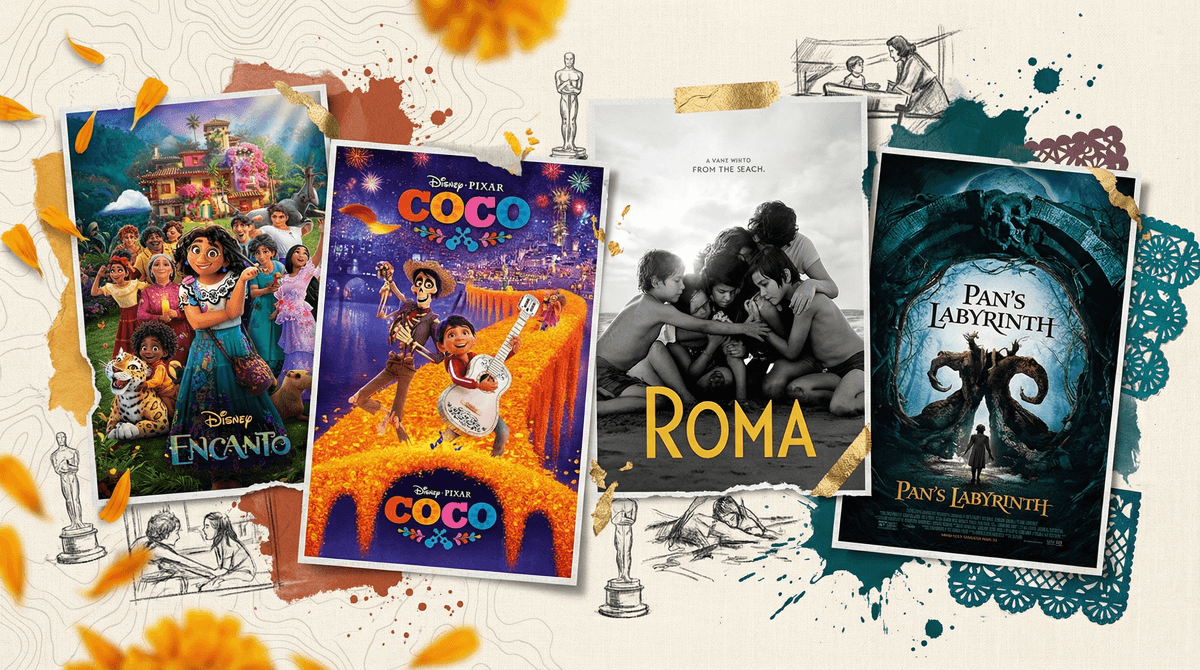
Look, we all want our kids to watch things with actual substance—films that aren't just empty calories for their brains. But finding movies that are both genuinely excellent AND open up conversations about different cultures and perspectives? That's the sweet spot.
Latin American cinema has been crushing it at the Oscars for decades, bringing home awards in major categories like Best Director, Best Foreign Language Film (now called Best International Feature), and even Best Picture. These aren't "eat your vegetables" educational films—they're genuinely compelling stories that happen to come from incredible filmmakers working across Mexico, Argentina, Chile, Brazil, and beyond.
The cool thing? Many of these films are totally watchable for families with tweens and teens, and they offer a window into different cultures, historical moments, and storytelling traditions that break the Hollywood mold.
Here's the reality: if your kids are only consuming English-language, US-produced content, they're missing out on how the rest of the world tells stories. And Latin American cinema in particular has this incredible range—from magical realism to gritty historical drama to deeply personal coming-of-age stories.
Plus, these films have been recognized as the best in the world by the Academy. We're not talking about obscure art house films that only film students appreciate (though some are definitely more challenging). These are movies that won because they're objectively excellent at what they do.
For families raising bilingual kids or kids with Latin American heritage, these films can be especially meaningful. But honestly, every kid benefits from seeing that great storytelling happens everywhere, not just in Hollywood.
Let's start with the films that work for a wider age range (think ages 12+):
Coco (2017) - Okay yes, this is a Pixar film so it's technically American, but it's co-directed by Adrian Molina and is deeply rooted in Mexican culture and the Day of the Dead tradition. It won Best Animated Feature and Best Original Song. If your kids haven't seen it, start here. It's gorgeous, emotionally devastating (in the best way), and sparked so many family conversations about death, memory, and cultural traditions. Ages 6+.
Encanto (2021) - Another Disney/Pixar collaboration, this one inspired by Colombian culture. Won Best Animated Feature. The songs are absolute earworms (you've probably already heard "We Don't Talk About Bruno" 47,000 times), but it's also a surprisingly nuanced look at family pressure, generational trauma, and finding your place. Ages 5+.
The Secret in Their Eyes (2009) - This Argentine thriller won Best Foreign Language Film and it's genuinely gripping. It's a murder mystery that spans decades, dealing with justice, obsession, and Argentina's complicated political history. The violence isn't gratuitous but it's there, so this is better for ages 14+. If you have a teen who thinks subtitled films are "boring," this one will change their mind.
These are the films that won major Oscars and are absolutely worth watching with older teens who can handle mature themes:
Roma (2018) - Alfonso Cuarón's black-and-white masterpiece won Best Director, Best Foreign Language Film, and Best Cinematography. It's a semi-autobiographical story about a domestic worker in 1970s Mexico City. It's slow, it's meditative, it's absolutely beautiful. But it deals with class, political violence, and loss in ways that require some maturity. Ages 16+.
Pan's Labyrinth (2006) - Guillermo del Toro's dark fantasy won three Oscars (Art Direction, Cinematography, Makeup). Set in post-Civil War Spain (del Toro is Mexican but the film is Spanish), it's a haunting fairy tale that doesn't pull punches. The violence is significant and the themes are heavy. But for teens interested in fantasy, filmmaking, or history, it's essential viewing. Ages 16+.
The Motorcycle Diaries (2004) - This one didn't win an Oscar but was nominated (Best Original Song), and it's perfect for teens learning about Latin American history. It follows a young Che Guevara on a road trip across South America before he became a revolutionary. Beautiful cinematography, coming-of-age story, and a window into social inequality across the continent. Ages 14+.
Amores Perros (2000) - Alejandro González Iñárritu's breakthrough film (he later won Best Director for Birdman and The Revenant). Nominated for Best Foreign Language Film. It's three interconnected stories in Mexico City, all linked by a car accident. Gritty, intense, and not for younger viewers, but for older teens interested in serious filmmaking, it's incredible. Ages 17+.
Some Latin American Oscar winners are just too intense or mature for family viewing, but they're worth mentioning because they're culturally significant:
No (2012) - Chilean film about the campaign to end Pinochet's dictatorship, nominated for Best Foreign Language Film. Fascinating political history but requires context.
Y Tu Mamá También (2001) - Alfonso Cuarón's road trip film, nominated for Best Original Screenplay. Excellent film, definitely not for kids (sexual content, mature themes).
The Official Story (1985) - Won Best Foreign Language Film. About Argentina's Dirty War and stolen children. Important but heavy.
Subtitles aren't the enemy. I know, I know—kids say they "can't focus" on subtitled films. But here's the thing: they absolutely can, they just need to give it 10 minutes. After that, their brains adjust and they stop noticing they're reading. Start with the more action-oriented films like The Secret in Their Eyes.
Provide context. A five-minute conversation before the film about where and when it takes place makes a huge difference. You don't need to deliver a history lecture, just: "This is set in Argentina in the 1980s, which was a really complicated political time."
Watch together. These aren't "throw it on and scroll your phone" movies. They're "actually pay attention and talk about it after" movies. That's the whole point.
Use the pause button. If your kid has questions about what's happening culturally or historically, pause and explain. This isn't school—it's okay to interrupt.
Latin American cinema has given us some of the most beautiful, challenging, and important films of the past few decades. These Oscar winners aren't just "good for foreign films"—they're good, period.
Start with the animated ones if you have younger kids. Move to the thrillers and dramas with teens. And if you're raising kids who think "foreign films are boring," these are the ones that'll change their minds.
Your kids are going to watch hundreds of hours of content this year. Making sure some of that content comes from different cultures, different perspectives, and different storytelling traditions? That's not extra credit. That's just good parenting.
Want more recommendations? Check out family-friendly international films or movies that spark conversations about history.
And if you're looking for Spanish-language content beyond movies, explore Spanish-language shows and podcasts for kids .
.