

TL;DR
If you’re wondering if you need to pack an entire box of tissues for The Wild Robot (movie), the answer is a resounding yes. It is a gorgeous, top-tier masterpiece, but it’s also "heavy." It deals directly with death, the brutality of the animal kingdom, and the bittersweet ache of a child growing up and leaving the nest.
Quick Verdict:
- Ages 6-7: Likely okay, but expect questions about "where the mommy birds went."
- Ages 8-12: The sweet spot for appreciating the themes without being traumatized.
- Sensitive Kids: Proceed with caution. The first 15 minutes involve an accidental tragedy that sets the whole plot in motion.
- Parents: You will cry harder than your kids. Guaranteed.
Ask our chatbot for more "meaningful but intense" movie recommendations
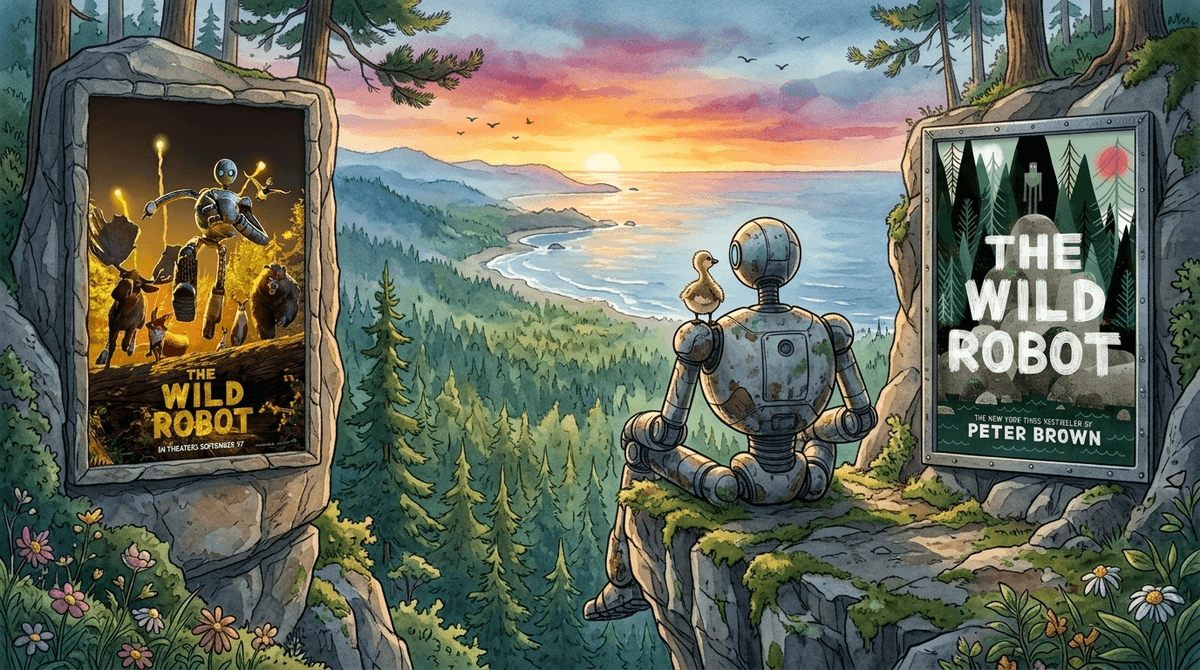
Based on the wildly popular The Wild Robot by Peter Brown, the movie follows Roz (ROZZUM unit 7134), a high-tech helper robot who gets shipwrecked on an island uninhabited by humans. To survive, Roz has to "program" herself to understand the animals.
The heart of the story begins when Roz accidentally crushes a goose nest, leaving only one unhatched egg. When it hatches, the gosling (Brightbill) bonds with Roz, and she has to learn how to be a mother—despite having no "parenting" protocol—to ensure he can survive the winter migration.
In an era of "brain rot" content and frantic, loud animations, The Wild Robot is a breath of fresh air. It’s a film that actually respects a child’s emotional intelligence. It doesn't shy away from the fact that nature is "red in tooth and claw."
It’s being compared to classics like The Iron Giant and Wall-E because it uses a non-human protagonist to tell a deeply human story about kindness as a survival skill.
Check out our guide on why "sad" media can actually be good for kids
When parents ask if a movie is "too sad," they usually mean one of three things: Does someone die? Is it scary? Or is it just emotionally overwhelming? In the case of The Wild Robot, it’s a bit of all three.
1. The "Accidental Loss"
The inciting incident involves Roz accidentally falling onto a goose nest. It’s not "Disney-fied"—the movie makes it clear that Brightbill’s family is gone because of an accident Roz caused. For a sensitive child who is particularly attuned to the safety of parents and siblings, this can be a tough start.
2. Nature is Brutal
Unlike many talking-animal movies where everyone is friends, this island has a food chain. There are jokes about opossum babies dying (dark humor!) and scenes where predators are actively trying to eat our protagonists. It’s handled with a "circle of life" philosophy similar to The Lion King, but the visual style makes it feel more immediate.
3. The Motherhood and "Leaving Home" Arc
This is where the parents get hit. The movie is essentially a 100-minute metaphor for parenting. Roz gives everything to raise Brightbill, only to realize that her ultimate success means he must leave her to join the migration. The "bittersweet separation" at the end is beautiful, but it’s a heavy emotional lift for kids who are currently in a "don't ever leave me, Mommy" phase.
If your kid has already read the book, they are well-prepared. Peter Brown’s writing style is sparse and gentle, even when the subject matter is tough. The movie ramps up the "action" and the visual scale, which can make the sad moments feel more intense than they did on the page.
If your child is a "reader first" type, we highly recommend starting with the series:
Reading the book together first allows you to pause, talk about the "circle of life," and gauge their reaction before seeing it on a 40-foot screen with Dolby surround sound.
Learn more about the differences between the Wild Robot book and movie
Ages 5-7: High Engagement, High Emotion
Kids in this bracket will love the "slapstick" elements and the cute animals. However, they might be confused by the ending or upset by the initial loss of the goose family. Pro tip: Sit close and be ready for some mid-movie snuggling.
Ages 8-12: The Ideal Audience
This age group can handle the nuance. They’ll understand that Roz isn't "bad" for the accident and they’ll relate to Brightbill’s struggle to fit in with the other geese (the classic "middle school" feeling of being an outsider).
Sensitive Kids (Any Age)
If your child still struggles with the "Mufasa moment" in The Lion King or was deeply rattled by Inside Out 2, you might want to wait for the home release. Being able to pause the movie and talk through a scene is a game-changer for sensitive souls.
Ask our chatbot for tips on introducing "heavy" themes to sensitive kids
If you decide to go, here are a few ways to frame the conversation on the car ride home:
- On Kindness: "Roz survived not by being the strongest, but by being the kindest. How did that change the other animals?"
- On Change: "Roz had to change her 'programming' to become a mom. What are some things we’ve had to learn or change in our family?"
- On Sadness: "It was really sad when Brightbill had to fly away, wasn't it? Why do you think Roz felt proud and sad at the same time?"
The Wild Robot is not "brain rot." It is the opposite. It is a visually stunning, emotionally resonant film that will spark actual conversations. Yes, it is sad. Yes, there is loss. But it’s the kind of sadness that builds empathy.
If your family is looking for a movie that actually means something, this is it. Just maybe don't go on a day when everyone is already feeling emotionally fragile.
Next Steps:
- Check out the Screenwise Media Page for The Wild Robot to see what other parents in the community are saying.
- If the movie feels like too much, consider a "lighter" but still quality alternative like The Bad Guys.
- Grab the The Wild Robot book for your nightly read-aloud.
Learn more about how to navigate "the circle of life" in kids' media