

Is Boyhood Appropriate for Family Movie Night with Teens?
TL;DR: Boyhood is an extraordinary coming-of-age film that unfolds over 12 years of real time, following Mason from age 6 to 18. It's rated R for language, some teen drinking, and brief drug use—but it's not gratuitous. Best for ages 14+, especially if you're ready for conversations about divorce, adolescent identity, and the messy reality of growing up. This could be an incredible family viewing experience with the right teens at the right time.
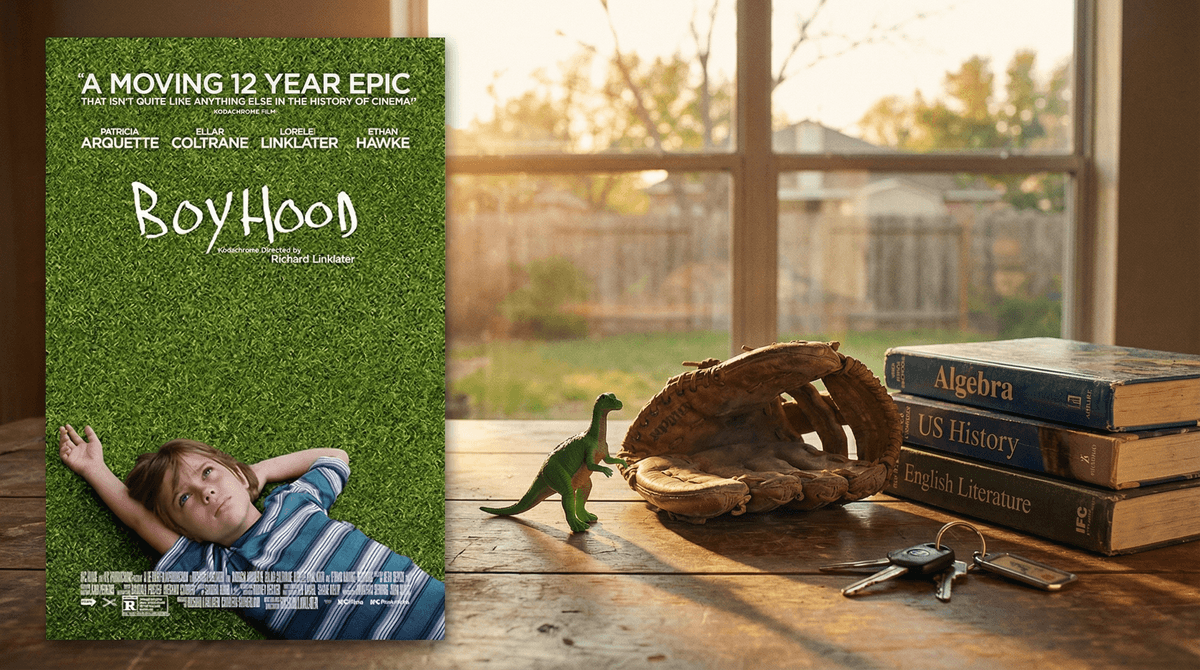
Richard Linklater filmed Boyhood over 12 years with the same cast, capturing actor Ellar Coltrane's actual transformation from child to young adult. It's not a gimmick—it's the entire point. You watch Mason (and his sister Samantha, played by Linklater's daughter) literally grow up on screen, and the effect is unlike anything else in cinema.
There's no traditional plot. No superhero origin story, no murder mystery, no quest. Just life: birthday parties, awkward school photos, family dinners, first crushes, moving houses, navigating parents' new relationships. It's deeply ordinary in the most profound way, which is exactly why it resonates so powerfully with teens who are living through their own "just life" moments that feel simultaneously boring and earth-shattering.
The film won dozens of awards and was nominated for six Oscars. Patricia Arquette won Best Supporting Actress for her role as Mason's mom, Olivia, whose own journey from struggling single parent to college professor unfolds alongside her kids' growth.
Let's break down what earns Boyhood its R rating:
Language: This is the big one. There's consistent profanity throughout—f-bombs, mostly, used in the way actual people (especially teenagers and stressed parents) actually talk. It's not Tarantino-level excessive, but it's present and natural to the dialogue.
Alcohol and Drug Use: You see teenage Mason and his friends drinking beer and smoking weed at a party. It's depicted as something teens do, not glamorized but not demonized either. There's also adult drinking throughout—wine at dinner, beers after work—portrayed as normal adult behavior.
Sexual Content: Minimal. There's some teen kissing, references to sex, and one scene where college-age Mason wakes up next to a girlfriend (nothing explicit shown). A poster of a woman in a bikini appears on a teenage boy's wall. That's about it.
Mature Themes: The heaviest content is emotional. You witness an alcoholic stepfather become verbally abusive and threatening (the most intense scenes in the film). Parents divorce. Kids process abandonment and disappointment. A character discusses his teenage pregnancy. These aren't graphic scenes, but they're real and can hit hard.
Nothing in Boyhood feels exploitative or included for shock value. Everything serves the story of authentic American adolescence.
Ages 14-15: This is the sweet spot for most families. Teens this age are old enough to appreciate the film's artistic achievement and relate to Mason's experiences. They've likely heard (or used) the language, and they're starting to navigate questions about identity, relationships, and what comes after high school. The teen drinking scene won't teach them anything new, but it provides an opening for conversation.
Ages 16-18: Absolutely appropriate. Older teens will likely see themselves in different parts of Mason's journey and appreciate the film's refusal to provide easy answers. Many have told me they found it validating—like someone finally made a movie that captures what it actually feels like to grow up, rather than the Hollywood version.
Ages 12-13: Probably too young for most families, not because of content concerns but because the pacing and lack of traditional plot will likely bore them. The film is nearly three hours long and deliberately slow. Younger middle schoolers typically need more narrative momentum. Want something more accessible for this age? Check out movies like The Way Way Back or Hunt for the Wilderpeople.
Under 12: Skip it. Not because it's inappropriate in a scarring way, but because it won't land. The whole point is watching someone grow from childhood through adolescence, which requires viewers to understand and care about that journey.
It's long: 2 hours and 45 minutes. Plan accordingly. This isn't background viewing—it demands attention and emotional investment.
The mom's storyline hits different for parents: While kids watch Mason's journey, parents often find themselves devastated by Olivia's arc. Her breakdown near the end—"I just thought there would be more"—has made countless parents cry. You're watching your kids grow up too, and this film will make you feel that in your bones.
It captures class and economic anxiety: The family moves frequently, Olivia goes back to school while working and raising two kids, money is always tight. This is working-class America, and it's portrayed with respect and honesty. Good conversation starter about economic mobility and the cost of education.
The stepdad scenes are tough: Bill (played by Marco Perella) starts as a charming psychology professor and becomes an increasingly volatile alcoholic. There's a scene where he drunkenly berates the kids and threatens Olivia. It's frightening without being graphic, but if your family has experienced domestic volatility, be prepared.
It will spark conversations: About everything. What makes a good parent? Why do people change? What does it mean to "make something" of your life? Is college necessary? How do you know who you are? The film doesn't answer these questions—it just raises them beautifully.
Most teen movies are about THE BIG MOMENTS: first kiss, prom, graduation, college acceptance. Boyhood is about all the moments in between—the boring Saturdays, the weird conversations, the way time just keeps moving whether you feel ready or not.
Teens tell me they love that Mason isn't particularly special. He's not the chosen one, not the smartest kid, not the athlete or the rebel or the artist (though he becomes interested in photography). He's just... a kid trying to figure things out. That's refreshingly honest in a media landscape that tells teenagers they need to be extraordinary.
The film also captures how relationships with parents shift during adolescence. Mason's relationship with his dad (Ethan Hawke) evolves from fun weekend visits to deeper conversations about life choices. His relationship with his mom moves from childish dependence to teenage friction to something approaching mutual respect. These dynamics feel real because they literally developed over 12 years of filming.
Boyhood is one of the most ambitious and successful experiments in cinema history, and it's absolutely worth watching with mature teens. The R rating is earned but not prohibitive—if your 14-year-old can handle realistic language and honest depictions of teenage behavior, they can handle this film.
The question isn't really "Is it appropriate?" but rather "Is your family ready for this kind of movie night?" Boyhood isn't entertainment in the traditional sense. It's an experience, a meditation on time and growth and the small moments that make up a life. It's slow, it's long, and it will absolutely wreck you emotionally (in a good way).
If you want a family movie night that leads to actual conversation—about choices, relationships, what it means to grow up, what parents sacrifice, what kids carry with them—this is it. Just bring tissues and maybe plan for pizza after, because you'll all need to decompress together.
Watch it if: You have teens 14+ who appreciate character-driven stories, you're ready for honest conversations about adolescence, and you can commit to nearly three hours of thoughtful, slow-burn filmmaking.
Skip it if: You need plot-driven entertainment, your teens are under 13, or you're looking for something light and fun. For lighter coming-of-age options, try The Goonies, Eighth Grade, or Spider-Man: Into the Spider-Verse instead.
- Preview the trailer for Boyhood
 with your teens to gauge interest
 - Check out other R-rated movies that work for family viewing with older teens
- Read about how to have better conversations after family movie night
- Explore more coming-of-age films that capture authentic adolescence