

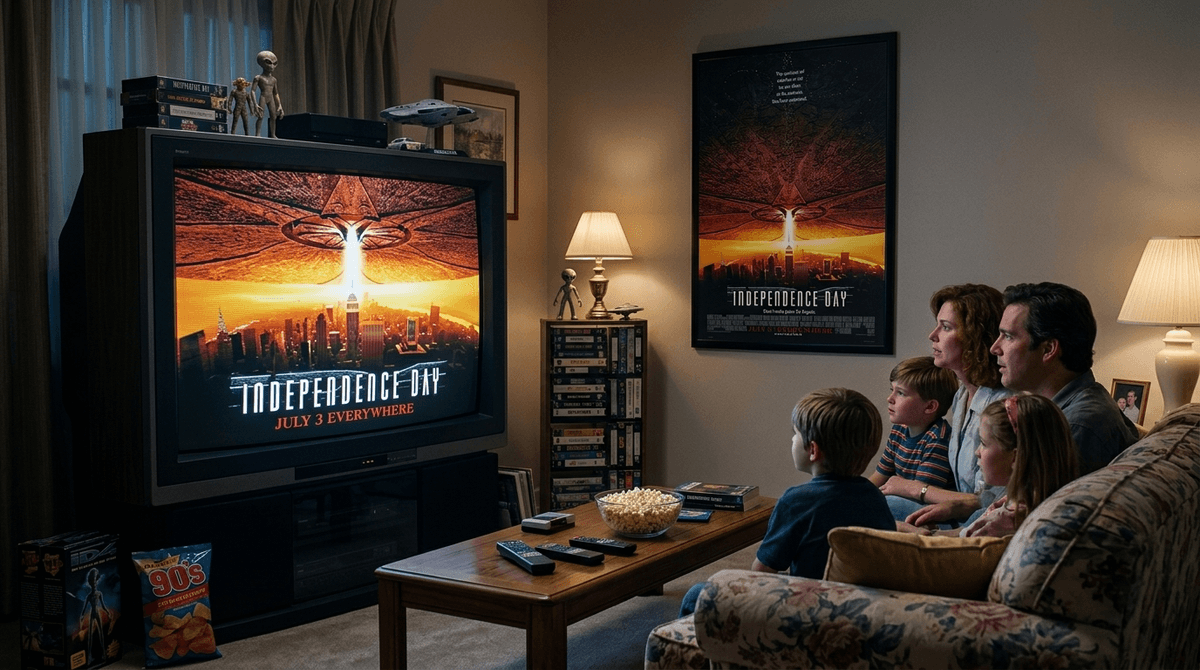
TL;DR: Independence Day is the ultimate 90s "popcorn" movie. It’s PG-13, mostly for massive-scale destruction and a few genuinely creepy alien encounters. It’s great for kids ages 10 and up, though you’ll have to explain what a "pager" is and why the laptop looks like a brick.
Quick Links:
- Is Independence Day too scary for 8-year-olds?

- Best sci-fi movies for family movie night
- Men in Black (The perfect follow-up)
- Mars Attacks! (For the kids who want something weirder)
It’s officially 2026, which means Independence Day is 30 years old. Feel old yet? Because I certainly do. Netflix just dropped it for the anniversary, and it’s currently climbing the Top 10 because nostalgia is a powerful drug.
But here’s the reality: your kids, who are used to the hyper-polished CGI of Avatar or the relentless pace of Spider-Man: Across the Spider-Verse, are going to have some questions. They might think the special effects are "Ohio" (that's Gen Alpha for weird or cringey, for those keeping track), and they will definitely be confused by the technology.
However, beneath the 1996 tech and the questionable science, this movie still slaps. It’s a masterclass in building tension, and it features Will Smith at the absolute height of his "coolest guy on Earth" era.
If you missed the 90s, the premise is simple: Giant city-sized spaceships park themselves over the world’s major capitals. For the first 45 minutes, everyone wonders if they’re friendly. Then, they blow up the White House (the most iconic shot in 90s cinema), and humanity has to figure out how to punch back.
It stars Will Smith as a hotshot pilot, Jeff Goldblum as a "too smart for his own good" cable guy/scientist, and Bill Pullman as the President we all wish we had. It’s patriotic, it’s loud, and it’s surprisingly earnest.
Despite being three decades old, the "David vs. Goliath" story is timeless. Kids love the idea of the underdog winning, and the alien designs—while creepy—are genuinely cool.
There’s also a lack of "brain rot" here. Unlike some modern blockbusters that feel like they were written by an AI trying to farm engagement, Independence Day has a clear beginning, middle, and end with actual stakes. It also introduces them to the concept of a "global community" working together, which is a nice break from the "lone hero saves the world" trope.
While it’s rated PG-13, the "13" was a bit more flexible in the 90s. Here’s how it breaks down by age group:
Ages 7-9
Proceed with caution. The scale of the destruction is massive. While you don’t see many people actually dying on screen (it’s mostly buildings exploding), the implication of millions of people being vaporized can be heavy for sensitive kids. There is also one specific scene involving an alien autopsy and a psychic attack that is straight-up nightmare fuel.
Ages 10-12
This is the sweet spot. They’re old enough to handle the "scary" parts and will likely find the dogfights between the F-18s and the alien attackers thrilling. This is also a great age to start talking about how movies are made and how they did these stunts without modern computers.
Ages 13+
They’ll enjoy it, but they might spend the whole time mocking the "hacking" scene. Apparently, in 1996, you could take down an intergalactic armada with a PowerBook and a basic computer virus. Just let them have their jokes; it’s part of the bonding experience.
1. The "Scare" Factor
The aliens in this movie aren't the cute E.T. variety. They are predatory, they use telepathy to torture people, and they look like slimy insects inside bio-mechanical suits. The scene in the Area 51 lab where the alien wakes up and kills the doctors is the most intense part of the movie. If your kid is sensitive to "creature features," maybe skip this one for a few years.
2. Language and Vibe
There are a handful of "hells," "damns," and a few "shits." It’s nothing compared to what they hear on a Roblox voice chat, but it’s worth noting if you’re a zero-tolerance household. There’s also some mild "90s-style" smoking (mostly cigars for celebration).
3. Retro Tech and Logic Leaps
Be prepared to explain:
- Pagers: No, it’s not a tiny phone. It just beeps.
- Static on TVs: Kids who grew up with 4K streaming don't understand what "snow" on a TV screen means.
- Dial-up logic: The idea that the world wasn't constantly connected is a foreign concept to Gen Alpha.
This movie is a great jumping-off point for a few interesting conversations:
- Unity: The movie shows countries that usually hate each other working together to save the planet. In 2026, that feels like a fantasy, but it’s a good conversation starter about global cooperation.
- Technology Evolution: Compare the "virus" in the movie to modern cybersecurity. Could a Mac really talk to an alien ship? (Spoiler: No, but it makes for a great ending).
- The Will Smith Era: It’s worth discussing how movie stars used to be the main draw, rather than just the "franchise."
If you watch it and your kid wants more, or if you decide it’s a bit too much for them, here are some Screenwise-approved pivots:
- If they loved the aliens: Men in Black. It’s funnier, less "end of the world," and also stars peak Will Smith.
- If it was too scary: The Iron Giant. It deals with aliens and the military but in a much more heart-wrenching, kid-friendly way.
- If they want more space action: Star Wars: A New Hope. The DNA of the Independence Day dogfights is all over the original trilogy.
- Avoid the sequel: Independence Day: Resurgence. I’m going to be honest here: it’s terrible. It lacks the heart of the original and is basically just a CGI mess. Your kids will be bored, and you’ll be annoyed you wasted two hours.
Independence Day is a classic for a reason. It’s a loud, proud, and genuinely fun ride that represents the pinnacle of the 90s blockbuster. As long as your kid is okay with some "gross" aliens and the destruction of every major landmark on Earth, it’s a fantastic choice for a Friday night movie marathon.
Just don't expect them to be impressed by the laptop Jeff Goldblum uses. To them, that thing belongs in a museum next to the spinning wheels and the telegraph.
Next Steps: