

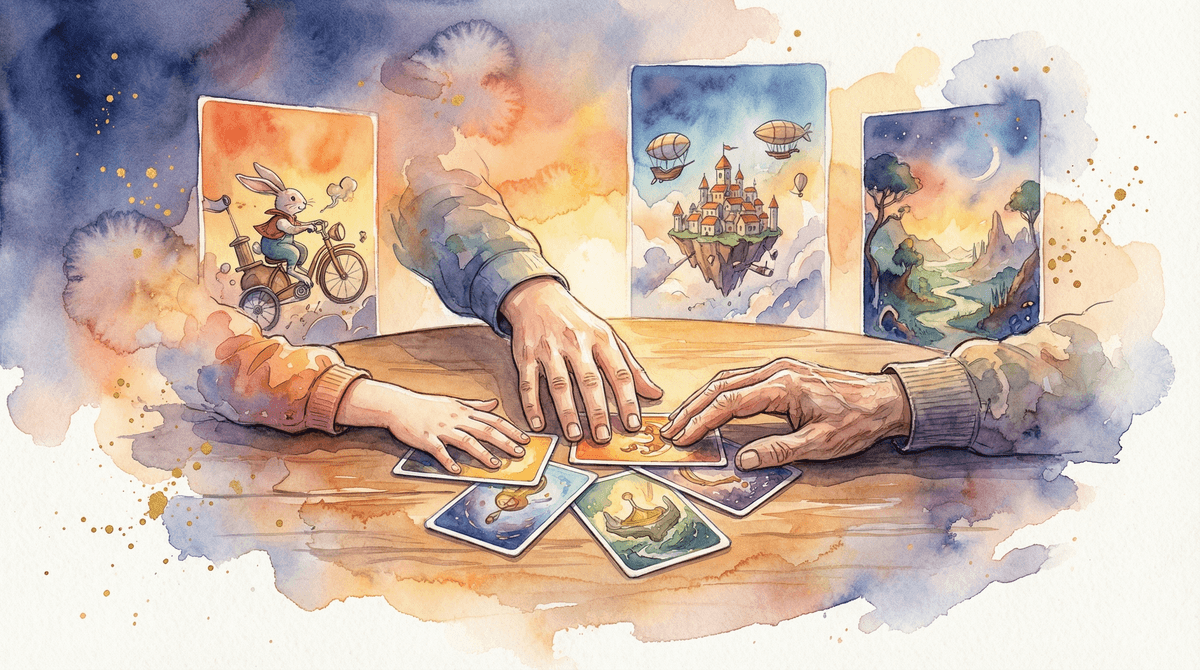
Dixit is one of those rare board games that actually gets better with mixed ages at the table. It's a beautifully illustrated storytelling game where players take turns being the "storyteller" who describes one of their cards using a word, phrase, song lyric, or sound — whatever sparks their imagination. Everyone else plays a card from their hand that matches the clue, then players vote on which card they think belongs to the storyteller.
Here's the genius part: the storyteller only scores if SOME players guess correctly, but not all of them. This means you want to be evocative and creative, but not too obvious. It's a game that rewards being on the same wavelength as some people at the table, which makes it perfect for families where everyone thinks a little differently.
The cards themselves are dreamlike, surreal illustrations that can mean different things to different people — which is exactly why it works so well across age groups.
Most family board games either bore the adults (Candy Land, anyone?) or leave younger kids in the dust. Dixit sidesteps this entirely because there's no "right" answer and no complex rules to master.
A five-year-old's literal interpretation ("it's a red bird!") is just as valid as a teenager's obscure movie reference or grandma's poetic metaphor. The game naturally adjusts to each player's cognitive level and cultural references. Your kindergartener isn't failing at the game — they're playing it perfectly for their age.
Plus, there's no reading required beyond keeping track of scores, and the gameplay is tactile and visual. Kids who struggle with traditional board games often thrive here.
Start with "open clues" for younger players. When your 6-year-old is the storyteller, let them describe their card more fully if they want to. The official rules say you can only give one clue, but honestly? Bend that rule for the first few rounds with little ones. Let them say "a blue castle with a princess" instead of forcing them to pick just one word. They'll naturally get more concise as they understand the game.
Pair up if needed. If you've got a preschooler who wants to play, let them be a team with an older sibling or adult. They can help choose cards and come up with clues together. This also works great for keeping a squirmy toddler engaged without derailing the whole game.
Embrace different types of clues. This is where the magic happens. Encourage kids to act out their clues, make sounds, sing songs, or reference their favorite shows. Your teen might quote TikTok audio, your 8-year-old might reference Bluey, and that's perfect. The game becomes a window into how each person's brain works.
Don't stress about scoring with young kids. The voting and scoring system can be confusing for kids under 7 or 8. You can either simplify it (everyone who guessed right gets a point, storyteller gets a point if someone guessed right) or just... not keep score at all. Gasp! The game is fun enough that younger kids won't care, and older players can still enjoy the creative challenge.
Use the "difficulty dial" naturally. When playing with your partner or older kids, you can make your clues more abstract and challenging. When playing with your first-grader, you might lean a bit more obvious. The game's scoring system actually rewards this — you're trying to connect with specific people at the table, not everyone.
Dixit has a bunch of expansion packs that add new card decks, and honestly, they're all pretty great. The base game has 84 cards, which is plenty to start, but if your family gets into it, expansions like Dixit: Odyssey or Dixit: Journey add fresh imagery and keep things interesting.
The cards can get weird. Some of the illustrations are dreamlike and surreal, occasionally slightly dark or abstract. There's nothing inappropriate, but some images might prompt questions from younger kids. This is actually a feature, not a bug — it leads to great conversations about interpretation and imagination.
Set a timer for thinking time. Give everyone 30-60 seconds to choose their card after the clue is given. This keeps the game moving and prevents analysis paralysis (looking at you, overthinkers).
Have a "clue helper" for kids who freeze up. Some kids get overwhelmed when it's their turn to be storyteller. Whisper suggestions if they're stuck: "What does it remind you of?" or "What's happening in the picture?"
Play with 4-6 players if possible. The game technically works with 3-12 players, but the sweet spot for mixed ages is 4-6. Fewer than that and it's too easy to guess; more than that and younger kids lose focus waiting for their turn.
Keep rounds short. You don't have to play to the official end point (when the deck runs out). Play to 20 points, or set a timer for 30 minutes. Better to end with everyone wanting more than to push through to tears and meltdowns.
Dixit is one of the best family board games for mixed ages because it celebrates different ways of thinking rather than penalizing them. Your 6-year-old's concrete thinking and your teenager's pop culture references exist beautifully in the same game space.
It's also a sneaky way to practice perspective-taking and theory of mind — kids learn to think about what other people might be thinking, which is a crucial social skill. And unlike Monopoly, nobody ends up crying or flipping the board.
The game typically takes 30-45 minutes, requires minimal setup, and the rules explanation takes about 2 minutes. It's won a bunch of awards for good reason.
If your family loves Dixit, you might also enjoy Mysterium (similar vibe but cooperative), Codenames: Pictures (word association with images), or Unstable Unicorns (sillier but still works across ages).
And if you're looking for more family game night ideas that actually work with mixed ages, check out our guide to the best board games for families with kids of different ages.