

Hot Streak Board Game: Is This Betting Game Right for Your 6-8 Year Old?
Hot Streak is a chaotic, fast-paced racing game where players bet on unpredictable mascot races. It's designed for ages 6+ and takes about 20 minutes to play. The gambling theme is front and center – you're literally betting play money on race outcomes – so whether this works for your family comes down to how comfortable you are with casino-style mechanics as entertainment for young kids. The game itself is simple, hilarious, and genuinely fun, but you'll want to think through the messaging before bringing it to family game night.
Hot Streak is a "bet-the-race" board game that supports 2-9 players (expandable for larger groups) and retails for around $50. The first print run sold out, and pre-orders for the next batch are slated for fall 2025, which tells you something about its popularity.
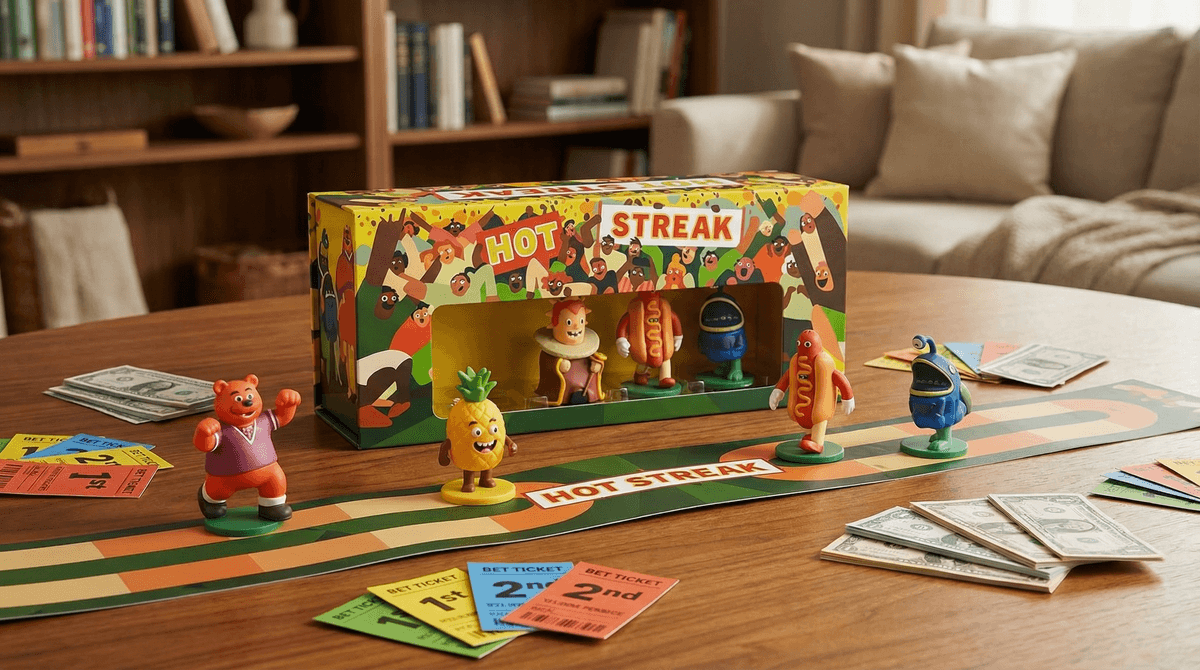
The box includes a long pull-out vinyl racetrack, four chunky mascot figures, a 53-card race deck, betting tickets, side-bet cards, and bundles of play money. The production quality is solid – the track is durable, the mascots are cute, and everything feels designed to withstand the chaos of excited kids slamming pieces around.
The game plays out over three short races. Before each race, players draft betting tickets that predict where specific mascots will finish (1st, 2nd, or 3rd place) or cover quirky side bets like "two racers will share a space." After everyone places their bets, each player secretly adds one of three cards from their hand to the race deck. The deck gets shuffled, three cards are burned, and then cards are revealed one by one, moving mascots forward, backward, turning them around, or knocking them down.
This is where the game gets wild. Mascots can fall, swerve into other lanes, or even run completely off the track and get disqualified. The outcome is almost entirely chaotic and driven by those hidden cards rather than strategic player decisions during the race. At the end of the third race, everyone tallies their winnings, and whoever has the most play money wins.
The appeal is immediate: it's loud, unpredictable, and genuinely funny. Reviews consistently describe the experience as "hilarious" and "wild & watchable." Geeks Under Grace praises the frantic, unpredictable races, while Dale Yu at Opinionated Gamers rates it a favorite of the past year. Christian Game Guy likens it to Camel Up (another betting-on-races game) and highlights the screaming, betting-the-race vibe.
For kids in the 6-8 age range, the thrill comes from watching their mascot take the lead, only to have it knocked down two spaces later by a surprise card. The side bets add an extra layer of silliness – betting that two racers will end up on the same space feels more like rooting for chaos than calculating odds. The short playtime (20 minutes) means even if you lose spectacularly, you're not stuck in a two-hour slog like Monopoly.
Adults tend to enjoy it for the same reasons kids do, plus the nostalgia factor of watching tiny figures race around a track. It's a game that works best when everyone leans into the absurdity and embraces the lack of control.
This is the elephant in the room, and honestly, it's the main reason you're reading this guide. Hot Streak doesn't just have a gambling theme – it IS a gambling game. You're betting play money on race outcomes, drafting betting tickets, and tallying your winnings at the end. The entire experience is designed to feel like a miniature casino.
For some families, this is a complete dealbreaker. If you've worked hard to teach your kids that gambling is risky, addictive, or morally problematic, introducing a game that celebrates betting – even with fake money – sends a confusing message. Kids at this age are concrete thinkers. They're not going to parse the difference between "fun pretend betting" and "real betting that can ruin lives." They're just going to learn that betting on races is exciting and rewarding.
For other families, this is a non-issue. Plenty of classic games involve chance, risk, and winning/losing resources – Uno, Sorry!, even Candy Land teaches kids to handle the emotional rollercoaster of random outcomes. If you see Hot Streak as teaching probability, managing disappointment, and having fun with uncertainty, then the betting language is just thematic dressing.
The key question: What do you want your 6-8 year old to internalize about gambling? If your answer is "nothing, because I don't want them thinking about it at all," skip this game. If your answer is "I want them to understand that betting is a form of entertainment with built-in risk," this could actually be a useful teaching tool – as long as you're prepared to have explicit conversations about why we use fake money in games and real money stays far away from casinos.
Ask our chatbot about how to talk to kids about gambling themes in games
The box says ages 6+, and that's mostly accurate, but there are a few practical considerations for younger players:
Reading level: The betting tickets and side-bet cards require reading. A confident 7-year-old reader can probably handle it, but a newer reader or a 6-year-old will need help. You'll be reading cards aloud or helping them understand what "Mascot finishes 2nd" means. This isn't a huge barrier – lots of family games require adult support at this age – but it does mean younger kids won't be playing independently.
Understanding betting mechanics: The concept of "betting" might be new for this age group. You'll need to explain that you're guessing what will happen, putting down a ticket to show your guess, and earning money if you're right. Most kids grasp this quickly, especially once they see it in action, but expect some confusion in the first round.
Handling losing: This is the big one. Hot Streak is wildly unpredictable. Your mascot can be in first place and then get knocked off the track entirely. Your carefully chosen side bet can miss by one space. Kids who struggle with losing or who get upset when things feel "unfair" might have a hard time here. The chaos is the point, but it also means there's very little skill or control. If your kid is the type who flips the Jenga tower when they lose, maybe wait a year or two.
Attention span: The 20-minute playtime is perfect for this age. Three quick races keep things moving, and even kids with shorter attention spans can stay engaged. This is a huge advantage over longer strategy games.
It's genuinely fun. Despite the gambling concerns, this is a well-designed game that delivers on its promise of chaotic, laugh-out-loud entertainment. If you decide it's a fit for your family, you'll probably find yourself suggesting it on game nights.
It's not educational. Unlike Catan (resource management) or Ticket to Ride (spatial planning), Hot Streak doesn't teach much beyond basic probability and emotional regulation. That's fine! Not every game needs to be a learning experience. But if you're looking for something that sneaks in math or critical thinking, this isn't it.
The gambling language is everywhere. The rulebook, the cards, the gameplay – it all uses casino terminology. "Betting tickets," "winnings," "payouts." You can't really strip this out or rebrand it as something else without fundamentally changing the game. If you're uncomfortable with that language, trust your gut.
It scales well. Whether you have two kids or a crowd of nine, the game works. The chaos actually gets better with more players, because more hidden cards mean more unpredictability.
Availability is limited. The first print run sold out, and the next batch isn't shipping until fall 2025. If you're interested, you'll need to pre-order or wait. This also means you can't just grab it off the shelf at Target to test it out.
Check out other fast-paced family games for ages 6-8
If you like the idea of a fast, chaotic racing game but want to avoid the gambling theme, here are a few options:
Camel Up: This is the game reviewers keep comparing Hot Streak to. It's also a betting-on-races game, so it has the same gambling theme, but it's slightly more strategic and has a longer playtime (30-45 minutes). Recommended for ages 8+.
Downforce: A racing game where you control cars AND bet on the outcome, but the betting feels more integrated into the strategy rather than the whole point. Ages 8+, 30-40 minutes.
Flamecraft: If you want something cooperative and cozy with zero gambling themes, this dragon-themed game is charming and accessible for ages 8+. Totally different vibe, but a solid family option.
Sushi Go!: Fast, fun, card-drafting game with zero gambling. Ages 8+, 15 minutes. Great for kids who like quick, strategic choices without the chaos.
Explore more family board games for elementary-age kids
Hot Streak is a well-made, genuinely entertaining game that will make your family laugh. The races are chaotic, the side bets are goofy, and the short playtime means you can squeeze in multiple rounds without losing steam.
But – and this is a big but – the gambling theme is not subtle. This is a game about betting, winning money, and celebrating payouts. If that language and those mechanics make you uncomfortable for your 6-8 year old, trust that instinct. There are plenty of other fast, fun family games that don't require you to navigate conversations about casinos.
If you're comfortable with the theme (or see it as an opportunity to teach your kids about probability and risk in a controlled setting), Hot Streak delivers exactly what it promises. Just be ready to help younger kids with reading, explain the betting mechanics clearly, and support them when their mascot gets knocked off the track for the third time in a row.
Every family is different. You know your kids, your values, and what works at your game table. Hot Streak is a blast for the right family – just make sure it's yours.
Ask our chatbot any questions about Hot Streak or similar games