

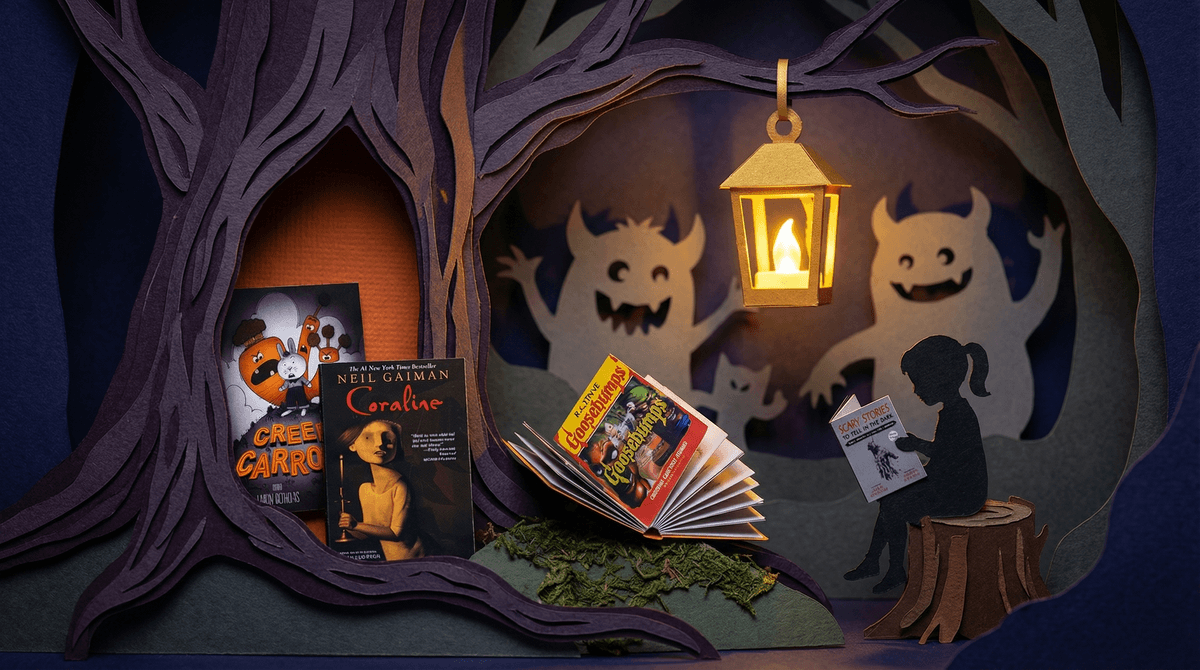
Look, we need to talk about those creepy books your kid keeps checking out from the library. You know the ones—with the skeleton on the cover, or the haunted house, or that disturbingly cheerful illustration style that somehow makes everything worse.
Horror books for kids range from mildly spooky picture books like Creepy Carrots! for the preschool set, to middle-grade series like Goosebumps and Scary Stories to Tell in the Dark, all the way up to genuinely unsettling YA novels. They're designed to give kids that delicious thrill of being scared in a safe, controlled way.
And here's the thing that might surprise you: these books are actually really good for kids. Not in a "well, at least they're reading" way, but in a legitimate developmental benefits kind of way.
Kids are drawn to horror for the same reason adults watch scary movies or ride roller coasters—it's a safe way to experience danger. They get to feel the adrenaline rush, the heart-pounding suspense, and then close the book and be totally fine.
But there's more to it than just thrills:
Control and mastery. When kids read scary stories, they're in charge. They can read faster or slower, skip ahead to make sure everyone's okay, or close the book if it gets too intense. This sense of control is huge for kids who often feel powerless in their actual lives.
Processing real fears. Horror books let kids explore their anxieties—about death, loss, the dark, being alone, not being believed by adults—in metaphorical ways. A story about a monster under the bed is way more manageable than trying to articulate complex fears about mortality.
Social currency. Let's be real: being the kid who's read the scariest book is a form of social capital. Kids love sharing scary stories, daring each other to read certain passages, and bonding over shared terror.
This isn't just about letting kids have fun. Research on children and scary media shows some legitimate developmental benefits:
Emotional resilience. Kids who engage with age-appropriate scary content learn to manage uncomfortable emotions. They practice being afraid and then calming themselves down—a crucial life skill.
Critical thinking. Horror requires kids to pick up on subtle clues, predict outcomes, and understand how tension builds. These are sophisticated reading skills that transfer to all kinds of texts.
Empathy development. When kids read about characters in scary situations, they practice perspective-taking and emotional understanding in high-stakes scenarios.
Reading motivation. Horror is one of the few genres that can turn reluctant readers into voracious ones. Kids who won't touch a "boring" book will absolutely demolish a 300-page horror novel in two days.
Not all scary is created equal. Here's a rough framework:
Ages 4-7: Mildly Spooky
Think gentle scares with humor and happy endings. Books like Room on the Broom or The Gruffalo have mild threat but lots of reassurance. The scary elements are clearly fantastical, and everything resolves nicely.
What to watch for: Even mild scares can be too much for sensitive kids this age. If they're having nightmares or seem genuinely distressed, dial it back.
Ages 8-12: Classic Kid Horror
This is peak Goosebumps territory. Books like Coraline by Neil Gaiman, the Goosebumps series by R.L. Stine, or Small Spaces by Katherine Arden. These books can be genuinely creepy but usually feature kid protagonists who solve problems and triumph over evil.
What to watch for: Some kids in this age range can handle intense scares, others can't. The difference between an 8-year-old and a 12-year-old is massive. Know your kid.
Ages 13+: YA Horror
Now we're getting into territory that can include some genuinely disturbing content. Books like Anna Dressed in Blood or The Monstrumologist series can have graphic violence, body horror, and psychological terror.
What to watch for: Even mature teens can be affected by horror content. Check reviews (Common Sense Media is your friend here) for specific content warnings about gore, violence, or disturbing themes.
"Is this too scary?" is the wrong question. The better question is: "Is my kid choosing to read this, and how are they handling it?" A book that's too scary for one kid is perfect for another.
Watch for these signs it might be too much:
- Nightmares or sleep disruption
- Refusing to be alone
- Excessive worry about scenarios from the book
- Physical symptoms like stomachaches before bed
But also watch for these signs it's just right:
- They can't put the book down
- They want to talk about it (even if they're a little freaked out)
- They're seeking out similar books
- They're processing it through play or art
The illustrations matter. Those Stephen Gammell illustrations in Scary Stories to Tell in the Dark? They're legitimately nightmare fuel, way scarier than the actual stories. If your kid is sensitive to visual stuff, preview the pictures or get the newer edition with different illustrations.
Reading together is powerful. For younger kids or those new to scary stories, reading together gives you a chance to process the scary parts in real-time, talk about what's happening, and provide reassurance.
Instead of "Are you sure you can handle this?" try:
"What do you like about scary books?" This opens up a conversation about what they're getting out of the experience.
"What's the scariest part so far?" This lets you gauge their comfort level and shows you're interested in their experience.
"How do you calm yourself down when it gets really scary?" This helps them develop metacognitive skills about managing their emotions.
"Want to tell me about it?" Sometimes kids need to process scary content by retelling it. This can actually reduce the fear factor.
Don't worry if:
- Your kid is reading horror but seems generally happy and well-adjusted
- They're reading age-appropriate content (even if it seems intense to you)
- They're excited to discuss the books with you
- They're developing into a more confident reader
Do pay attention if:
- The content is way above their maturity level (like a 9-year-old reading adult horror with graphic violence)
- They're reading horror compulsively as a way to avoid other emotions
- They're becoming desensitized to violence in concerning ways
- The scary content is bleeding into their daily life in disruptive ways
Horror books for kids aren't a guilty pleasure or a phase to endure—they're a legitimate genre with real benefits. They build resilience, critical thinking, and most importantly, a love of reading.
Your kid who tears through Goosebumps books is developing reading stamina, learning to analyze plot structure, and practicing emotional regulation. That's not nothing.
The key is age-appropriateness and knowing your kid. A sensitive 10-year-old might do better with The Spiderwick Chronicles (adventure with scary elements) than full-on horror, while a thrill-seeking 10-year-old might be ready for Doll Bones by Holly Black.
Trust your kid to know their limits (with your guidance), keep communication open, and remember: every adult who loves to read has a story about the book that scared them as a kid. That's not trauma—that's the beginning of a lifelong relationship with stories.
If your kid is new to scary books: Start with humor-horror hybrids like The Last Kids on Earth series or Hilo graphic novels.
If they're ready for the next level: Check out this guide to age-appropriate horror books for specific recommendations by age and sensitivity level.
If you're concerned about a specific book: See if a specific book is appropriate for your child's age and temperament.
If they're into horror across media: Consider this guide about scary movies for kids to understand how horror content works across different formats.