

Let's be direct: there are no "fun" Holocaust movies, and there shouldn't be. But there are films that can help children understand one of history's darkest chapters in age-appropriate ways—movies that balance historical truth with emotional accessibility, that teach without traumatizing.
The challenge is real. This isn't like explaining World War II battles or ancient civilizations. The Holocaust represents human cruelty at an incomprehensible scale, and deciding when and how to introduce it to your kids requires careful thought. Too early, and you risk nightmares and anxiety they're not equipped to process. Too late, and they might first encounter it through insensitive jokes at school or shallow references online.
The good news? There are filmmakers who've taken this responsibility seriously, creating films that serve as educational bridges—stories that center humanity, resilience, and historical truth without graphic violence or gratuitous suffering.
Here's the reality: by middle school, most kids will encounter Holocaust references—in history class, in books, in casual conversation, even in memes (yes, really, and it's as awful as it sounds). If their first exposure is through an inappropriate joke or a graphic documentary meant for adults, you've lost the chance to frame this history thoughtfully.
Additionally, Holocaust education is increasingly under threat. Some states are seeing efforts to restrict how genocide is taught, and Holocaust denial content exists online. Teaching kids early with accurate, age-appropriate content helps inoculate them against misinformation later.
And honestly? This history matters beyond dates and facts. It's about understanding how ordinary people can commit extraordinary evil, how propaganda works, how discrimination escalates, and why "never again" requires constant vigilance. These are lessons that resonate in 2026 just as much as they did in 1945.
Ages 8-10: Introduction Through Individual Stories
The Diary of Anne Frank (1959) or the 2016 miniseries This is often the entry point, and for good reason. Anne's story focuses on hiding, hope, and a girl's inner life rather than camp horrors. The diary format makes it relatable—she's writing about crushes and family annoyances alongside fear. That said, kids need to understand the ending: Anne died at Bergen-Belsen. Don't sugarcoat it, but you can keep details age-appropriate ("She got very sick and died in the camp").
Number the Stars (based on the book) While the book is more commonly read, if you can find the film adaptation, it shows Danish resistance and rescue—a story of people who helped, which gives kids a sense of agency and hope within the horror.
Ages 11-13: Expanding Understanding
The Boy in the Striped Pajamas (2008) Controversial among historians for its historical inaccuracies (the friendship depicted wouldn't have been possible), but emotionally powerful for this age group. The ending is devastating and will require serious conversation. Watch it with them. Some kids find the child's perspective makes it more accessible; others find it more upsetting. You know your kid.
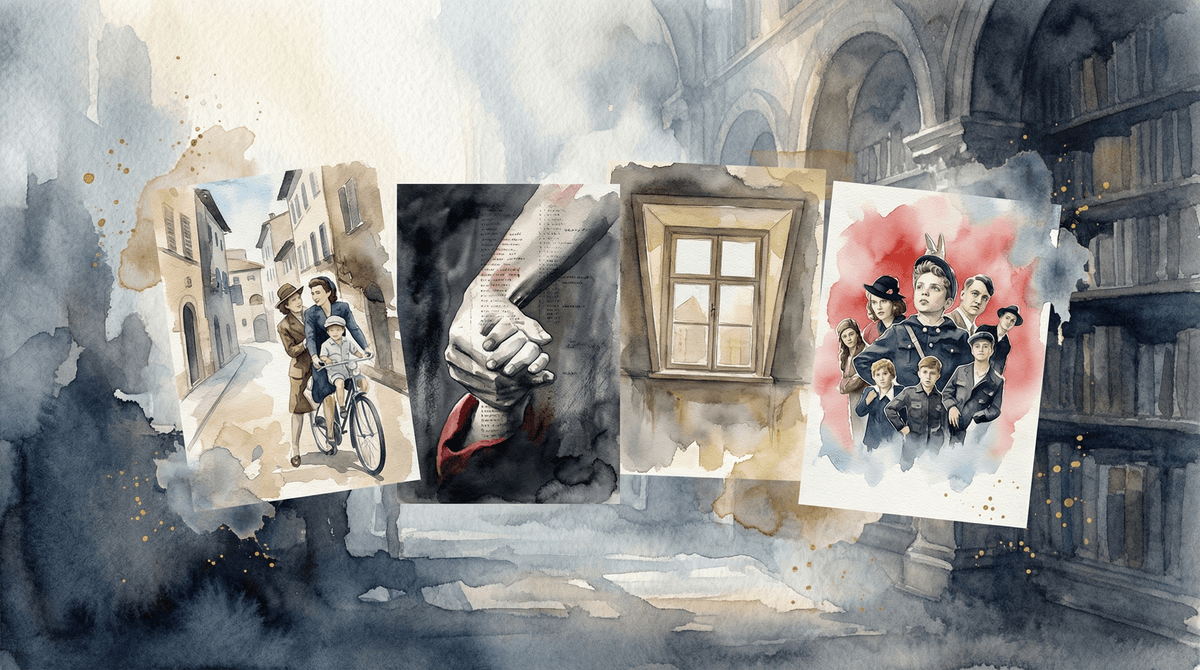
Life is Beautiful (1997) Roberto Benigni's film shows a father protecting his son through imagination and humor even in a concentration camp. It's rated PG-13 for a reason—there's implied violence and the context is clear. But it emphasizes love, sacrifice, and the human spirit. The Italian with subtitles actually helps for some kids—creates a tiny bit of emotional distance while they process.
Ages 14+: More Complex Narratives
Schindler's List (1993) This is the film many people think of first, but it's rated R for graphic violence, nudity, and intense scenes. Do not show this to younger kids. For mature teens, it's powerful and historically important, but watch it together and be prepared for hard conversations. Some scenes are truly brutal.
The Pianist (2002) Also rated R. Follows a Polish Jewish musician's survival in Warsaw. Less graphic than Schindler's List but still intense. Better for older teens interested in individual survival stories.
Defiance (2008) Shows Jewish resistance fighters—an important counter-narrative to passive victimhood. Rated R for violence and language. Good for teens who need to see that Jews fought back.
Jojo Rabbit (2019)
Satire from a German child's perspective with Hitler as an imaginary friend. Sounds bizarre, and it is, but it's also surprisingly effective at showing how propaganda works on young minds. Rated PG-13. Some teens love it; some find the humor inappropriate. It's definitely not for everyone.
1. Watch it first, or at least watch it with them Seriously. Age ratings help, but you know your kid's sensitivity level. Some 13-year-olds can handle more than some 16-year-olds. If you can't preview it, at minimum watch together so you can pause and process.
2. Context is everything Don't just throw on a Holocaust film during family movie night. Prepare them: "We're going to watch a movie about something very difficult that happened in history. It's going to be sad and maybe scary, but it's important to learn about. We can stop anytime and talk."
3. Have the conversation framework ready
Kids will have questions. Big ones. "Why didn't they just fight back?" "Why didn't other countries help?" "Could this happen again?" Don't wing it. Think through how you'll discuss these.
4. Balance horror with humanity After watching, many families find it helpful to also learn about rescuers, resistance fighters, and survivors who rebuilt their lives. The Holocaust United States Memorial Museum has excellent educational resources for families.
5. Be honest about what you don't know If your kid asks something you can't answer, it's okay to say "That's a really good question, and I don't know. Let's find out together." This models intellectual humility and shows that learning about difficult history is ongoing.
- "What did you think about [character]? How do you think they felt?"
- "What surprised you most about what you saw?"
- "Were there parts that were confusing or that you want to talk about?"
- "What do you think we can learn from this that matters today?"
- "How do you think people let this happen? What could have stopped it?"
Don't force it. Some kids need time to process before they're ready to talk. Let them know you're available when they are.
Some Holocaust films are important historical documents but simply aren't appropriate for children or even most teens:
- Shoah (1985): Nine-hour documentary with extensive testimony. For adult study, not kids.
- Son of Saul (2015): Follows a Sonderkommando. Incredibly powerful, absolutely not for minors.
- Come and See (1985): Soviet film about Nazi atrocities. Traumatizing even for adults.
There's no shame in saying "This is an important film that you might watch when you're older, but it's too intense right now."
Teaching kids about the Holocaust through film isn't about exposing them to maximum horror—it's about building understanding gradually, age-appropriately, and with support. The right film at the right age, with the right preparation and follow-up, can be transformative education.
Start with stories that emphasize individual humanity. Move to broader historical context as they mature. Always, always create space for questions and feelings. And remember: you're not trying to make them experts in one sitting. You're opening a door to understanding that will deepen over their lifetime.
This is hard parenting work. But it's also some of the most important. In a world where Holocaust denial exists online and antisemitism is rising, kids who understand this history—really understand it—are better equipped to recognize and resist hatred in all its forms.
- Check out Anne Frank's diary as a book first—many kids connect better with her voice on the page
- Visit the United States Holocaust Memorial Museum's resources for families for age-appropriate educational materials
- Talk to your kid's school about what Holocaust education looks like in their curriculum—you can coordinate timing
- Consider documentaries designed for students as they get older for a more historical approach
You've got this. It won't be easy, but it matters.