

Let me paint you a picture: Your sixth grader comes home from school, drops their backpack, and immediately picks up their phone. Within seconds, they're furiously typing into a group chat with 15 other kids, discussing everything from tonight's homework to who said what at lunch to an endless stream of memes you don't understand.
Welcome to the sixth grade group chat—the digital equivalent of passing notes in class, except it never stops, involves way more people, and can blow up your kid's phone with 200+ messages before dinner.
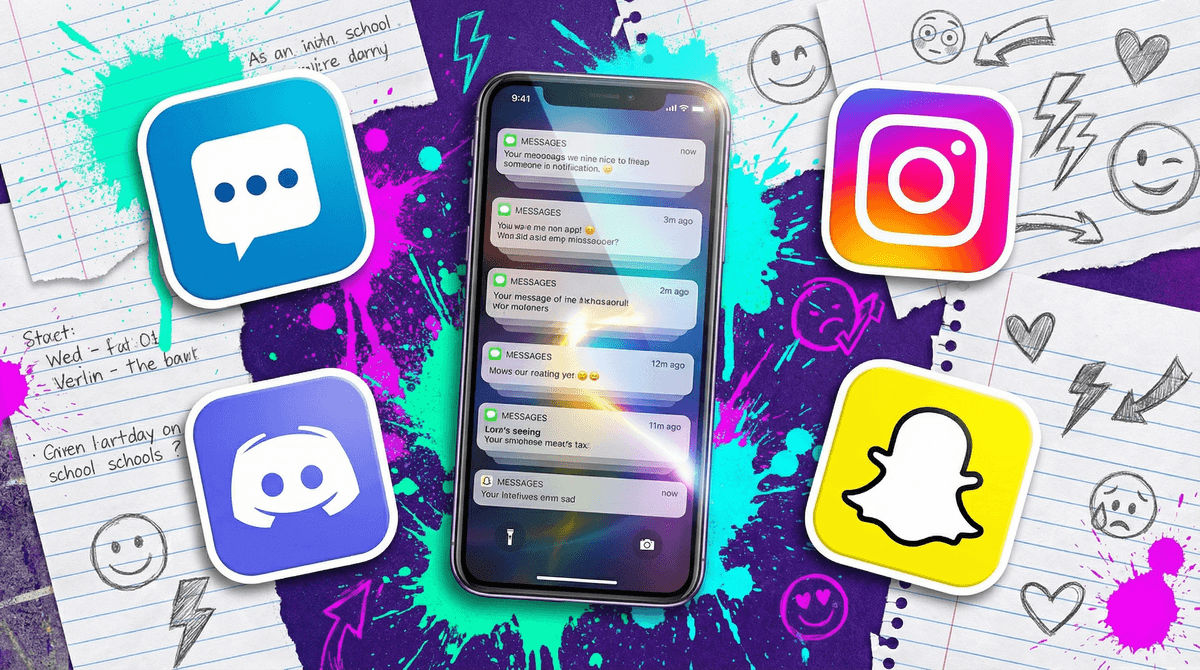
These group chats typically happen on platforms like iMessage, Instagram DMs, Snapchat, Discord, or WhatsApp. They're where sixth graders coordinate hangouts, share inside jokes, plan group projects, discuss crushes, and navigate the complicated social dynamics of middle school—all in real time, all the time.
Here's the thing: as much as the constant notifications drive us parents bonkers, group chats serve a legitimate developmental purpose for sixth graders.
They're learning social navigation. Sixth grade is peak "figuring out where I fit in" territory. Group chats let kids practice reading social cues (even without facial expressions), understand group dynamics, and learn when to contribute versus when to lurk. These are real skills they'll use their entire lives.
They feel included. FOMO is real at this age, and being part of the group chat means being part of the social fabric. When everyone's talking about something that happened in the chat, your kid isn't left out of the conversation.
They're building friendships. Sharing memes, inside jokes, and random thoughts throughout the day actually strengthens bonds between kids. It's not that different from when we text our own friend groups—it's connection.
They coordinate real life. "Who's bringing snacks?" "What time are we meeting?" "Did anyone write down the homework?" Group chats are genuinely useful tools for organizing their increasingly independent lives.
Let's be honest about what you're signing up for:
The volume is WILD. A sixth grade group chat can easily generate 300+ messages in an afternoon. Most of it is noise—random emojis, "lol," reaction GIFs, and conversations that go absolutely nowhere. Your kid will insist they need to read every single message.
Drama happens. Someone gets left out. Someone says something mean. Two kids start arguing and drag everyone else in. Subgroups form. The whole thing implodes and three new chats spin off. This is middle school, digitized.
The hours are brutal. Group chats don't respect dinner time, homework time, or sleep time. Kids feel pressure to respond immediately or they'll miss something important (spoiler: it's rarely actually important).
Screenshots are forever. Kids this age don't fully grasp that anything they type can be captured and shared beyond the group. This includes jokes that don't land, venting about other kids, or messages sent in anger.
Sixth grade is a tricky age—they're not little kids anymore, but they're definitely not ready for completely unsupervised digital social lives. Here's what developmentally makes sense:
Start with smaller, supervised groups. If your sixth grader is new to group chats, begin with smaller groups (4-6 kids) with friends you know. This is more manageable and less overwhelming than jumping into a 20-person class chat.
Platform matters. iMessage groups are generally easier to monitor than Snapchat or Instagram DMs, where messages can disappear. Discord offers more control but requires more setup. Choose platforms where you can have some visibility, at least initially.
Set clear boundaries. This is non-negotiable. Establish rules about:
- When the phone gets put away (dinner, homework time, an hour before bed)
- What kinds of messages are never okay (mean comments, sharing personal info about others, anything they wouldn't say to someone's face)
- What happens if they see something concerning (they come to you, no punishment)
Check in regularly. Not helicopter-parent surveillance, but genuine curiosity. "How's the group chat going? Anything funny happen today?" Make it normal to talk about their digital social life like you would their school social life.
You need to know who's in these chats. A group chat with five of your kid's close friends is very different from a chat with 20 kids including some your child barely knows. Larger groups = more risk of drama, bullying, or inappropriate content.
The "add anyone" problem. Kids often don't realize that when they're in a group chat, any member can add new people without permission. Your kid might think they're in a small friend group, then suddenly there are 15 people they don't know well.
Exclusion hurts, digitally and IRL. Being left out of "the" group chat can be devastating for sixth graders. But being in too many chats or the wrong ones can also be stressful. There's no perfect answer here—just awareness that this is a real social-emotional issue.
Inappropriate content spreads fast. Whether it's a kid sharing something they shouldn't, or someone forwarding a meme that's way too mature, group chats can expose kids to content they're not ready for. The larger the group, the higher the risk.
They need an exit strategy. Teach your kid that it's okay to mute chats, leave groups that feel toxic, or take breaks. They don't have to be available 24/7, even if it feels that way.
Have the conversation before they join. Don't wait until there's a problem. Talk through scenarios: What if someone's being mean? What if someone shares something inappropriate? What if the chat is blowing up during homework time? Role-play responses.
Establish tech-free zones and times. Phones don't sleep in bedrooms. Period. Group chats can wait until morning. Research shows that phones in bedrooms significantly impact sleep quality, and sixth graders need 9-11 hours of sleep.
Use Do Not Disturb features. Teach your kid to silence group chats during homework, family time, and before bed. They can check messages on their schedule, not the group's schedule.
Monitor without hovering. You should have access to your sixth grader's devices and accounts. But randomly reading every message builds distrust. Instead, spot-check occasionally and focus on conversations about what they're experiencing.
Teach digital citizenship. Help them understand that everything they type reflects on them. Would they want a teacher to see it? Their grandma? Future employers? (Yes, I know that sounds dramatic for sixth grade, but building good habits now matters.)
Know when to intervene. If you see bullying, sexual content, or anything that makes you concerned for your child's safety or someone else's, that's when you step in. Document, involve the school if appropriate, and address it directly.
Sixth grade group chats are pretty much inevitable in 2024. According to recent data, around 70-80% of sixth graders have access to smartphones, and most are participating in some form of group messaging. Fighting this reality isn't productive—preparing your kid for it is.
The goal isn't to prevent your child from participating in their digital social world. It's to teach them to navigate it safely, kindly, and with boundaries that protect their wellbeing.
Yes, there will be drama. Yes, you'll get frustrated by the constant notifications. Yes, something will eventually go sideways. But with clear expectations, ongoing conversations, and appropriate guardrails, group chats can be a relatively safe space for your sixth grader to practice the social skills they're developing anyway—just with an off button.
If your kid is asking to join group chats:
- Start with smaller groups of friends you know
- Set up clear rules together before they start
- Choose a platform you can monitor
- Establish tech-free times immediately
If your kid is already in multiple group chats:
- Have a conversation about how it's going
- Review who's in each chat
- Adjust boundaries if needed
- Make sure they know how to mute, leave, or take breaks
If there's been a problem:
- Don't panic or punish immediately—get the full story
- Document concerning messages
- Involve the school if appropriate
- Use it as a teaching moment about digital citizenship
Want to understand more about what other sixth graders in your community are doing digitally? Screenwise can show you data about app usage, group chat participation, and digital boundaries from families similar to yours—helping you make decisions that feel right for your family, not just based on what you're guessing everyone else is doing.
Learn more about messaging apps and platforms or explore what's age-appropriate for middle schoolers.