

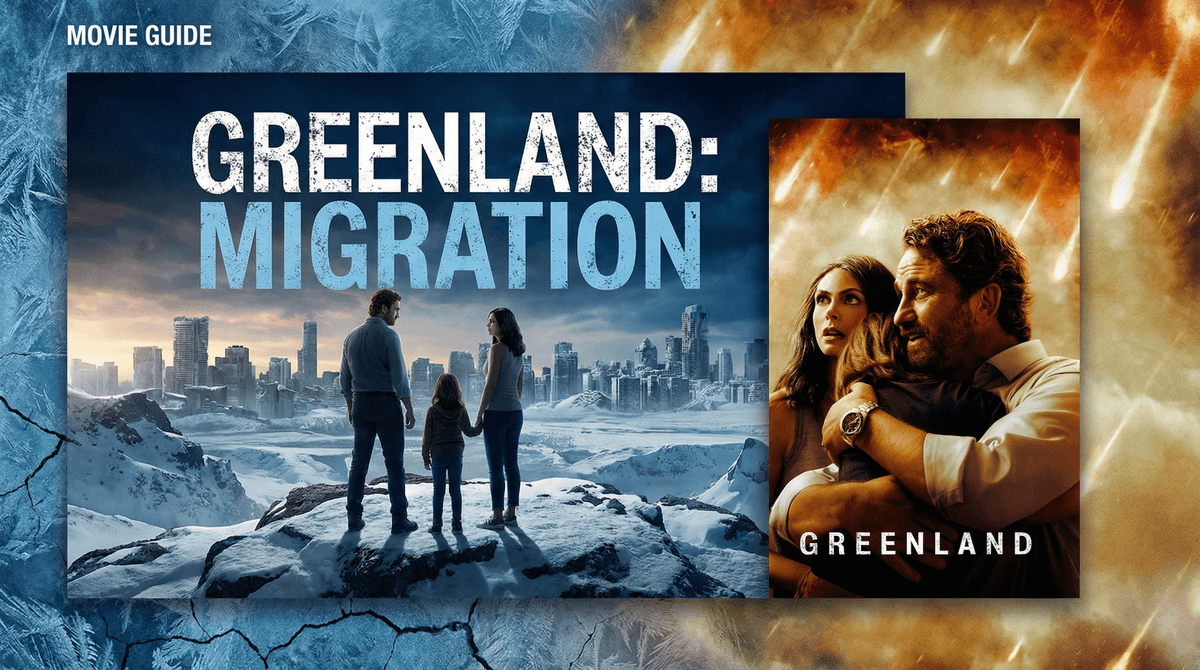
Greenland: Migration - What Parents Need to Know About the Disaster Sequel
TL;DR: The sequel to 2020's surprise hit disaster thriller is here, and it's bringing more family-focused survival drama with intense action sequences. If your teens loved the first film, they'll probably want to see this one—but the violence, peril, and apocalyptic themes are even more intense this time around. Recommended for ages 14+, with strong consideration for your individual kid's anxiety levels around disaster scenarios.
Greenland: Migration picks up after the comet fragments from the first film devastated Earth. Gerard Butler returns as John Garrity, leading his family through a frozen, post-apocalyptic landscape as they attempt to leave their Greenland bunker and find a new home. Think The Road meets disaster blockbuster, with more explosions and less existential dread.
The first Greenland became a streaming phenomenon during lockdown—it hit differently when we were all living through our own global crisis. This sequel leans into the "what comes after" question, exploring how humanity rebuilds (or doesn't) after catastrophe.
Disaster movies have always been teen catnip, and the Greenland films add family dynamics that make them feel more grounded than your typical CGI destruction-fest. The first movie resonated because it focused on ordinary people trying to survive extraordinary circumstances—not scientists or presidents, just a family trying to stay together.
For teens who've grown up with climate anxiety and pandemic uncertainty, these films tap into real fears while providing the catharsis of watching characters actively fight for survival. It's apocalypse fiction that feels uncomfortably plausible.
The Intensity Factor
This is a hard PG-13. We're talking:
- Sustained peril and tension throughout the entire runtime
- Violence including gunfire, explosions, and people making brutal survival choices
- Death and loss - characters you care about don't all make it
- Panic and chaos in crowd scenes that can be genuinely distressing
- Bleak post-apocalyptic imagery - frozen wastelands, destroyed cities, desperate survivors
The MPAA rating system exists for a reason, but also... it's wildly inconsistent. This film earns its PG-13 through sheer relentless intensity rather than gore or language. There's no blood splatter or F-bombs, but the emotional weight is heavy.
Family Dynamics Worth Discussing
One thing the Greenland films do well is show a family under extreme stress. John and his wife Allison (Morena Baccarin) have a realistic, imperfect marriage. They make mistakes, they fight, they struggle with impossible choices about their diabetic son Nathan.
This creates good conversation starters about:
- How families handle crisis and whether stress brings people together or tears them apart
- Parental protection vs. honesty - how much do you shield kids from harsh realities?
- Resource scarcity and ethics - who gets saved when there isn't room for everyone?
The Anxiety Question
About 92% of families in our community use TV/streaming for family entertainment, and disaster films are a popular genre. But here's the thing: not every teen who wants to watch this should watch this.
If your kid already struggles with:
- Climate anxiety or catastrophic thinking
- Intrusive thoughts about family safety
- Difficulty separating fiction from reality
- Sleep issues triggered by intense media
...then this might not be the right choice, regardless of age. The film's strength—its grounded, realistic approach to disaster—is also what makes it potentially more triggering than something like The Day After Tomorrow, which is so over-the-top it feels cartoonish.
Talk to your teen about their anxiety levels before committing to this one.
Ages 14+: Most teens in this range can handle the intensity, especially if they've seen similar content. The themes of family loyalty and survival can spark meaningful conversations.
Ages 11-13: Probably too intense for most middle schoolers, even mature ones. The sustained peril and darker themes are a lot. If they're dying to see it, consider watching together and being ready to pause for processing breaks.
Under 11: Hard pass. This isn't [Greenland](https://screenwiseapp.com/media/greenland-movie... wait, wrong Greenland. This isn't age-appropriate disaster content for elementary schoolers. If they want disaster movies, try Twister or Jurassic Park instead.
If you have younger kids who want to watch "the comet movie" because their older sibling is watching it, here are some age-appropriate disaster/adventure alternatives:
- The Wild Robot (Ages 6+) - Survival story with heart, minimal peril
- Jumanji: Welcome to the Jungle (Ages 10+) - Adventure with stakes but comedy relief
- Maze Runner (Ages 13+) - Dystopian survival for the almost-ready crowd
Find disaster movie alternatives based on your specific family.
The first Greenland became a hit because it dropped on streaming (HBO Max, now just Max) during lockdown when everyone was home and anxious. Migration is getting a theatrical release first, which means you have time to decide if this is a "theater with friends" experience for your teen or a "wait for streaming and watch at home where we can pause" situation.
With 40% of families in our community having Netflix access for kids and 30% allowing free access to Amazon Prime, most teens are used to choosing their own content. But theatrical releases still give parents more natural control over the timing and context of viewing.
If your teen watches Greenland: Migration (or wants to), here are conversation starters:
Before watching: "This is going to be intense. What makes you interested in this kind of story? Are there any themes that might be hard for you?"
After watching:
- "What would our family do in that situation?"
- "Which character's choices did you agree with? Disagree with?"
- "How realistic do you think the scenario is?"
- "Did anything feel too intense or stay with you in an uncomfortable way?"
The film raises questions about climate change, resource allocation, and what humanity looks like under pressure. These are conversations worth having, even if the movie itself is just entertainment.
Greenland: Migration is a well-made, intense disaster sequel that will appeal to teens who love survival stories and apocalyptic fiction. It's not gratuitous, but it's relentless. The family dynamics are the film's strength, and they provide good fodder for real conversations about values and choices.
Watch it if: Your teen is 14+, enjoys disaster movies, and doesn't struggle with anxiety around catastrophic scenarios.
Skip it if: Your kid is under 13, has significant climate anxiety, or prefers their entertainment less emotionally heavy.
Watch together if: You want to use it as a springboard for family discussions about survival, ethics, and how we treat each other in crisis.
And honestly? If you're on the fence, wait for streaming. The theatrical experience adds intensity, but watching at home gives you more control over the experience and easier opportunities for pause-and-process moments.
Explore more age-appropriate thriller and disaster content for your family.