

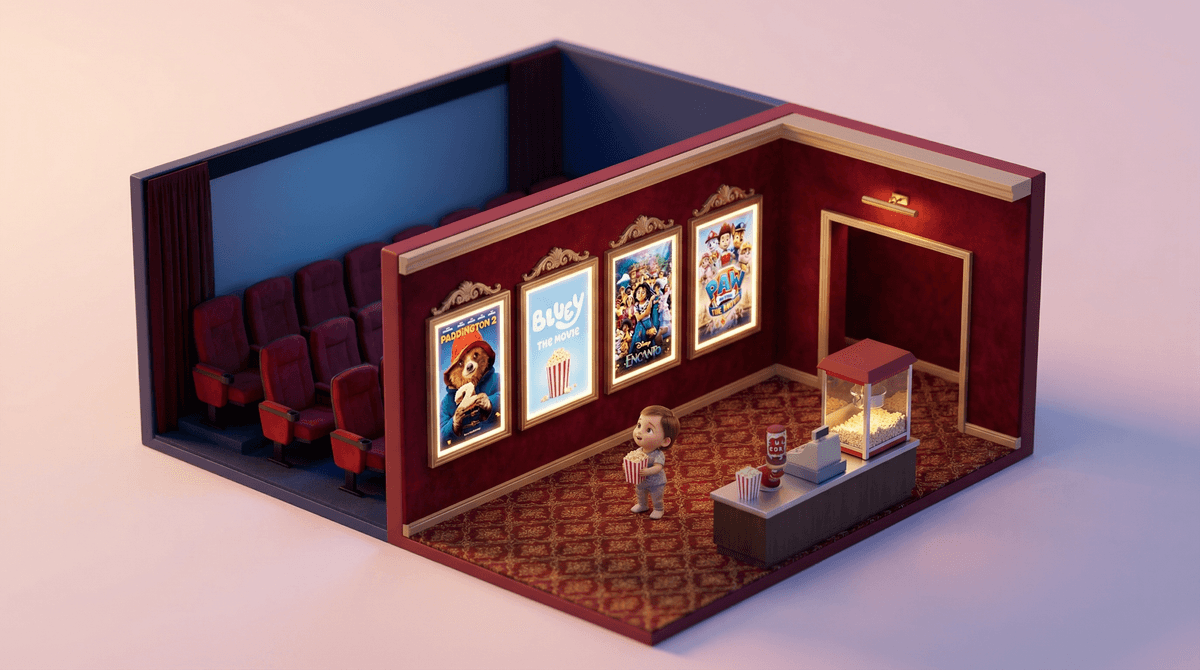
We're talking about that milestone moment when you take your kid to see a movie on the big screen for the first time. Giant screen, surround sound, sticky floors, overpriced popcorn—the whole experience. It's a rite of passage that can be absolutely magical or a $60 lesson in "we should have stayed home."
The thing is, movie theaters are designed for adults who can sit still for two hours, understand that the loud noises are pretend, and won't need to pee the second the plot gets interesting. Your 3-year-old? Different story.
A good first theater experience can create a lifelong love of cinema and shared cultural moments. A bad one can make your kid anxious about theaters for years (and make you never want to leave the house again).
Plus, let's be real: going to the movies is expensive. You're looking at $40-80 for a family of four once you factor in tickets and snacks. That's a lot to invest in something that might end with you standing in the lobby while your kid melts down because the previews were "too scary."
The good news? With the right prep and realistic expectations, you can absolutely nail this.
Age 3-4: This is the earliest most kids can handle it, and even then it's a toss-up. Look for:
- Can sit through a 30-minute show at home without constant movement
- Understands the difference between pretend and real
- Can communicate when they need something (bathroom, too loud, scared)
- Has shown interest in the idea of a movie theater
Age 5-6: The sweet spot for most kids. They can usually handle the sensory experience and sit for 90 minutes.
Age 7+: Generally ready for longer films and more complex plots, though every kid is different.
Some kids won't be ready until 6 or 7, and that's completely fine. There's no award for earliest theater visit.
This is where parents mess up most often. Here's what matters more than the movie being "good":
Length: Under 90 minutes for first-timers. Seriously. Bluey: The Movie is perfect at 88 minutes. The Lego Movie at 100 minutes is pushing it but doable for some kids.
Intensity: Skip anything with:
- Prolonged scary scenes (villain-heavy plots can wait)
- Lots of loud action sequences
- Sad/emotional moments that might trigger public crying
- Complex plots they'll ask you to explain every five minutes
Familiarity: This is controversial, but hear me out—a movie they've already seen at home can be perfect for a first visit. They know what's coming, which reduces anxiety about scary parts. The theater experience itself is novel enough.
Good first movie options:
- Paddington or Paddington 2
- Moana (though Te Kā can be intense)
- Encanto
- Most Pixar shorts programs
- Paw Patrol movies (yes, they're brain rot, but they're SHORT brain rot that keeps little kids engaged)
Choose a matinee: Cheaper, less crowded, and if you need to leave, fewer people will judge you.
Sit on the aisle near the back: Easy exit access. Non-negotiable.
Visit the bathroom twice: Once before you buy tickets, once right before you sit down. Even if they say they don't need to go.
Bring a small water bottle: Theater air is dry, and a coughing kid disrupts everyone. Most theaters allow sealed water bottles.
Skip the giant soda: You're just buying yourself a bathroom emergency in 45 minutes.
Arrive early but not too early: 10-15 minutes before showtime. Enough to get settled, not so early they're restless before it starts.
Prep them for previews: Explain that there will be ads and previews for other movies (some of which might look scary), and then their movie will start. This is huge—lots of kids get freaked out by previews for movies they weren't expecting.
Set snack expectations beforehand: "We're getting popcorn to share" is clearer than deciding in the moment when they're pointing at every candy option.
Movie theaters are LOUD. Like, genuinely too loud for little kids' ears. The THX sound test alone has traumatized many a first-timer.
Consider bringing kid headphones or earplugs for the previews and loud parts. You can find kid-safe volume-limiting headphones for $20. Some kids won't keep them on, but having the option is worth it.
Talk about the dark: "The lights will go down so we can see the screen better, but I'll be right next to you the whole time."
Explain the bigness: If they've only watched TV at home, the giant screen can be overwhelming. "The characters will look really big, but they're still just pretend, like on our TV at home."
Here's your permission slip: If it's not working, leave. You're not failing. You're not wasting money. You're teaching your kid that when something isn't right, we adjust.
Signs it's time to go:
- Genuine fear (not just "this part is exciting" squirming)
- Repeatedly asking to leave
- Disrupting other people despite your best efforts
- They're clearly checked out and miserable
You can always try again in six months. No big deal.
A successful first movie theater visit isn't about seeing the whole movie or them sitting perfectly still. It's about:
- Staying mostly engaged
- Not being scared or overwhelmed
- Building positive associations with the experience
- Making it through without a full meltdown
Set your expectations at "reasonably pleasant" rather than "Instagram-worthy magical moment," and you'll probably be pleasantly surprised.
And if it goes sideways? There's always Disney+, where the pause button is free and the bathroom is 10 feet away.
- Scout your theater: Some have "sensory-friendly" screenings with lower volume and lights slightly up—perfect for first-timers or kids with sensory sensitivities
- Do a practice run: Visit the theater lobby when there's no show, just to see the space and reduce novelty anxiety
- Check out our guide to age-appropriate movies for young kids for more specific recommendations
- Make it special but not too special: A little hype is good ("We're going to see a movie on a GIANT screen!"), but if you oversell it, you're setting up disappointment
You've got this. And if you don't? There's always next time.