

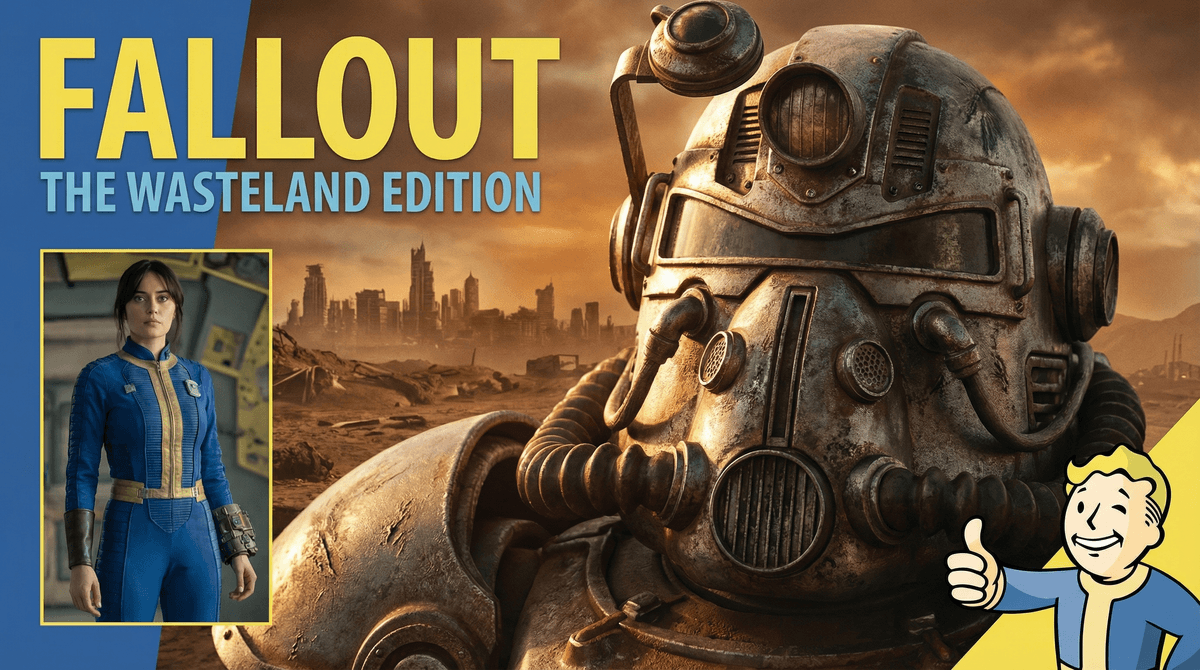
Fallout Season 2: What Parents Need to Know About the Graphic Violence and Mature Themes
TL;DR: Season 2 of Amazon's Fallout doubles down on everything that made Season 1 a hit—and everything that earned its TV-MA rating. We're talking intense gore, dark humor about nuclear annihilation, morally complex storylines, and some genuinely disturbing imagery. If your teen watched Season 1, they know what they're in for. If you're considering it for the first time, this is not a starter show for exploring mature content. Minimum age: 16+, and even then, it depends on your kid.
Fallout is Amazon Prime's adaptation of the beloved video game franchise set in a post-apocalyptic America after nuclear war. The show follows Lucy, a vault dweller who ventures into the irradiated wasteland, and Maximus, a member of the Brotherhood of Steel (think: tech-hoarding knights in power armor). Season 1 was a surprise hit—critics loved it, gamers mostly approved, and it introduced a whole new audience to the franchise's signature blend of dark satire and extreme violence.
Screenwise Parents
See allSeason 2 picks up where we left off, with Lucy searching for her father and uncovering more about Vault-Tec's sinister corporate machinations. The wasteland is still brutal, the humor is still pitch-black, and the violence is still... a lot.
Here's the thing about Fallout: it's genuinely good television. The production values are incredible, the performances are compelling (Ella Purnell and Walton Goggins are fantastic), and the storytelling is smart. It's not mindless violence—it's using the post-apocalyptic setting to explore themes about capitalism, corporate greed, human nature, and what we're willing to do to survive.
But (and this is a big but), it's also relentlessly graphic and tonally complex in ways that can be genuinely disturbing. This isn't The Last of Us, which balances its violence with emotional depth and restraint. Fallout leans into absurdist gore and treats horrific violence as darkly comedic. That tonal choice is intentional—it's part of the show's DNA—but it also makes it harder to recommend to younger viewers who might not have the context to process it.
Violence and Gore (This Is the Big One)
Season 2 continues the show's tradition of extreme, often cartoonish violence. We're talking:
- Graphic dismemberment: Bodies explode, limbs are severed, heads are blown off. The show uses practical effects that look disturbingly real.
- Torture and body horror: Characters are subjected to brutal interrogations, medical experiments, and mutilation. One particularly rough scene involves surgical experimentation on a conscious person.
- Creature violence: Mutated animals and humans (ghouls, super mutants, deathclaws) attack people in visceral ways. The deathclaw scene in Episode 4 is nightmare fuel.
- Casual brutality: People shoot each other over minor disputes. Life in the wasteland is cheap, and the show doesn't shy away from that.
The violence isn't just present—it's constant. If your teen is sensitive to gore or has anxiety around body horror, this will be overwhelming. Even kids who've played Fallout 4 or Fallout 76 might be surprised by how much more visceral it is in live-action.
Sexual Content
Season 2 has less sexual content than Season 1, but there are still:
- Brief nudity in a couple of scenes
- Sexual situations (nothing explicit, but clearly implied)
- Prostitution and sexual exploitation as background elements of wasteland life
- A romance subplot that includes some intimate scenes
Nothing here is gratuitous in the HBO sense, but it's present and matter-of-fact.
Language
Expect frequent strong language throughout. F-bombs, creative profanity, crude humor. It's not non-stop, but it's consistent.
Themes and Emotional Weight
This is where it gets interesting for older teens. Season 2 digs deeper into:
- Corporate malfeasance: Vault-Tec's role in starting the nuclear war is explored in flashbacks. It's a scathing critique of capitalism and corporate greed that's surprisingly relevant.
- Moral ambiguity: Almost every character exists in shades of gray. The "good guys" do terrible things. The "bad guys" have understandable motivations.
- Survival ethics: What are you willing to do to survive? To protect your family? The show asks these questions repeatedly and doesn't offer easy answers.
- Existential dread: The world ended. Humanity destroyed itself. What now? It's heavy stuff presented through a satirical lens, but the underlying despair is real.
For a mature 17-year-old who can handle complexity and wants to talk about these themes? This could be genuinely enriching. For a 14-year-old who just wants action? They'll get the violence but might miss the point entirely.
16-17+: This is the sweet spot if you're going to allow it at all. Teens in this range who:
- Have watched other mature content (The Boys, Invincible, Attack on Titan)
- Can distinguish between stylized violence and reality
- Are interested in discussing themes and not just consuming violence
- Have demonstrated they can process disturbing content without it affecting their mood or behavior
14-15: Probably not. Even mature 15-year-olds will find this intense. If you're considering it, watch the first two episodes of Season 1 together first. If they're disturbed or you're uncomfortable, that's your answer.
Under 14: Hard no. This isn't Stranger Things. The violence alone disqualifies it, but the thematic complexity and moral ambiguity require a level of emotional maturity most younger teens haven't developed yet.
The game connection matters: If your teen has played the Fallout games, they'll have context for the violence and the world. The games are rated M (17+), but let's be real—lots of younger teens play them. The show is more graphic than the games, but the tonal consistency might make it easier to process if they're already fans.
It's a cultural phenomenon: Fallout Season 1 was one of 2024's biggest shows, and Season 2 is getting similar buzz. Your teen's friends are probably watching it or talking about it. That doesn't mean they should watch it, but it's worth acknowledging the social pressure. Understanding why kids want to watch popular mature content can help you have a more productive conversation.
The satire is the point: Fallout isn't glorifying violence—it's using extreme violence to satirize American militarism, corporate greed, and Cold War paranoia. That's a sophisticated reading that requires media literacy. If your teen just sees "cool explosions," they're missing the entire point.
Co-viewing is valuable here: If you decide to allow it, watching together (at least the first few episodes) gives you a chance to pause and discuss. "What do you think the show is saying about corporations?" "How do you feel about Lucy's choices?" These conversations can transform passive consumption into active critical thinking.
Without major spoilers, Season 2 introduces:
- More faction warfare: The Brotherhood of Steel, NCR remnants, and various raider groups clash violently
- Deeper vault experiments: We see more of Vault-Tec's horrific human experiments
- Higher stakes: Characters face more dire consequences, including major character deaths
- Expanded world-building: We visit New Vegas (yes, that New Vegas), which brings its own morally questionable content
The body count is higher, the stakes feel more personal, and the violence is more frequent. If Season 1 was at a 7 for intensity, Season 2 is a solid 8.5.
If your teen wants post-apocalyptic storytelling but isn't ready for Fallout's intensity:
- The Last of Us: Still mature (TV-MA), but more emotionally grounded and less gratuitously violent
- Sweet Tooth: Post-apocalyptic but much gentler (TV-14)
- The 100: Survival drama with teens as protagonists (TV-14, though later seasons get darker)
- A Quiet Place: Tense post-apocalyptic survival without the gore (PG-13)
If they're specifically interested in the Fallout universe, consider starting with gameplay videos of Fallout 4 where they can see the world and story without the live-action intensity.
If they're lobbying to watch:
"Help me understand what appeals to you about this show." Are they interested in the story? The world-building? The violence? Their answer matters.
"What have you heard about it from friends?" This tells you what they're expecting and what the social pressure looks like.
"Let's watch the first episode together and check in." Make it a trial run, not a commitment. If you're both uncomfortable, you can stop.
If you decide it's not appropriate yet:
"I get that this is frustrating, and I'm not saying never—just not yet." Acknowledge their disappointment without backing down.
"The violence in this show is really extreme, and I want to make sure you're ready to process that." Be specific about your concerns.
"Let's find something else in the post-apocalyptic genre that works for both of us." Offer alternatives so it's not just a "no."
Fallout Season 2 is excellent television that's absolutely not for everyone. The violence is extreme, the themes are complex, and the tonal choices require maturity to fully appreciate. This is a 17+ show that some 16-year-olds can handle and most younger teens cannot.
If your teen is mature, interested in discussing themes, and has demonstrated they can handle graphic content, this could be a worthwhile watch—ideally together. If they're just chasing the hype or you have any hesitation, wait. The show will still be there in a year or two when they're more ready.
Trust your gut. You know your kid better than any rating system or parent guide. If something feels off, it probably is.
- Watch the Season 1 trailer together to gauge their reaction to the violence and tone
- Check out parental control options on Amazon Prime if you want to restrict access
- Read reviews together on Common Sense Media or IMDb to see what other parents are saying
- Set clear expectations about discussing the show if you do allow it
- Have an exit strategy: If they watch an episode and it's too much, it's okay to stop
Remember: saying "not yet" isn't helicopter parenting—it's thoughtful parenting. There's no trophy for letting your kid watch the most mature content earliest.