

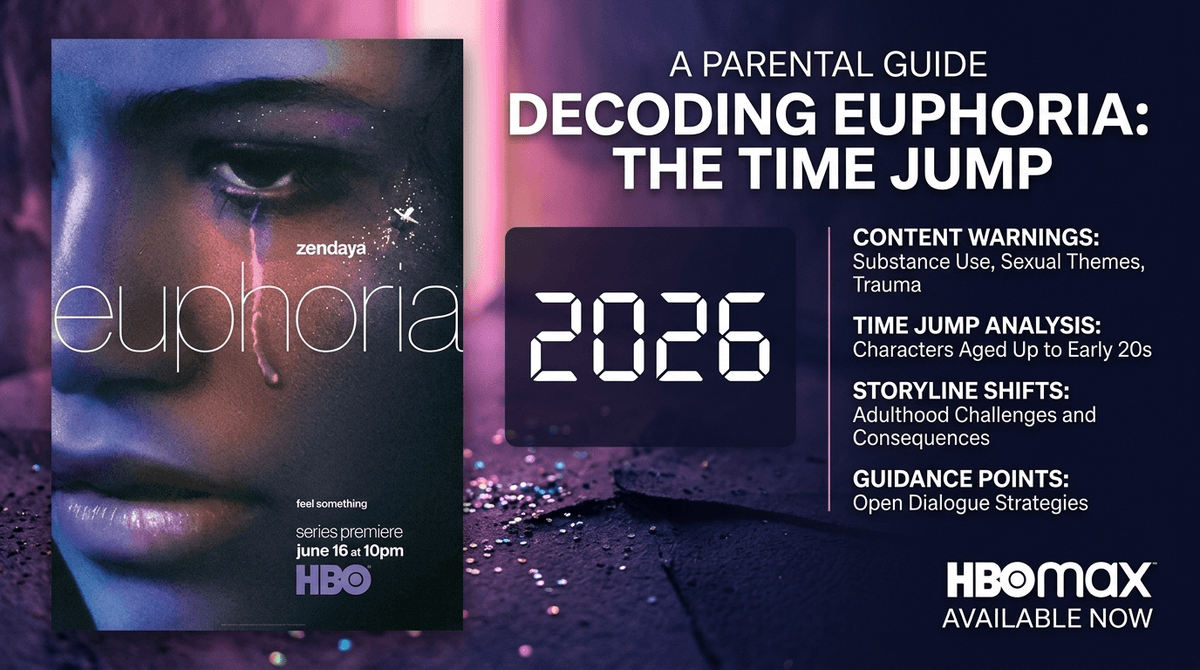
TL;DR: Euphoria is back for Season 3 after a four-year hiatus, and the "High School" label is officially gone. With the 2026 time jump moving the characters into their 20s, the show has traded lockers for real-world trauma. It remains the most graphic, visually stunning, and potentially triggering show on television. If your teen is under 17, this is a hard "no." If they are older, it’s a "watch and talk" situation.
Ask our chatbot about the most graphic scenes in Season 3
If you’ve managed to miss the glitter-soaked, anxiety-inducing cultural phenomenon that is Euphoria, here is the breakdown. It’s an HBO original series starring Zendaya that follows a group of young people navigating addiction, identity, and intense trauma.
For the first two seasons, it was a "high school show," though it looked nothing like the high school experience most of us had. It was Degrassi on a cocktail of fentanyl and existential dread. Now, in 2026, Season 3 has finally arrived with a massive five-year time jump. The characters are out of East Highland High and struggling with the bleak realities of adulthood.
The show is famous (or infamous) for its "prestige" production value. It looks like a high-fashion editorial, but it feels like a panic attack. It’s not "brain rot" in the way Skibidi Toilet is—it’s high-art nihilism.
Even with the long delay between seasons, the Euphoria grip on Gen Z and Gen Alpha hasn't loosened. Here’s why:
- The Aesthetic: The "Euphoria look"—heavy glitter, neon lighting, and Y2K-meets-futuristic fashion—dominates TikTok and Instagram. Even kids who aren't allowed to watch the show are consuming its visual language daily.
- The Cast: Zendaya is the biggest star of her generation. Throw in Sydney Sweeney and Jacob Elordi, and you have a cast that kids follow across every platform.
- The "Realness" Fallacy: Teens often feel that because the show is dark and "edgy," it’s more "real" than other media. They see the characters' struggles with mental health and identity as a reflection of their own internal lives, even if the external circumstances are exaggerated.
- FOMO: Because the show is such a massive "event," not watching it feels like being left out of the cultural conversation.
Check out our guide on why teens are obsessed with dark prestige TV
The move to 2026 in the show's timeline means the characters are now roughly 22-23 years old. In some ways, this makes the graphic content slightly less "gross" than when they were playing 17-year-olds, but the themes have actually become heavier.
Season 3 focuses on:
- Post-college disillusionment: The "quarter-life crisis" turned up to eleven.
- Deep-seated addiction recovery: The stakes for Rue (Zendaya) are no longer about passing a drug test at school; they’re about staying alive in the real world.
- Toxic relationship cycles: Seeing these characters as adults makes their toxic behavior feel less like "teen angst" and more like "personality disorders."
Let’s be blunt: Euphoria is not for children. It’s barely for some adults.
Ages 0-14: Hard No
There is absolutely no reason for a middle schooler to be watching this. The level of graphic nudity, sexual violence, and drug use is extreme. If they are seeing clips on TikTok, it’s worth a conversation about how social media algorithms push "mature" content to younger users.
Ages 15-17: Proceed with Extreme Caution
This is the "danger zone." Many 16-year-olds are watching this show. If you allow it, you should be aware that you are opening the door to very heavy conversations about consent, addiction, and self-harm.
Ages 18+: Adult Content
At this point, it’s their choice, but it’s still worth checking in on how the show affects their mood. Euphoria is notoriously "depressing," and for young adults struggling with their own mental health, it can be a lot to handle.
1. The Glamorization of Substance Abuse
While the show creators argue that Euphoria shows the "ugly side" of drugs, the cinematography is so beautiful that it often creates a "cool" vibe around very dangerous behaviors. Rue’s drug use is portrayed as a harrowing struggle, but the parties and the lifestyle can look aspirational to a teen who lacks the life experience to see through the "glitter."
2. Graphic Sexual Content and Nudity
This isn't a "standard" level of TV nudity. It is frequent, often non-simulated in appearance, and frequently involves power imbalances or coercion. Season 3 has continued this trend, despite the characters being older.
3. Digital Wellness and "Euphoria Core"
The biggest impact on your kid might not be the show itself, but the digital fallout. The "Euphoria Aesthetic" encourages a specific type of online presence: curated, moody, and often hyper-sexualized.
If your teen wants the "vibe" of Euphoria but isn't ready for the heavy lifting, consider these:
- Sex Education (Netflix): Still mature and frank about sex, but much more hopeful, educational, and funny. It deals with real issues without the crushing nihilism.
- Heartstopper (Netflix): If they want stories about teen identity and LGBTQ+ themes but want to actually feel good afterward.
- Genera+ion (Max): A bit more "indie" and less graphic than Euphoria, focusing on Gen Z identity.
- Skins (UK): The "original" Euphoria. It’s still very mature, but it feels more grounded in actual teenage messiness rather than stylized trauma.
If you find out your teen is watching Euphoria, don't freak out. That just makes it "forbidden fruit." Instead, try these conversation starters:
- "The show is visually amazing, but have you noticed how almost every character is deeply unhappy? Why do you think the director chose to make it look so 'pretty' while the story is so sad?"
- "Which character do you actually relate to? And which one do you think is a total 'red flag'?"
- "How does watching this show make you feel? Do you feel more anxious after an episode, or does it feel like a release?"
Get a list of conversation starters for talking to teens about mature media
Euphoria Season 3 is a masterpiece of television production, but it is a "black diamond" slope of content. It’s intended for adults. The 2026 time jump has moved the characters into a new phase of life, but the show remains committed to shocking its audience.
As a parent, your job isn't necessarily to "ban" it (which rarely works with 17-year-olds), but to provide the context that the show lacks. It’s a fantasy of trauma, not a roadmap for life.
Next Steps:
- Check your HBO Max (now just "Max") settings. Ensure the "Adult" profile is PIN-protected if you have younger kids.
- Talk to your teen about "Aesthetic vs. Reality."
- If they are struggling with mental health, be aware that this show can be a major trigger for self-harm and relapse.
Ask Screenwise for a personalized digital wellness plan for your teen