

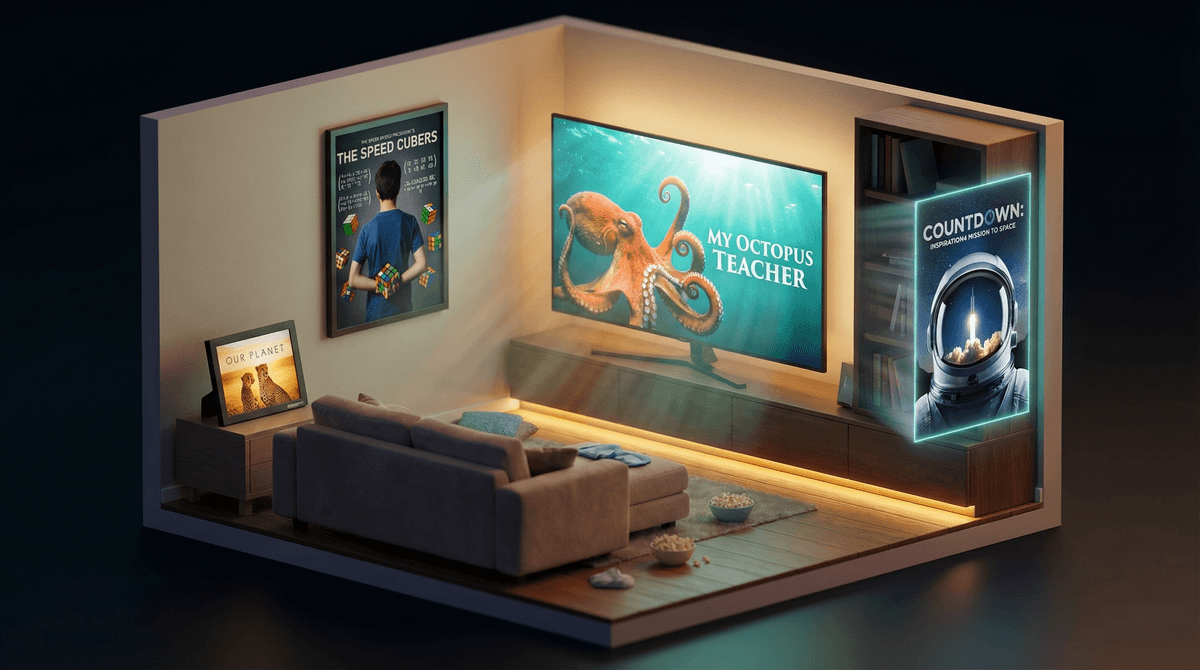
Look, we all know the drill: you suggest a documentary about octopuses or the solar system, and your kids look at you like you just proposed watching paint dry. Meanwhile, they'll happily binge six hours of someone playing Minecraft.
But here's the thing — Netflix actually has some genuinely engaging documentaries that can hook kids without feeling like homework. We're not talking about dusty nature films narrated in monotone. We're talking about docs with actual storytelling, visual spectacle, and topics that spark the kind of dinner table conversations that don't revolve around who's hogging the bathroom.
The key is knowing what to pick, how to frame it, and when to bail if it's not working.
Before you roll your eyes at the idea of "educational screen time," hear me out. Documentaries offer something most kids' content doesn't: real-world context, critical thinking opportunities, and exposure to perspectives beyond their bubble.
When your 10-year-old watches Octonauts, they learn about sea creatures. When they watch My Octopus Teacher, they see vulnerability, patience, and the complexity of interspecies connection. Both are valuable, but one opens doors the other doesn't.
Plus, documentaries can be a stealth way to introduce topics that are hard to bring up cold — climate change, social justice, failure, perseverance — without it feeling like A Talk.
Ages 5-8: Visual Spectacle Over Narration
Little kids need docs that feel like magic, not lectures.
Our Planet — Stunning visuals, David Attenborough's voice (which somehow works for all ages), and episodes you can watch in chunks. The walrus scene is intense though, so maybe preview first or skip that part if your kid is sensitive.
Night on Earth — Nighttime animal footage with thermal cameras. It's basically nature doing cool stuff in the dark. Kids love it because it feels like spying.
Babies — Follows babies around the world through their first year. Surprisingly fascinating even for kids who think babies are boring. Lots of "wait, babies can DO that?" moments.
Ages 8-12: Story-Driven and Relatable
This age wants narrative, characters they can root for, and topics they can connect to their own lives.
Cheer — Follows a competitive cheerleading team. Yes, there's some mature content (injuries, personal struggles), but it's incredibly well-made and shows dedication, teamwork, and the reality of pursuing excellence. Watch with them and be ready to talk about pressure and mental health.
The Social Dilemma — Okay, this one's a bit meta, but if you've got a tween who's lobbying for Instagram, watching this together can open up conversations about how social media is designed to be addictive. It's not perfect (a bit dramatic at times), but it's effective.
Explained series — Short episodes (15-20 min) on everything from K-pop to cryptocurrency to why we dream. Perfect for kids with shorter attention spans or as a "one episode before bed" option.
14 Peaks: Nothing Is Impossible — Mountaineer climbs all 14 of the world's highest peaks in record time. Visually stunning, genuinely inspiring, and shows what determination looks like without being preachy.
Ages 12+: Complex Topics and Real Consequences
Older kids can handle ambiguity, moral complexity, and documentaries that don't tie everything up in a bow.
The Last Dance — Even if your kid isn't into basketball, this Michael Jordan doc is a masterclass in competition, leadership, and the cost of greatness. Great for discussions about what it means to be "the best" and whether it's worth it.
Athlete A — About the USA Gymnastics scandal. Heavy content, but important for teens to understand institutional failure, speaking up, and believing survivors. Watch together and be ready for real conversation.
13th — Ava DuVernay's documentary about mass incarceration and racial inequality. Essential viewing for high schoolers. It's dense and requires engagement, not background watching.
The Speed Cubers — Follows competitive Rubik's Cube solvers, including one with autism. Sweet, inspiring, and shows that "sports" come in all forms. Also might make your kid want to learn to speed cube, which honestly isn't the worst hobby.
Not all documentaries are created equal. Netflix labels some content as "documentary" that's really just reality TV with a narrator. If it's about influencers' drama or true crime that's basically torture porn, skip it. Check the actual content, not just the rating.
Preview when possible. Especially for younger kids or sensitive topics. A quick skim through can help you decide if it's right for your family or if you need to watch together.
It's okay to bail. If something isn't landing, don't force it. The goal is engagement, not endurance. Try something else or just admit that tonight's a Bluey night.
Use the pause button liberally. The best part of watching documentaries with kids is the conversations they spark. When your 9-year-old asks "why would someone climb a mountain without ropes?" — pause and talk about it. That's where the learning happens.
Watch out for "documentary" content that's actually just branded content or propaganda. Netflix generally curates well, but always consider the source and the framing, especially on political or corporate topics.
Friday night rotation: Alternate who picks. One week it's your choice (documentary), next week it's theirs (probably Nailed It for the 47th time). Fair is fair.
Pair it with something tactile: Make popcorn, build a blanket fort, whatever makes it feel special rather than medicinal.
Follow up the next day: "Remember that thing about the octopus changing colors? I was thinking about that..." Casual callbacks show you valued the shared experience.
Connect to their interests: Kid into space? Countdown: Inspiration4 Mission to Space. Loves animals? Life in Color with David Attenborough. Into gaming? There are docs about esports and game design.
Family documentary night isn't about forcing education down anyone's throat or proving you're a "good parent" who limits screen time to PBS-approved content. It's about using the screen you're already staring at to open windows instead of just killing time.
Will every documentary be a hit? Absolutely not. Will your kids sometimes complain? Definitely. But the ones that land — the ones that lead to questions, conversations, or just a shared "whoa, that was cool" moment — those are worth the occasional groan.
And honestly? Sometimes you'll learn something too. Like the fact that octopuses are terrifyingly smart and we probably shouldn't eat them. Or that competitive cup stacking is an actual thing. Or that your kid has opinions about criminal justice reform you didn't know they had.
Start with one. Pick something visual and short. See what happens. The worst case is you've wasted 45 minutes. The best case is you've found a new way to connect that doesn't involve discussing Roblox drama.
- Browse Netflix's "Documentary" section with your kid and let them help choose based on the thumbnails and descriptions
- Check out Screenwise's guide to educational screen time for more ideas beyond just documentaries
- Set a regular "family watch night" on the calendar — consistency makes it less of a battle each time
- Get documentary recommendations for your family based on your kids' specific interests and ages