

Apple TV+ has quietly built one of the most impressive documentary libraries in streaming. We're talking gorgeous nature films, gripping true crime, cultural deep-dives, sports stories, and science explorations that don't talk down to viewers. Unlike the algorithmic chaos of YouTube or the "what even is this" vibe of some streaming platforms, Apple's documentary collection is curated, high-quality, and often genuinely educational without feeling like homework.
The production values are typically stunning (Apple loves throwing money at beautiful cinematography), and many of these docs are made by established filmmakers who know how to tell a story. Think less "educational video from science class" and more "something you'd actually want to watch on a Friday night."
Here's the thing: documentaries can be a genuine sweet spot for family screen time. They're not mindless consumption, but they're also not forcing kids to read subtitles on a black-and-white film from 1952 (though no shade if that's your vibe).
Good documentaries spark curiosity, introduce kids to perspectives and experiences beyond their bubble, and give you natural conversation starters that don't feel forced. "So... how was school?" gets you nowhere. "Did you see that octopus basically walk on land?" opens actual dialogue.
Plus, in a media landscape where kids are swimming in manufactured content, influencer drama, and algorithm-driven garbage, documentaries offer something real. Real people, real stories, real science, real stakes. That matters more than we sometimes realize.
Apple's documentary library spans several categories:
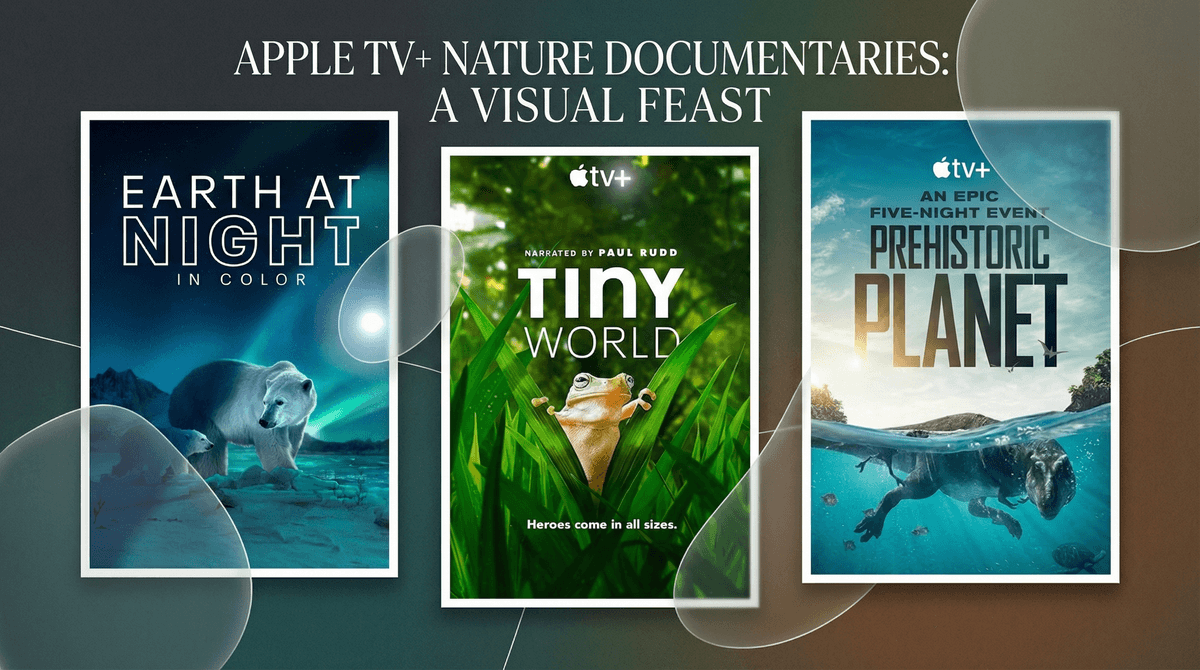
Nature & Science: This is where Apple really shines. Tiny World and Earth at Night in Color are visually stunning and work for younger kids (ages 6+). Prehistoric Planet brings dinosaurs to life with David Attenborough narration and is legitimately fascinating for the whole family (ages 7+).
Sports & Culture: They Call Me Magic (Magic Johnson's story) and various sports documentaries offer great entry points for conversations about perseverance, teamwork, and cultural impact. Most work for ages 10+.
True Crime & Investigative: Apple has several true crime docs, but be careful here. These are often intense, deal with real trauma, and aren't appropriate for younger viewers. We're talking 14+ minimum, and even then, know your kid.
Music & Entertainment: Documentaries about musicians, filmmakers, and cultural figures. Age-appropriateness varies wildly depending on the subject matter.
Ages 6-9: Stick with nature documentaries. The visuals are captivating, the concepts are accessible, and the "wow" factor is high. Tiny World is perfect for this age—each episode is under 30 minutes, and watching a baby chameleon navigate a garden is genuinely delightful.
Ages 10-13: This is when you can branch out into sports documentaries, cultural stories, and some science content that goes deeper. Prehistoric Planet works beautifully here, as do docs about athletes or musicians your kid already knows about. Just preview anything first—even seemingly innocent topics can include mature themes.
Ages 14+: Most of the catalog opens up here, including investigative journalism and true crime. But "can watch" doesn't mean "should watch alone." These docs often deal with heavy topics—injustice, violence, systemic problems—that benefit from processing together.
Co-viewing is your friend: Unlike throwing on Bluey where you can fold laundry in peace, documentaries work best when you're actually watching together. Not helicopter-parenting the experience, just... present. Available for the inevitable questions and conversations.
Pause and discuss: The beauty of streaming is you can hit pause. Kid confused about something? Stop and talk about it. Something intense happens? Take a breath. This isn't a theater where you power through.
Check ratings, but trust your gut: Apple provides age ratings, but you know your kid. Some 11-year-olds can handle complex topics that would overwhelm others. Some 15-year-olds aren't ready for intense true crime. Learn more about how to evaluate content for your specific kid .
.
Production quality matters: One reason Apple's docs work well for kids is they're not boring. The cinematography, pacing, and storytelling are legitimately engaging. This isn't your middle school assembly video.
Be ready for hard questions: Good documentaries raise questions. About climate change, social justice, how the world works, why bad things happen. Don't shy away from this—it's actually the point. You don't need perfect answers; you need to be willing to explore the questions together.
Subscription cost: Apple TV+ runs about $10/month, and you can share with family members. If you're already paying for Netflix, Disney+, and whatever else, this is another subscription to consider. But the quality-to-cost ratio is honestly pretty solid.
Content discovery: Apple's interface is... fine. Not amazing, not terrible. You might need to actively search for documentaries rather than stumbling upon them. The "Documentaries" section exists, but it's not always prominently featured.
Download capability: You can download content for offline viewing, which is clutch for road trips or flights. Nature documentaries on a plane? Chef's kiss.
Apple TV+'s documentary library is legitimately one of the better uses of family screen time you'll find. It's not perfect—some content is too mature, some topics are heavy, and you'll need to be more involved than with passive entertainment. But that's actually the upside.
In a world where so much kids' content is designed to be addictive, algorithm-friendly, and ultimately empty, documentaries offer something different: real stories, real knowledge, and real conversation starters.
Start with something visually stunning and age-appropriate like Tiny World or Prehistoric Planet. Watch together. Talk about what you're seeing. Let your kid's curiosity lead.
Not every documentary will land. Some will bore your kids. Some will spark obsessions. That's how it works. But compared to another hour of Roblox or doomscrolling YouTube Shorts, this is time well spent.
This week: Pick one nature documentary and watch 20 minutes together. See what happens. No pressure, no forced educational moment—just watch something beautiful and real.
Going deeper: If your kid gets hooked on a topic (dinosaurs, ocean life, space), Find documentaries and resources about dinosaurs for kids to keep the momentum going.
For older kids: Preview a sports or cultural documentary that connects to something they already care about. Music, basketball, fashion, whatever. Use their existing interests as the entry point.