

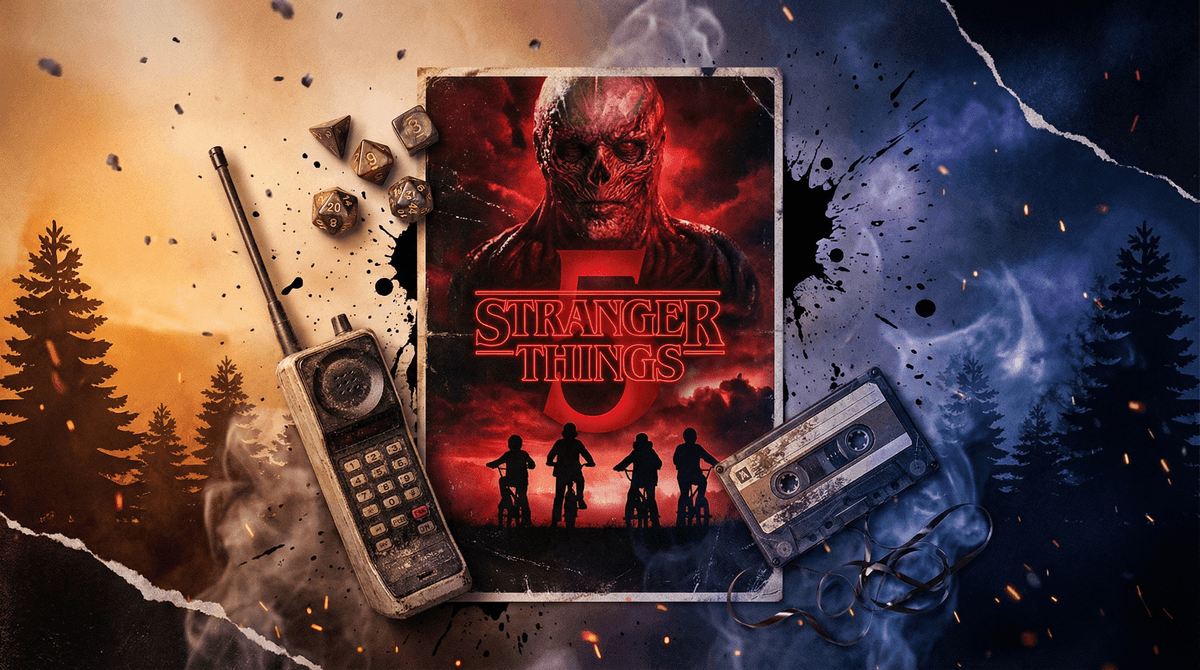
Discussing Horror Elements in Stranger Things with Tweens
Stranger Things gets progressively darker and more intense with each season. If your tween loved Season 1's nostalgic adventure vibes, they might not be ready for Season 4's graphic body horror. The jump scares are real, the gore escalates significantly, and the supernatural tension can stick with kids long after the credits roll. Here's how to navigate the horror elements without killing the fun—or their sleep schedule.
Quick navigation:
- Season-by-season breakdown of what gets worse
- How to prep your kid before they watch
- Signs they're not handling it well
- What to do when they're already scared
Stranger Things occupies this weird space where it's technically rated TV-14, features kids as protagonists, and has become a legitimate cultural phenomenon among tweens and teens. Your 11-year-old's friends are talking about it at lunch. The Halloween costumes are everywhere. The memes are inescapable.
But here's what makes it tricky: the show fundamentally changes tone as it progresses. Season 1 is Spielberg-esque adventure horror—scary but manageable for many tweens. By Season 4, we're in full-blown supernatural slasher territory with extended scenes of psychological and physical torture.
The Duffer Brothers (the show's creators) have explicitly said they wanted each season to grow up with the characters. That's great storytelling, but it means a kid who was fine with Season 1 at age 10 might not be ready for Season 4 at age 12, even though they're technically older.
Season 1: Gateway Horror
The vibe: 80s adventure movie meets monster-in-the-woods
Horror elements:
- The Demogorgon is genuinely scary but mostly shown in shadows
- Barb's death is disturbing but not graphic
- The Upside Down is creepy and atmospheric
- Jump scares are present but relatively mild
- Body horror is minimal
Parent take: This is the most accessible season. If your tween can handle A Quiet Place or has read Goosebumps without nightmares, they can probably handle Season 1. The monster is scary, but the focus is on friendship and problem-solving.
Season 2: Turning Up the Volume
The vibe: Alien/Aliens progression—bigger threat, higher stakes
Horror elements:
- The Mind Flayer is more abstract and therefore more unsettling
- Will's possession scenes include disturbing convulsions and loss of bodily autonomy
- The "demodogs" attack in packs (more intense than single Demogorgon)
- Bob's death is the first truly graphic on-screen kill
- More body horror with the "slugs" and possession elements
Parent take: Bob's death scene is the watershed moment. It's sudden, graphic, and happens to a beloved character. This is where you'll know if your kid can handle what's coming. The possession storyline also introduces psychological horror that some kids find more disturbing than monsters.
Season 3: Gore Goes Mainstream
The vibe: The Thing meets Invasion of the Body Snatchers
Horror elements:
- The "flayed" people melting into biomass is genuinely disgusting
- Prolonged body horror sequences (the sauna scene, the hospital scene)
- The Mind Flayer's physical form is made of melted humans
- Multiple graphic deaths
- Torture scenes (Russian interrogation)
- Gore is now a regular feature, not an occasional shock
Parent take: This season crosses into legitimate horror territory. The melting bodies aren't just implied—they're shown in detail. If your kid is squeamish about gross-out horror or has a thing about body integrity, this season will be rough. The 80s mall aesthetic can't disguise that this is now a horror show that happens to have kids in it.
Season 4: Full Horror Show
The vibe: A Nightmare on Elm Street meets Hellraiser
Horror elements:
- Vecna's kills are extended, graphic, and deeply disturbing (bones breaking, eyes popping)
- Multiple teen deaths shown in detail
- Psychological horror is cranked to 11 (trauma, guilt, PTSD as weapons)
- The Upside Down is now actively hostile and decaying
- Extended sequences in a horror-movie mindscape
- The Russia subplot includes graphic violence and torture
- The finale includes large-scale death and destruction
Parent take: This isn't tween-friendly anymore, full stop. The rating should honestly be TV-MA. Vecna's kills are designed to be traumatic—they're meant to disturb you. The show lingers on suffering in ways that earlier seasons didn't. Multiple parents have reported their tweens being genuinely traumatized by Max's "death" scene and Vecna's curse mechanics.
Unlike a lot of horror content, Stranger Things is designed to create lasting dread:
1. It targets characters' psychological trauma Vecna doesn't just kill people—he weaponizes their guilt, grief, and shame. For tweens who are just developing complex emotional awareness, watching characters be tortured by their own worst thoughts hits different than a simple monster chase.
2. The horror happens to kids and teens When the victims are peers, not adults, it's more visceral. Your tween isn't watching this happen to some random 30-year-old—it's happening to someone their age or slightly older.
3. It uses real-world fears Losing your friends, your parents not believing you, feeling like you're going crazy, being possessed or controlled—these tap into genuine tween anxieties in ways that supernatural monsters alone don't.
4. The stakes keep escalating Every season, more people die, more graphic content appears, and the sense that "anyone can die" increases. There's no safe baseline to return to.
Don't just ask "do you want to watch this?"—of course they do, everyone's watching it. Instead:
Set expectations about what they'll see: "This season has some really graphic deaths. Like, you'll see bones break and blood. Are you okay with that, or would you rather wait?"
Acknowledge peer pressure: "I know your friends are watching this. That doesn't mean you have to watch it right now. You can catch up later, or I can give you the plot summary so you can still talk about it."
Establish the escape hatch: "If it gets too intense, we can pause or stop. That's not failing—that's knowing your limits. Even adults tap out of horror content sometimes."
Be specific about triggers: If your kid has specific sensitivities (medical stuff, eyes, bones, loss of control), tell them those elements appear and give them a heads up before those scenes.
Watch together, especially for first viewings Your presence matters. You can:
- Fast-forward through the worst gore if needed
- Pause to talk through what's happening
- Provide context that makes it less scary ("that's all practical effects and CGI")
- Model healthy reactions ("okay, that was intense, let's take a break")
Use the "closed eyes, open ears" technique For particularly graphic scenes, your kid can close their eyes and just listen. They get the story beats without the visual trauma. (This works better than covering ears with eyes open—audio is usually less intense than visuals.)
Don't marathon it Binging horror content doesn't give your brain time to process. One episode at a time, with breaks, is healthier than a Season 4 weekend marathon.
Check in between episodes "How are you feeling about that?" "Was that too much?" "Do you want to keep going or save the rest for tomorrow?"
During/immediately after:
- Wanting to sleep with lights on (when they haven't before)
- Asking lots of questions about whether it's real
- Becoming clingy or not wanting to be alone
- Difficulty falling asleep
- Asking to stop watching (believe them!)
Days later:
- Intrusive thoughts about scenes
- Avoiding places that remind them of the show (dark rooms, basements)
- Nightmares featuring show elements
- Increased anxiety about unrelated things
- Regressive behaviors
What to do:
- Validate their feelings: "That was really scary. It's okay that it bothered you."
- Provide context: "The people who made this are experts at making things feel real. But it's all fake—here's how they did it." Behind-the-scenes content
 can be surprisingly helpful.
 - Create distance: Take a break from the show. They can catch up later.
- Process through conversation: Let them talk about what scared them. Sometimes naming the fear reduces its power.
- Don't minimize: "It's just a show" doesn't help. Their fear is real even if the show isn't.
Here's the hard truth: lots of kids are watching content they're not ready for because of peer pressure and FOMO. Your kid is not the only one having nightmares about Vecna, even if nobody's talking about it at school.
Some options:
The summary approach: Read episode summaries together or watch recap videos. They can participate in conversations without the trauma. Yes, they'll miss some nuance, but they also won't be afraid of their basement for three months.
The delayed viewing approach: "You can watch this when you're 14" or "Let's revisit this next year" isn't punishment—it's development. Their brain will literally be better equipped to process horror content in 12-18 months.
The edited viewing approach: Watch together and skip the worst parts. They get the story, the characters, and the cultural literacy without the graphic content. Is this "cheating"? Who cares—you're the parent.
The alternative content approach: If they want spooky but not traumatizing, there are better options: Gravity Falls, Coraline, The Owl House, or Goosebumps all deliver mystery and supernatural elements without the gore and psychological horror.
Let's be real: Stranger Things isn't all trauma. The show has genuine strengths:
- Friendship and loyalty: The core group's bond is the heart of the show
- Overcoming trauma: Characters deal with real emotional challenges
- Found family: Joyce and Hopper's relationship with the kids is genuinely moving
- Nostalgia and cultural literacy: Understanding 80s references and aesthetics
- Problem-solving and teamwork: The kids use their brains, not just luck
- LGBTQ+ representation: Will's storyline and Robin's coming out are handled well
These elements are why the show resonates beyond just being scary. But you have to weigh whether these positives are worth the horror elements for your specific kid at their specific age.
Season 1: Ages 11-12+ (with caveats) Mature 11-year-olds who have experience with mild horror can probably handle this. Watch together first.
Season 2: Ages 12-13+ The possession storyline and Bob's death require more emotional maturity. Not for sensitive kids.
Season 3: Ages 13-14+ The body horror is significant. If your kid is squeamish, wait longer.
Season 4: Ages 14-15+, honestly 16+ for sensitive kids This is legitimately intense horror. The TV-14 rating is generous. Many adults find this season disturbing.
But remember: age is just a number. A mature 13-year-old who loves horror might be fine with Season 4, while a sensitive 15-year-old might struggle with Season 2. You know your kid.
Stranger Things is genuinely great television with increasingly intense horror elements. The cultural pressure for tweens to watch it is real, but so is the potential for genuine distress.
You're not a bad parent if you:
- Let your tween watch it (with appropriate support)
- Make them wait until they're older
- Let them watch edited versions
- Say "no, not in this house"
You ARE being a thoughtful parent if you:
- Watch it yourself first to know what you're dealing with
- Have honest conversations about content
- Check in during and after viewing
- Respect your kid's reactions, whether that's "this is fine" or "this is too much"
- Make decisions based on your specific kid, not what other families are doing
The show will still be there in a year. Their childhood sense of safety is harder to restore once it's been shaken. When in doubt, wait.
Want to dig deeper? Learn about age-appropriate horror content for tweens or explore alternatives to Stranger Things that deliver mystery without the trauma.