

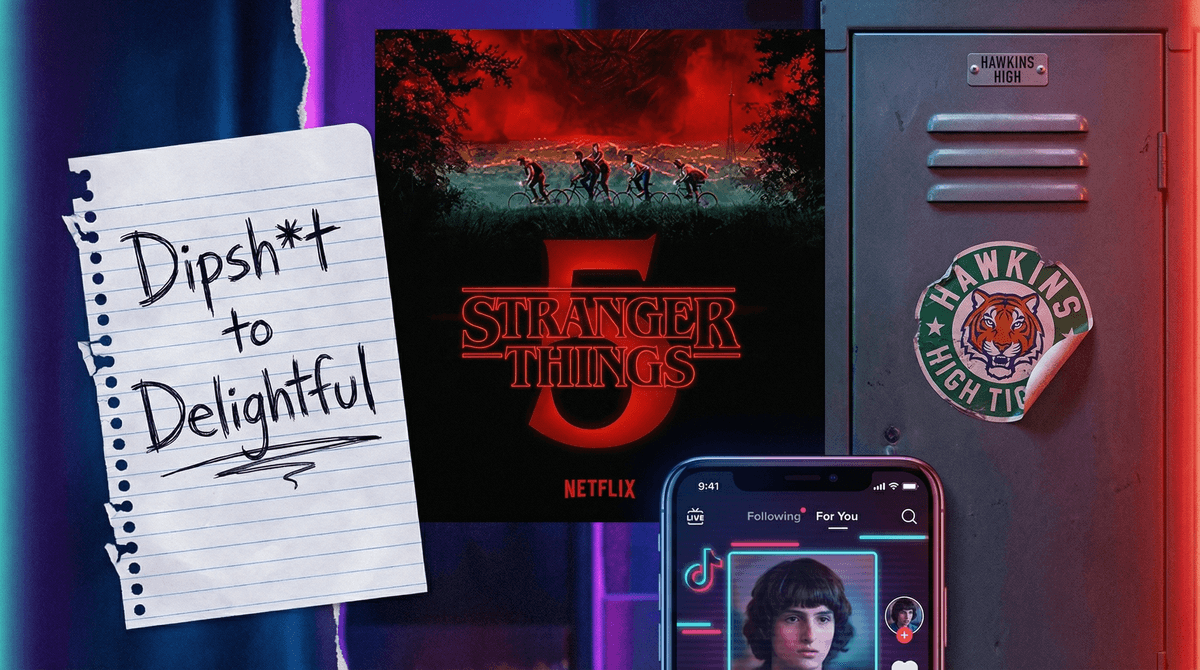
Derek Turnbow: The 'Dipsh*t to Delightful' Character Parents Are Talking About
TL;DR: Derek is a new character in Stranger Things Season 5 who starts as a stereotypical '80s bully but gets a redemption arc that's resonating with kids. He's not a major character, but he's quotable, and your middle schooler might start calling people "dipsh*t" (his signature insult) or referencing his scenes. The character deals with themes of peer pressure, standing up to bullies, and finding courage — pretty standard Stranger Things fare, but executed well enough that he's become a minor fan favorite before the season even fully drops.
Derek Turnbow appears in the final season of Stranger Things as a high school student in Hawkins who initially torments the main crew (particularly Dustin and Lucas) but eventually helps them when things get real with the Upside Down. Think of him as the show's attempt to create a "Zuko from Avatar: The Last Airbender" moment but compressed into a few episodes instead of three seasons.
The character is played by a relative newcomer, and while he's not getting Vecna-level screen time, he's getting the meme treatment online. Kids are sharing clips of his "transformation" scenes and his increasingly desperate attempts to apologize to the group while also trying to save his own skin.
The redemption arc formula works. Kids love a character who starts terrible and becomes tolerable (or even likable). It's the same reason why Draco Malfoy has a million fan theories and why every anime has the "rival who becomes an ally" trope. Derek hits those beats efficiently.
He's quotably mean, then quotably earnest. In his early scenes, Derek delivers classic '80s bully lines with enough self-awareness that they're funny rather than genuinely cruel. Then when he switches sides, his dialogue gets awkwardly sincere in a way that's both cringe and endearing. Kids are eating it up.
He represents the "normal kid" perspective. Unlike the main cast who've been dealing with interdimensional horror since they were 12, Derek is just a regular teenager who suddenly realizes monsters are real. His freakout scenes are apparently pretty relatable for viewers who wonder how they'd actually react if their town was being invaded by demogorgons.
The language is typical Stranger Things. Derek says "dipsh*t" a lot in his bully phase, plus the usual "ass," "damn," and "hell" you'd expect from a show rated TV-14. If your kid has been watching Stranger Things already, this isn't new territory. If they haven't, Derek isn't the reason to start worrying about the language — the show's been consistently PG-13-level profanity throughout.
His bullying scenes are uncomfortable but brief. Derek's mean phase involves typical '80s harassment: shoving kids into lockers, mocking them in the cafeteria, threatening violence that doesn't actually happen. It's not graphic or prolonged, but it might hit differently if your kid is currently dealing with bullying. The show doesn't glorify it — Derek is clearly positioned as wrong — but it's there.
The redemption feels earned-ish. This isn't a "bad guy suddenly becomes good with no explanation" situation. Derek has a clear moment of realization (he sees something horrifying from the Upside Down and realizes the "freaks" he's been tormenting were actually telling the truth), and his switch to helping the crew comes with genuine consequences. He loses social status, gets rejected by his former friends, and has to prove himself multiple times. It's not the deepest character work in television history, but it's not lazy either.
He's not a main character. Despite the online chatter, Derek probably gets 20-30 minutes of total screen time across the season. He's a supporting player who makes an impact, but he's not displacing Eleven or Steve in the narrative. If your kid is obsessed with Derek, they're likely more interested in the idea of his character arc than in hours of actual content.
The fan nickname for Derek's arc — "dipsh*t to delightful" — comes from a viral TikTok that pointed out how efficiently the show transforms him from antagonist to ally. It's become shorthand for any quick redemption arc, and kids are using it to describe everything from classmates who stopped being annoying to characters in other shows.
If your kid starts calling someone a "Derek" or talking about a "Derek moment," they're likely referencing either:
- Someone who was mean but got better
- Someone who's trying too hard to apologize for past behavior
- A character in another show/game who has a similar redemption arc
It's mostly harmless slang, though you might want to clarify that real-life redemption usually takes more than one dramatic monster encounter.
Stranger Things Season 5 is rated TV-14, same as previous seasons. The Derek storyline specifically doesn't add anything more intense than what's already in the show, but here's the breakdown:
Ages 10-12: If they've watched previous seasons with you and handled them fine, Derek's scenes won't be the issue. The bullying might be more relatable/uncomfortable than the supernatural stuff for this age group. Worth a conversation about how TV bullying is often exaggerated for drama.
Ages 13-15: This is the target audience, and Derek's arc is pitched right at them. The themes of peer pressure, standing up for what's right even when it's social suicide, and finding courage when it counts are all age-appropriate and potentially valuable discussion topics.
Ages 16+: They'll probably find Derek a bit simplistic but still entertaining. Older teens might appreciate the show's self-awareness about the redemption arc tropes it's using.
If your kid is quoting Derek or talking about his character arc, here are some conversation starters:
"What do you think made Derek change his mind?" This gets at motivation and character development without being preachy. Kids often have interesting takes on whether fear, guilt, or genuine growth drove the change.
"Do you think someone can really change that fast in real life?" Opens up discussion about the difference between TV redemption arcs and actual personal growth, which takes time and consistent effort.
"Have you ever had a 'Derek moment' where you realized you were wrong about someone?" Turns it personal in a low-stakes way. Most kids have experienced misjudging someone or being misjudged.
"Why do you think people online like this character so much?" Gets them thinking critically about fan culture and what makes characters resonate. Plus, you might learn something about what your kid values in storytelling.
If Derek has become your kid's entry point to Stranger Things conversations (maybe they're watching with friends or seeing content online), it's worth understanding where the show is at in Season 5:
- This is the final season, so there's heightened emotion around everything
- The main characters are now high school age (the actors are adults playing teens)
- The stakes are "save the entire world" level
- The violence and horror elements have escalated from Season 1
Derek represents a relatively safe corner of the Stranger Things universe — his storyline is more about social dynamics than graphic horror. But the show overall has gotten darker and more intense with each season.
If your kid hasn't watched Stranger Things but is interested because of Derek, consider watching the first few episodes of Season 1 together to gauge whether the show's tone works for your family. Here's a full parent guide to Stranger Things if you want to dig deeper.
Derek Turnbow is a minor character who's having a major moment in kid culture right now. He's quotable, his arc is satisfying in a fast-food kind of way, and he's giving kids a framework to talk about redemption, bullying, and courage.
The character itself isn't particularly concerning — the language and themes are consistent with Stranger Things overall, and the bullying-to-redemption storyline is handled with reasonable care. If anything, it's a decent conversation starter about how people change and what real apologies look like.
Your kid calling someone "dipsh*t" (Derek's signature insult) is more annoying than alarming, and if they're talking about "Derek energy" or "Derek moments," they're engaging with pretty standard character analysis, just wrapped in Gen Alpha slang.
If you're curious about the full context, Season 5 is streaming now, and Derek's scenes are mostly in episodes 3-6. You can also just ask your kid to explain the character — they'll probably be thrilled to give you a full breakdown, complete with TikTok references and strong opinions about whether his redemption was earned.
Next Steps:
- If your kid is watching Stranger Things, check in about how they're handling the intensity (the show gets darker in later seasons)
- Use Derek's arc as a springboard to talk about bullying, peer pressure, and redemption in age-appropriate ways

- If they're not watching but just seeing content online, decide whether you want to have a conversation about spoilers and fan culture
- Consider whether Stranger Things is appropriate for your family if this is sparking new interest in the show