

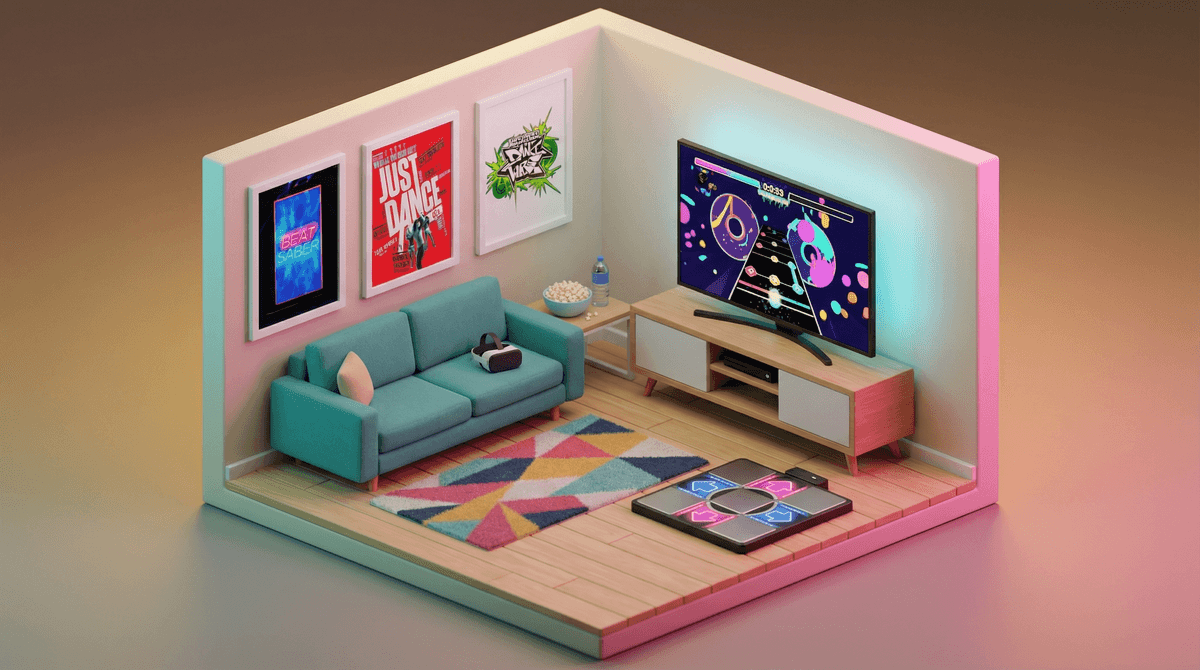
Dance games are exactly what they sound like: video games that get kids off the couch and moving their bodies to music. The most popular ones like Just Dance, Dance Dance Revolution (DDR), and Beat Saber use motion tracking, dance pads, or VR controllers to turn your living room into a dance floor.
Here's the basic setup: the game shows dancers on screen performing choreography, and players mirror the moves. Sensors track how well you're matching the routine, awarding points for accuracy and timing. Some games use cameras (like Just Dance with your phone or console camera), others use physical pads you step on (DDR), and VR options like Beat Saber have you slicing blocks to the beat with lightsabers.
The music ranges from current pop hits to classic throwbacks, Disney songs, K-pop, and everything in between. Most games offer difficulty levels from "my 4-year-old can flail to this" to "I'm training for a dance competition."
It's screen time that actually gets them moving. In a world where we're constantly negotiating how much time kids spend staring at devices, dance games are the rare win-win. Yes, they're technically playing a video game, but they're also getting genuine cardio. A solid 30-minute Just Dance session can burn as many calories as a bike ride.
No dance experience required. Unlike actual dance classes where kids might feel self-conscious, dance games let them learn moves in the privacy of home. The scoring system is forgiving enough that everyone can feel successful, but challenging enough to keep competitive kids engaged.
It's legitimately fun for the whole family. Dance games are one of the few gaming genres where skill gaps between ages matter less. A 6-year-old, a teenager, and a parent can all play together and have a good time. Family dance battles are real, and they're hilarious.
The music selection is actually good. Modern dance games have licensing deals with major artists. You're not stuck with MIDI versions of public domain songs. Kids can dance to Olivia Rodrigo, Taylor Swift, BTS, and whatever else is currently dominating their Spotify.
Ages 4-7: Just Dance has a "Kids Mode" with age-appropriate songs and simpler choreography. At this age, don't stress about scoring or accuracy—just let them move and have fun. Dance Dance Revolution on easier settings works too, though the pad-stepping might be more coordination than some younger kids can handle.
Ages 8-12: This is the sweet spot for dance games. Kids have enough coordination to actually follow routines, they love the competitive scoring element, and they're starting to care about current music. Just Dance's multiplayer modes are perfect for playdates and birthday parties. Beat Saber (if you have VR) is a huge hit with this age group, though the movements are more arm-focused than full-body dance.
Ages 13+: Teens often gravitate toward the competitive aspects and harder difficulty levels. Some will spend hours perfecting routines to beat their high scores. Others use dance games as actual workout tools. Just Dance Unlimited (the subscription service) gives access to 700+ songs, which matters more to teens who burn through content quickly.
The equipment situation: Just Dance works with most modern consoles (Switch, PlayStation, Xbox) and even has a mobile app. You don't need special controllers—your phone becomes the motion tracker. DDR requires a dance pad, which you can get for $20-100 depending on quality. Beat Saber needs a VR headset, which is a bigger investment ($300+).
Subscription vs. base game: Just Dance comes with 40-50 songs, but pushes its Unlimited subscription service ($4/month) pretty hard. The base game is fine for casual play, but if your kids are really into it, you'll probably end up subscribing. Think of it like Spotify for dance games.
Space requirements: You need a decent amount of room. Clear at least 6 feet in front of your TV, move the coffee table, and accept that things might get knocked over occasionally. Dance games and fragile decor don't mix.
It's louder than you think. Kids jumping and stomping to music is... not quiet. If you have downstairs neighbors or a home office near the living room, plan accordingly.
The workout is real. Don't underestimate how much of a workout these games provide. Kids should take water breaks, especially during marathon sessions. Some teens actually use Just Dance as their primary cardio, which is honestly a pretty good deal.
Online features are minimal. Most dance games don't have the social/chat features that make parents nervous about online gaming. Just Dance has a "World Dance Floor" mode where you can compete against others, but there's no voice chat or messaging. It's about as safe as online gaming gets.
Music content: The songs in dance games reflect current pop music, which means some lyrics might not be what you'd choose for younger kids. Most games rate songs by content (E for Everyone, T for Teen), and you can restrict access to certain tracks. Preview songs if you're concerned—some popular hits have lyrics about drinking, relationships, or mild profanity.
Body image stuff: Dance games generally feature slim, athletic dancers performing routines. For kids already anxious about body image, this could be a thing. The flip side: these games emphasize what bodies can DO rather than how they look, which can be genuinely empowering. Know your kid.
Injury prevention: Kids get excited and don't always warm up or stretch. Encourage them to start with easier songs and build up. Twisted ankles from aggressive DDR sessions are a real thing.
Dance games are probably the best type of screen time you can give your kids from a physical health perspective. They're getting exercise, developing coordination and rhythm, and having fun—all while technically playing video games.
Are they a replacement for outdoor play, sports, or actual dance classes? No. But as far as indoor, screen-based activities go, dance games are genuinely beneficial. They're especially valuable during bad weather, hot summer days, or those winter months when getting kids outside feels impossible.
The social aspect is underrated too. Dance games at birthday parties or playdates create the kind of silly, uninhibited fun that kids (and adults) remember. There's something about everyone looking equally ridiculous while trying to nail the choreography to "Uptown Funk" that levels the social playing field.
If you're looking for ways to make screen time more active, or if you need an indoor activity that doesn't involve everyone sitting still, Just Dance is probably your best first purchase. It works on most systems you already own, doesn't require extra equipment beyond your phone, and has the broadest appeal across ages.
Start simple: Get Just Dance for whatever console you have. Try it yourself first (seriously, it's more fun than you think).
Make it a family thing: Schedule regular family dance-off nights. The shared embarrassment is bonding.
Set it up for success: Clear the space, make sure the camera/sensor has a clear view, and keep water bottles nearby.
Don't overthink it: The goal is movement and fun, not perfect scores or professional-level choreography. Let kids be silly, encourage the flailing, and celebrate when they nail a move.
Want to explore other games that get kids moving? Check out our guide to active video games for kids, or if you're curious about the VR route, learn more about Beat Saber and other VR fitness games.