

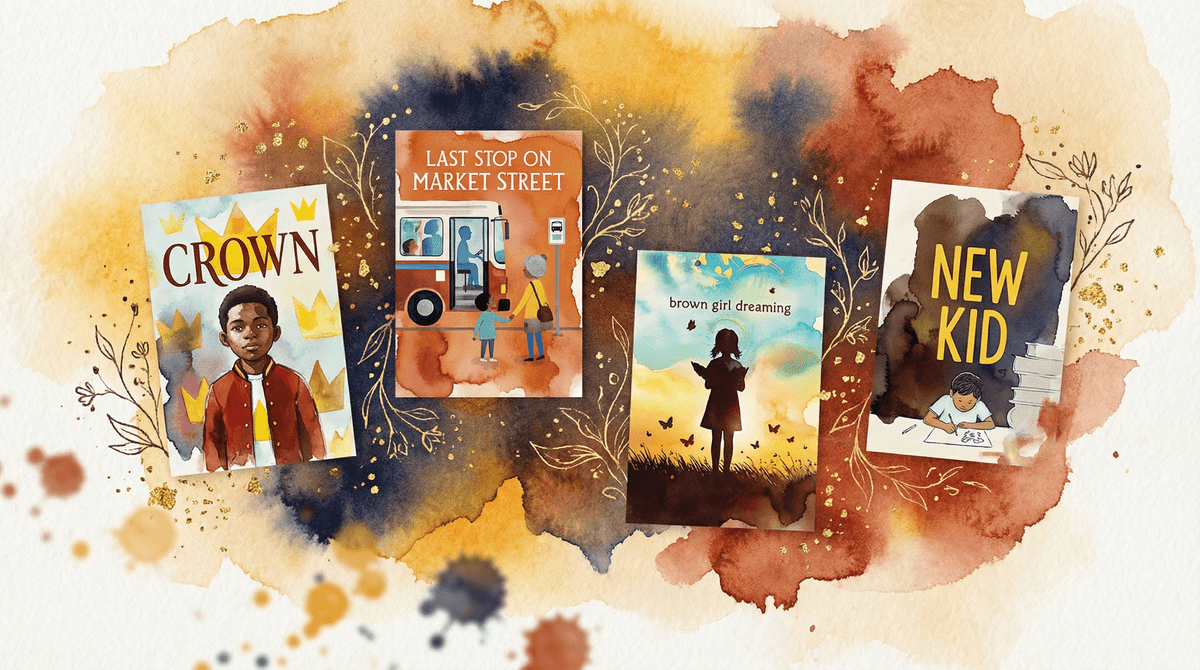
The Coretta Scott King Book Awards honor outstanding books by African American authors and illustrators that reflect the Black experience. Named after Coretta Scott King's dedication to promoting peace and world brotherhood, these awards have been recognizing exceptional children's and young adult books since 1970.
Here's the thing: this isn't just another "diverse books" list that gets trotted out during Black History Month and forgotten the rest of the year. These are legitimately excellent books that happen to center Black stories, characters, and experiences. They've won because they're beautifully written, gorgeously illustrated, and tell stories that resonate with kids across all backgrounds.
The awards come in several categories—author awards, illustrator awards, and the John Steptoe Award for New Talent. There are also honor books each year, which means you've got a constantly growing library of vetted, high-quality options.
Let's be real: representation in media matters. And that goes way beyond just seeing yourself reflected in stories (though that's crucial too). Kids who only read books about people who look like them grow up with a pretty narrow view of the world. Kids who never see themselves in books get the message that their stories don't matter.
The Coretta Scott King Award winners solve both problems elegantly. They're books that Black kids can see themselves in, and books that give all kids windows into experiences different from their own. Plus, they spark conversations about history, identity, justice, and resilience that are honestly easier to have through the lens of a good story than through a lecture at the dinner table.
And here's the practical angle: these books are actually good. We're not talking about eating your vegetables here. Kids genuinely love these stories. The Crossover by Kwame Alexander? Kids who claim to hate reading have devoured that book. Last Stop on Market Street? It's a picture book that adults want to read again and again.
Picture Books (Ages 4-8)
For younger kids, the illustrator award winners are absolute gold. The Undefeated by Kwame Alexander (illustrated by Kadir Nelson) is a stunning ode to Black excellence that works as both a read-aloud and a jumping-off point for conversations about history. The illustrations alone are museum-worthy.
Crown: An Ode to the Fresh Cut celebrates the barbershop experience and Black hair culture in a way that's joyful and affirming. Even kids who've never been to a barbershop connect with the themes of confidence and community.
Middle Grade (Ages 8-12)
This age range is where the Coretta Scott King Awards really shine. Ghost by Jason Reynolds (first in the Track series) hooks reluctant readers with its fast pace and real talk about trauma, family, and finding your place.
Brown Girl Dreaming by Jacqueline Woodson is written in verse, which makes it feel less intimidating than a thick novel, but it packs an emotional punch. It's a memoir about growing up Black in the 1960s and 70s, navigating two homes (South Carolina and New York), and finding your voice.
New Kid by Jerry Craft is a graphic novel about a Black kid navigating a predominantly white private school. It's funny, honest, and kids recognize the social dynamics immediately—even if their school looks nothing like the one in the book.
Young Adult (Ages 12+)
The Hate U Give by Angie Thomas is the book everyone thinks of first, and for good reason. It tackles police violence, code-switching, and activism without being preachy. Fair warning: it deals with heavy topics and includes some strong language, so preview it if your kid is on the younger end of this range.
March (the trilogy) by John Lewis, Andrew Aydin, and Nate Powell is a graphic novel memoir about the Civil Rights Movement from someone who was actually there. It's powerful, accessible, and honestly should be required reading.
These books deal with real stuff. Many Coretta Scott King Award winners tackle racism, discrimination, violence, and historical trauma. That's not a bug, it's a feature—but it means you might want to read alongside your kid, especially for middle grade and YA titles. Some books include the n-word in historical or reclaimed contexts. Some deal with police violence or slavery or Jim Crow.
This isn't "trauma porn" or books that exist just to make kids feel bad. These are stories about resilience, joy, community, and triumph alongside the hard stuff. But you should know what you're walking into.
Start with joy. If your family is new to centering Black authors and stories, you don't have to start with the heaviest books. There are Coretta Scott King Award winners that are pure fun—like The Jumbies by Tracey Baptiste (Caribbean folklore-inspired fantasy) or anything by Kwame Alexander that isn't explicitly about civil rights.
These books spark conversations. Be ready for questions. Kids will want to talk about why people treated others unfairly, whether things like that still happen, and what they can do about it. That's the point. If you need help navigating these conversations, this guide on talking to kids about race and racism might help.
The Coretta Scott King Award winners aren't a checkbox exercise in diversity—they're simply some of the best children's literature being published, period. Building a home library that includes these books (alongside all the other great stuff your kids are reading) is one of the easiest ways to expand their worldview and give them access to stories that are beautiful, challenging, and necessary.
You don't need to overhaul your entire bookshelf at once. Start with one book that fits your kid's age and interests. Read it together. Talk about it. Then grab another one.
Browse the full list: The American Library Association maintains the complete list of Coretta Scott King Award winners. You can filter by year, category, and age range.
Check your library: Most public libraries have dedicated sections or lists for award winners. Librarians are also genuinely thrilled when parents ask for recommendations.
Follow the authors: Many Coretta Scott King Award winners are prolific authors with multiple books. If your kid loves Jason Reynolds or Jacqueline Woodson or Kwame Alexander, you've just unlocked an entire shelf of reading material.
Make it a family habit: Instead of treating this as a one-time thing, make it part of your regular reading rotation. The goal isn't to read only books by Black authors—it's to make sure they're consistently part of the mix.