

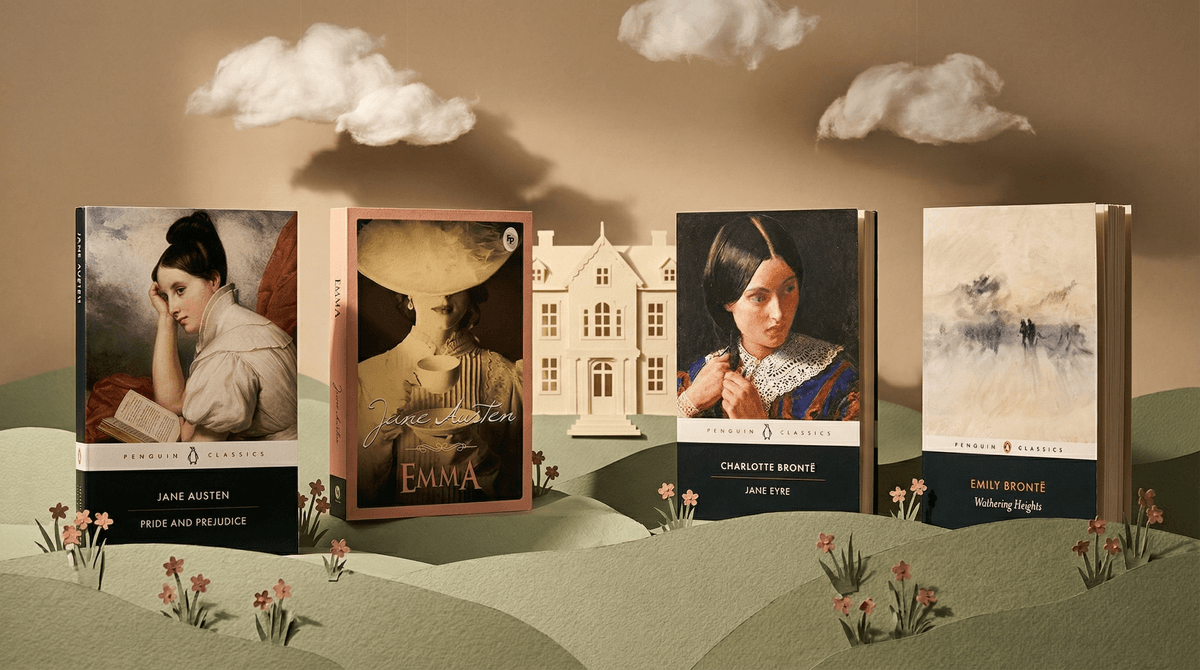
We're talking about the OG love stories here—the ones that have survived centuries because they're actually good. Pride and Prejudice, Jane Eyre, Wuthering Heights, Emma. These aren't your typical YA romance novels (though there's nothing wrong with those either). These are the books that shaped how we think about love, relationships, power dynamics, and social expectations.
And here's the thing: they're shockingly relevant. Yeah, the language can be dense and nobody's wearing corsets anymore, but the core relationship dynamics? The tension between what society expects and what your heart wants? The questions about whether you can truly know someone? That stuff hits different when your teen is navigating their own social hierarchies and figuring out what they want in relationships.
Classic romance novels are basically relationship education disguised as entertainment. They explore consent (or the lack thereof), economic power in relationships, the difference between infatuation and genuine connection, and how family and social pressure shape our choices.
Pride and Prejudice is fundamentally about overcoming first impressions and your own biases. Elizabeth Bennet has to recognize her prejudice against Darcy, while he has to confront his pride and sense of superiority. It's a master class in communication (or miscommunication) in relationships.
Jane Eyre tackles power imbalances, emotional manipulation, and what it means to maintain your integrity in a relationship. Jane literally walks away from the man she loves because the relationship isn't right—and only comes back on equal footing. That's powerful stuff.
Wuthering Heights is... well, it's a hot mess, honestly. But it's a useful hot mess because it shows what toxic, obsessive love looks like. Heathcliff and Catherine's relationship is destructive, and the book doesn't romanticize that (even if pop culture sometimes does).
Ages 13-14: Start with Pride and Prejudice or Emma. Austen's wit is accessible, and the stakes are lower (no one's dying tragically). The 2005 Pride and Prejudice movie or the Emma adaptations can be great entry points—watch together, then tackle the book.
Ages 15-16: Jane Eyre becomes more accessible here. The themes of independence, self-worth, and standing up for yourself resonate strongly with older teens. Fair warning: there's the whole "wife in the attic" situation that requires some discussion about mental health stigma in the 1800s.
Ages 17+: Now you can tackle Wuthering Heights or Anna Karenina. These are darker, more complex, and require more emotional maturity to process. Wuthering Heights in particular—every character is terrible, and that's kind of the point.
The language barrier is real. Don't force it if your teen is genuinely struggling with the Victorian prose. There are excellent modern adaptations, graphic novel versions, and even Pride and Prejudice and Zombies that can serve as gateway drugs to the originals.
These books contain outdated social norms. Racism, classism, sexism—it's all there because that was the reality of the time. This is actually a feature for discussion purposes. "Why do you think Elizabeth's marriage prospects were so limited?" opens up conversations about economic independence and gender equality.
The romance is slow-burn. No one's making out in chapter three. These books are about longing, misunderstanding, social barriers, and eventual connection. If your teen is used to more explicit YA romance, this might feel tame—or refreshingly focused on emotional connection.
Some content needs context. Rochester lying to Jane about his wife. Heathcliff's abuse. The age gaps in some of these relationships. These aren't "problematic" in a way that means teens shouldn't read them—they're opportunities to talk about what healthy relationships look like and how our standards have (thankfully) evolved.
Watch an adaptation first. The 1995 BBC Pride and Prejudice, the 2011 Jane Eyre, the 2020 Emma—they're all excellent and can help your teen visualize the story before tackling the prose.
Read together or do a family book club. Discussing these books makes them infinitely more enjoyable. "Do you think Elizabeth was right to reject Darcy the first time?" is a much better dinner conversation than "how was school?"
Use audiobooks. A good narrator can make Victorian prose come alive. Rosamund Pike reading Pride and Prejudice is chef's kiss.
Don't assign all of them. Let your teen choose which one sounds interesting. Someone who loves gothic vibes will gravitate toward Jane Eyre or Wuthering Heights. Someone who loves witty banter will prefer Austen.
Classic romance novels aren't dusty relics—they're sophisticated explorations of human relationships that happen to be set in different time periods. They teach critical thinking about relationships, social structures, and personal values in ways that Instagram-worthy quotes never will.
Are they going to replace The Hunger Games or Red, White & Royal Blue in your teen's affections? Probably not. But exposing them to these stories—whether through the original books, adaptations, or modern retellings—gives them a richer vocabulary for understanding relationships and a connection to stories that have resonated for generations.
Plus, when they inevitably encounter Mr. Darcy references in pop culture, they'll actually get the joke.
Start with whichever book or adaptation sounds most interesting to your teen—there's no wrong entry point. Watch a movie together, see if it sparks interest, then grab the book. And if your teen bounces off the first one? Try another. Austen's wit is completely different from Brontë's intensity, and both are different from the Russian epics.
The goal isn't to create a Victorian literature scholar. It's to show your teen that love stories—real ones, complicated ones—have been captivating people for centuries, and maybe spark some conversations about what they want (and don't want) in their own relationships.