

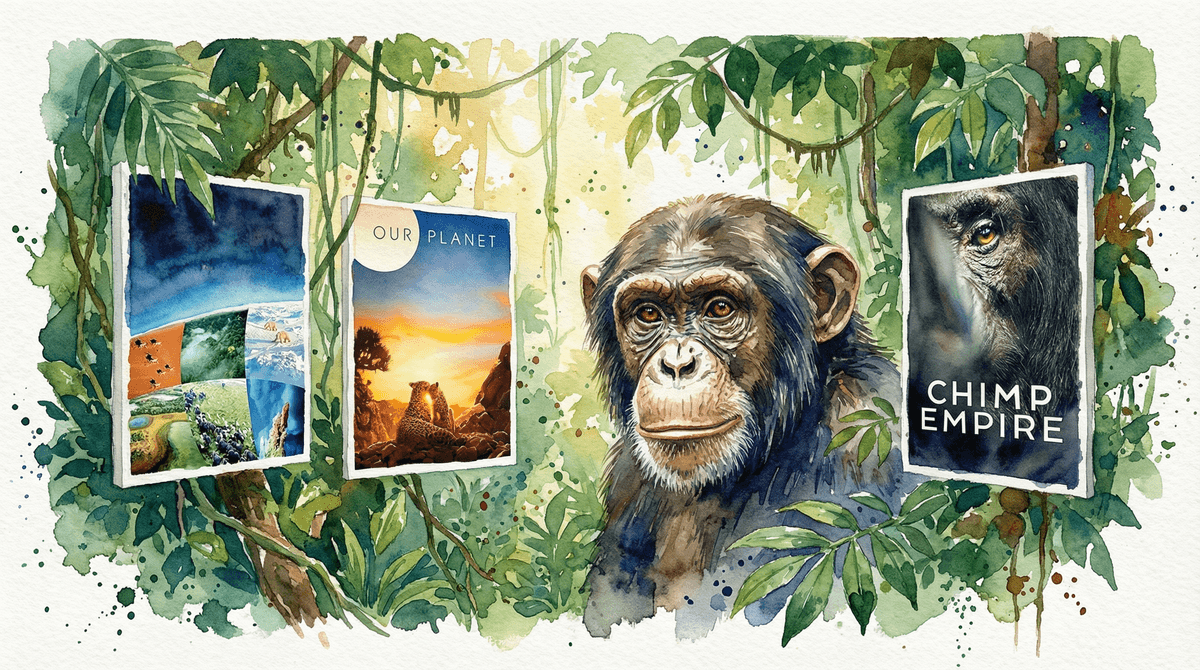
Chimp Empire is a 4-part nature documentary series on Netflix that dropped in April 2023, narrated by Mahershala Ali. It follows a massive community of chimpanzees living in Uganda's Kibale National Park as they navigate what can only be described as Game of Thrones-level drama—territorial battles, family alliances, power struggles, and yes, some pretty intense violence.
The cinematography is stunning, the storytelling is gripping, and the chimps are genuinely fascinating to watch. It's rated TV-PG, which might make you think "oh great, educational content for the kids!" But here's where we need to talk.
There's something magnetic about watching these chimpanzees that share 98% of our DNA navigate their world. The series doesn't anthropomorphize them with cute voices or silly narratives—it treats them as the complex, intelligent creatures they are. Kids who love nature documentaries will be drawn to:
- Real animal behavior that's way more interesting than any zoo visit
- Actual stakes - this isn't a sanitized nature show where everything works out
- Character development - you genuinely start rooting for certain chimps and their families
- Stunning footage that shows behaviors rarely captured on film
The series also has genuine educational value about animal behavior, social structures, evolution, and conservation. It's the kind of thing that could spark a genuine interest in primatology or wildlife biology.
Here's where I need to be straight with you: this documentary shows real chimpanzee violence, and it can be genuinely disturbing. We're not talking about cartoon bonks on the head. Chimpanzees are incredibly strong, territorial, and can be brutal to each other—and to other species.
The series includes:
- Intense fights between rival groups with visible injuries
- Hunting sequences where chimps kill and eat other animals (including other primates)
- Scenes of infant chimps in danger or being threatened
- Territorial battles that result in serious harm
The filmmakers don't linger gratuitously on the violence, but they don't shy away from it either. This is nature, unvarnished. One Reddit thread described it as "like a Shakespearean drama"—which is accurate, but Shakespeare also had people getting their eyes gouged out on stage.
Ages 5-8: Probably not. The violence will likely be scary, and younger kids don't yet have the context to understand predator-prey relationships or territorial behavior without potentially developing fears about animals or nature.
Ages 9-11: Maybe, with significant parent co-viewing. Some kids in this age range are ready for nature documentaries that show the full circle of life, others absolutely are not. You know your kid—if they were disturbed by the wildebeest scene in The Lion King, they're probably not ready for this.
Ages 12+: This is where it becomes more appropriate for most kids, especially those interested in animals, science, or nature. The educational value is real, and middle schoolers are generally developmentally ready to process that nature includes both cooperation and violence.
The real question: Is your kid the type who wants to understand how the natural world actually works, even when it's uncomfortable? Or are they still in the "all animals are friends" phase? Neither is wrong, but it matters for this particular series.
About 40% of families in the Screenwise community use Netflix regularly for their kids, with another 40% using it occasionally. But here's the thing: just because something is on Netflix and rated TV-PG doesn't mean it's automatically kid-appropriate. The TV-PG rating is pretty broad and doesn't always capture intensity or thematic weight.
A few practical considerations:
Co-viewing is essential for younger viewers. You'll want to be there to pause, discuss, and provide context about what they're seeing. Questions will come up about why animals fight, what happens to the babies, why the chimps hunt other primates—be ready for those conversations.
It's not background viewing. This isn't something to put on during dinner. It requires attention and processing, especially for the more intense sequences.
Consider your child's sensitivity level. Some kids can intellectually understand "this is how nature works" but still be emotionally affected by seeing it. That's normal and okay. You can always talk through what makes certain content feel too intense .
.
The educational value is legitimate. If your kid can handle it, this is genuinely excellent science content that shows animal behavior, social structures, and ecosystems in action. It's the kind of thing that could inspire a kid who's interested in biology or conservation.
Chimp Empire is a beautifully made, scientifically valuable documentary that shows chimpanzees as they actually are—complex, intelligent, social, and sometimes violent. It's not "too intense" universally, but it's definitely too intense for some kids, and that's a judgment call only you can make based on your child's age, temperament, and previous exposure to nature content.
If you're looking for animal content that's a bit gentler, check out alternatives like Our Planet or Planet Earth. If your older kid is ready for the real deal and interested in primates, this is excellent—just plan to watch together and talk through what you're seeing.
The TV-PG rating is technically accurate, but think of this as "PG with an asterisk"—appropriate for older kids and teens who are ready to see nature without the Disney filter.