

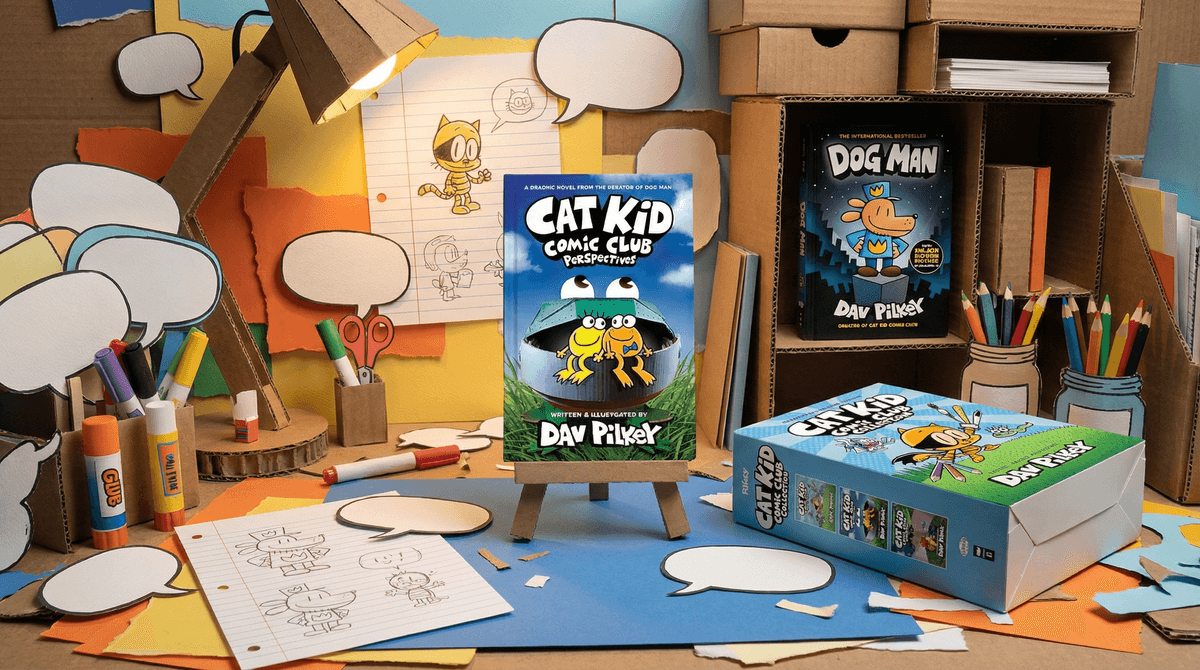
Cat Kid Comic Club is a graphic novel series by Dav Pilkey (yes, the same brilliant mind behind Captain Underpants and Dog Man). The series follows Li'l Petey, a kitten who starts a comic book club to help a group of enthusiastic but chaotic baby frogs learn how to create their own comics.
Here's what makes it different from Pilkey's other work: it's literally a book about making books. Each story shows the baby frogs (Melvin, Naomi, Poppy, Gilbert, and Curly) creating their own comics, complete with all the messy drafts, creative disagreements, and moments of self-doubt that come with the artistic process. The books include the frogs' actual comic creations—which range from surprisingly sophisticated to wonderfully ridiculous—alongside the main narrative.
The series currently has six books, with more on the way. Each one is structured around the comic club's meetings, where the characters create, share feedback, collaborate, and grow as artists and friends.
If your kid has read one Cat Kid Comic Club book, they've probably already asked for the rest of the series. Here's why these books hit differently:
It validates their creative impulses. The baby frogs make comics about everything—silly stuff, serious stuff, weird experimental stuff. There's no "right way" to create, which is incredibly freeing for kids who are used to following rubrics and meeting expectations in school.
It's a creativity manual disguised as a story. Kids don't just read about making comics—they see the actual process. They watch characters brainstorm, struggle with writer's block, revise their work, and support each other through creative challenges. It's like a masterclass in artistic collaboration, but with fart jokes.
The humor is genuinely funny. Pilkey understands kid humor in a way few authors do. The books are packed with wordplay, visual gags, and the kind of absurdist comedy that makes kids (and honestly, adults) laugh out loud.
It makes them want to create their own stuff. This is the big one. After reading these books, kids don't just want to read more—they want to grab markers and paper and start making their own comics. The series includes tips, techniques, and encouragement that make the creative process feel accessible.
Ages 6-8: Perfect entry point for emerging readers. The graphic novel format with lots of visual storytelling makes these books accessible for kids who are still building reading stamina. They might need help with some of the more complex storylines, but the pictures carry a lot of the narrative weight.
Ages 8-10: The sweet spot. Kids this age have the reading skills to fly through these independently and the creative capacity to really engage with the meta-narrative about making art. Don't be surprised if they start creating their own comic clubs with friends or siblings.
Ages 10-12: Still highly engaging, especially for kids interested in art, writing, or storytelling. The themes about creative collaboration, handling criticism, and finding your artistic voice resonate deeply with this age group, who are starting to develop more sophisticated creative identities.
The content is squeaky clean—no violence beyond cartoon slapstick, no romance, no scary stuff. The biggest "issue" parents might encounter is kids spending hours making their own comics instead of doing homework (which, honestly, isn't the worst problem to have).
These books are gateway drugs to creativity. Seriously, budget for art supplies. After reading Cat Kid Comic Club, kids often want blank paper, colored pencils, markers, and notebooks. Some families report their kids filling entire sketchbooks with original comics. This is a feature, not a bug.
The books teach real artistic concepts. Pilkey sneaks in legitimate lessons about storytelling, visual composition, character development, and creative revision. Kids learn about flip books, perspective, panel layouts, and narrative structure without realizing they're learning.
They normalize the messy creative process. One of the most valuable things these books do is show that creating art isn't always easy or perfect. Characters struggle, make mistakes, feel discouraged, and keep going anyway. For kids who are perfectionists or afraid of "doing it wrong," this is incredibly powerful.
There's surprising emotional depth. While the books are funny and light, they also deal with themes like anxiety, self-doubt, friendship challenges, and finding your voice. Li'l Petey himself has some touching moments about his own artistic journey and relationship with his dad (who is, you know, a former villain).
They work great as read-alouds. Even if your kid can read these independently, the format makes them excellent for family reading time. The different character voices are fun to perform, and the comics-within-the-comic create natural stopping points for discussion.
In a world where kids spend an average of 5-7 hours daily on screens, Cat Kid Comic Club offers something increasingly rare: creative inspiration that leads to screen-free activity.
After reading these books, kids aren't passive consumers—they're creators. They're drawing, writing, designing characters, and building worlds. Some kids even create digital comics using apps like Procreate or Comic Life, which is a great bridge between their interest in screens and creative output.
If you're trying to balance screen time in your family, these books are powerful allies. They scratch the same itch as YouTube or TikTok—entertainment, humor, visual stimulation—but they inspire kids to make their own content rather than just consume it.
Cat Kid Comic Club is one of those rare series that kids love and parents can feel genuinely good about. It's entertaining, educational, and inspiring without being preachy or boring.
If your kid has already burned through Dog Man or Captain Underpants, this is the natural next step. And if they haven't discovered Dav Pilkey yet, you're in for a treat—just prepare for them to ask for the entire series.
Start with Book 1: Cat Kid Comic Club: Perspectives is the first in the series and sets up the whole premise beautifully.
Create space for creativity: Stock up on blank paper, markers, and pencils. Consider setting up a dedicated "comic creation station" if you have the space.
Join the fun: Ask your kid to teach you how to make comics. Let them be the expert. Make your own terrible comic and share it with them.
Connect with other creator kids: If your child gets really into making comics, look for local comic creation workshops, art classes, or even virtual communities where young artists share their work.
Want to explore more books that inspire creativity rather than just passive reading? Check out our guide to books that get kids creating .
.