

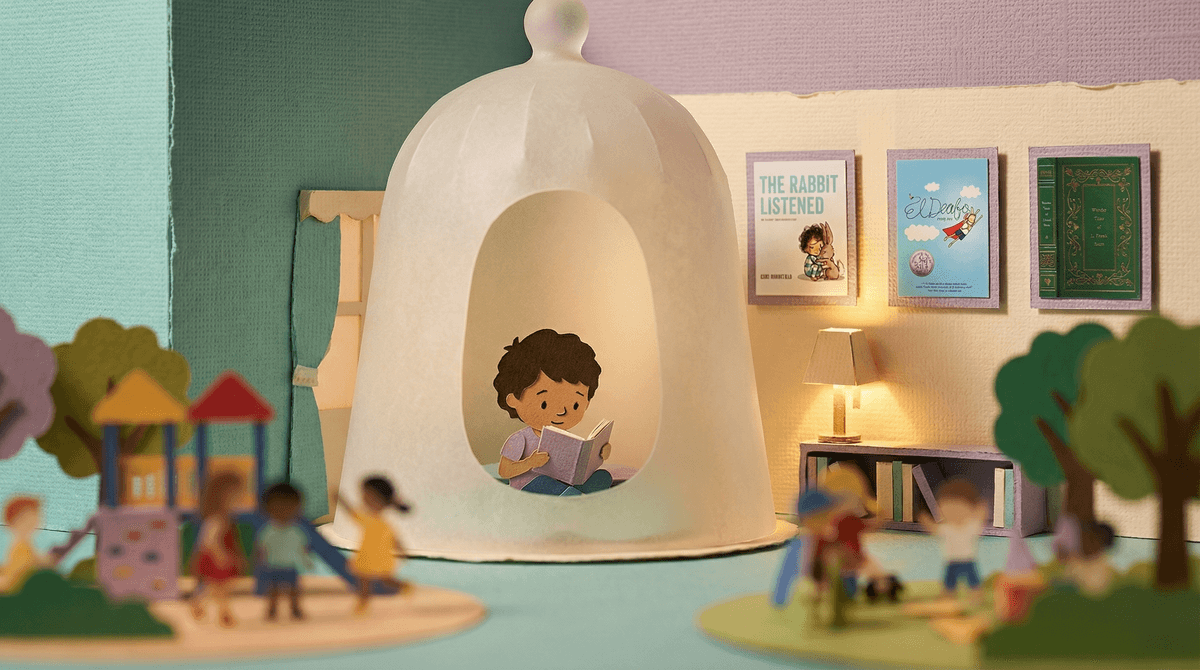
Books for Kids Who Struggle with Large Groups and Loud Spaces
If you've got a kid who melts down at birthday parties, covers their ears in the cafeteria, or needs serious decompression time after school assemblies, you're not alone. Some kids are just wired to experience the world more intensely—louder sounds feel louder, crowded spaces feel more overwhelming, and the sensory input that other kids seem to brush off can feel like too much.
Whether your child has been diagnosed with sensory processing differences, is on the autism spectrum, has ADHD, or is just what people used to call "highly sensitive," books can be incredibly validating. They help kids see themselves in stories, understand that they're not broken or weird, and learn strategies for navigating a world that wasn't exactly designed for their nervous system.
Here's the thing: most kids' books feature protagonists who are social butterflies, love parties, and thrive in chaos. When your kid's experience is the opposite, they can start to internalize that something is wrong with them. Books that reflect their reality do important work—they normalize different ways of experiencing the world and help kids develop language for what they're feeling.
Plus, these books can be conversation starters. They give you a way to talk about sensory overwhelm, personal boundaries, and self-advocacy without it feeling like a lecture or a "you have a problem we need to fix" conversation.
Picture Books (Ages 4-8)
A Quiet Place by Tomie dePaola
This one's a classic for a reason. It follows a young boy seeking peace in a noisy world. Simple, gentle, and perfect for younger kids who are just starting to understand that they need quiet time.
The Rabbit Listened by Cori Doerrfeld
When Taylor's block tower falls, different animals offer different types of help—but only the rabbit knows to just sit quietly and listen. Beautiful for kids learning that sometimes the best response to overwhelm is gentle presence, not fixing.
Jabari Jumps by Gaia Cornwall
While not explicitly about sensory issues, this book brilliantly captures the feeling of being scared to do something everyone else seems fine with. Jabari's dad doesn't push—he validates the fear and helps him work through it at his own pace.
Lots of Feelings by Shelley Rotner
A photo book that shows real kids experiencing different emotions. Great for helping younger kids identify and name what they're feeling when things get too much.
Early Chapter Books (Ages 6-10)
Ivy Aberdeen's Letter to the World by Ashley Herring Blake
Ivy is dealing with a tornado, family stress, and figuring out her identity—but she's also a kid who needs quiet and art to process the world. The sensory elements aren't the main plot, but they're woven throughout in a really authentic way.
The Miscalculations of Lightning Girl by Stacy McAnulty
Lucy was struck by lightning and now has OCD and struggles with social situations. The book handles her need for routine and her sensory sensitivities with humor and heart, while also being a genuinely fun middle-grade read.
Fish in a Tree by Lynda Mullaly Hunt
Primarily about dyslexia, but Ally's experience of feeling different and overwhelmed in school environments will resonate with sensory-sensitive kids. The message about different kinds of smart is powerful.
Middle Grade (Ages 8-12)
El Deafo by Cece Bell
This graphic novel memoir about a girl who's deaf brilliantly captures what it's like to experience the world differently than your peers. The visual format makes it accessible, and Cece's humor about her "superpower" hearing aid is perfect.
Wonder by R.J. Palacio
Yes, everyone recommends this one, but for good reason. Auggie's experience of being stared at, feeling different, and navigating social situations that feel overwhelming is beautifully handled. The multiple perspectives also help kids understand how others might see situations differently.
Real Friends by Shannon Hale
Another graphic novel (they're great for kids who get overwhelmed by dense text). Shannon's anxiety about fitting in and her struggles with group dynamics will resonate with kids who find large social situations exhausting.
Insignificant Events in the Life of a Cactus by Dusti Bowling
Aven was born without arms, but the book isn't inspiration porn—it's about real friendship and navigating a world that isn't built for you. Her friend Conner has Tourette syndrome, and their friendship around being "different" is genuinely touching.
Young Adult (Ages 12+)
Turtles All the Way Down by John Green
Aza has OCD and anxiety, and Green (who has OCD himself) captures the spiral of intrusive thoughts and sensory overwhelm with painful accuracy. Not a light read, but validating for teens who feel like they're drowning in their own minds.
The Rest of Us Just Live Here by Patrick Ness
While a fantasy apocalypse happens in the background, the real story follows Mikey, who has OCD and anxiety. It's a brilliant take on being the "normal" kid in a world that celebrates the extraordinary—and how hard "normal" can actually be.
When choosing books for sensory-sensitive kids, prioritize:
- Characters who experience the world similarly to your child
- Validation without "fixing"—the best books show that different isn't broken
- Practical strategies woven into the story (like characters who use noise-canceling headphones or take breaks)
- Diverse representation—sensory sensitivity looks different across different kids
- Authentic voices—look for #OwnVoices books where the author shares the experience they're writing about
Books won't magically make loud cafeterias less overwhelming or birthday parties less exhausting. But they can help your kid feel less alone, develop language for their experiences, and see that there are others out there who get it.
The goal isn't to make your kid "normal" (whatever that means). It's to help them understand themselves, advocate for their needs, and find their people—both in books and in real life.
Start with one book that feels right for your kid's age and interests. Read it together if they're younger, or just leave it on their nightstand if they're older. And then talk about it—or don't. Sometimes just knowing that someone else gets it is enough.