

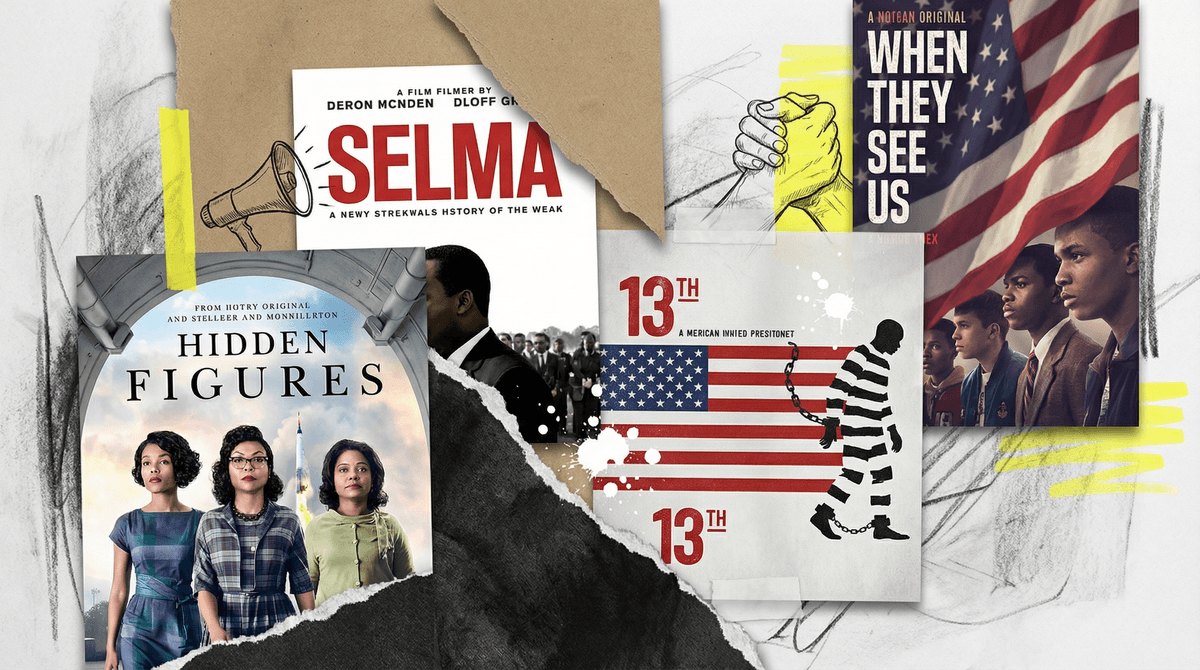
Look, talking to kids about racism, police violence, and systemic injustice is hard. Like, really hard. But it's also necessary, and honestly, film can be one of the most powerful entry points for these conversations—especially when you're not sure where to start.
When we talk about "Black Lives Matter movies," we're talking about films that center Black experiences, explore racial injustice, celebrate Black resistance and resilience, or document the ongoing fight for civil rights. Netflix has a surprisingly solid collection that spans documentaries, historical dramas, and even some lighter fare that still carries important messages. Some are explicitly about activism and protest movements. Others are simply stories that humanize Black lives in ways mainstream media has historically failed to do.
The key is finding the right film for your kid's age and emotional readiness—because a 7-year-old processing racism for the first time needs something very different than a 15-year-old who's already following social justice accounts on Instagram.
If you're a white family, these conversations are essential because your kids need to understand the reality of racism in America—and they won't learn it by osmosis. If you're a Black family, you're likely already having these conversations, but seeing your family's experiences reflected on screen can be validating and empowering.
Here's the thing: kids are already aware of racial dynamics earlier than most parents think. Research shows children as young as 3-5 notice racial differences, and by elementary school, they're absorbing messages about race from everything around them—school, media, their peers, that one uncle at Thanksgiving. The question isn't whether to talk about it, but how.
Movies give you a shared experience to process together. They create emotional connection to stories that might otherwise feel abstract or "political" to kids. And honestly? Sometimes it's easier to talk about hard things when you're both staring at a screen instead of making direct eye contact.
Ages 6-10: Starting the Conversation
For younger kids, you want films that introduce concepts of fairness, standing up for what's right, and celebrating Black joy without traumatizing them with graphic violence.
Ruby Bridges (1998) - This Disney TV movie tells the story of the 6-year-old girl who integrated an all-white elementary school in New Orleans in 1960. It's gentle enough for young kids but doesn't shy away from showing the hatred Ruby faced. Perfect for ages 7+.
Akeelah and the Bee - Not explicitly about activism, but it's a beautiful story about a young Black girl from South LA pursuing her dreams despite systemic barriers. Ages 8+.
Hidden Figures - If it's still on Netflix (availability changes), this is gold for kids 9+ who can handle some period-appropriate racism but mostly want to see brilliant Black women literally send people to space while dealing with segregation.
Ages 11-14: Deeper Understanding
Middle schoolers can handle more complexity and historical context. They're also starting to form their own political opinions and notice injustice in their own lives.
13th - Ava DuVernay's documentary about mass incarceration and the 13th Amendment is stunning and essential viewing. Ages 13+, and honestly, some mature 11-12 year olds can handle it with parent co-viewing. It's not graphic, but it's heavy and requires context.
Selma - DuVernay's film about MLK and the Selma to Montgomery marches is powerful without being gratuitous. The violence is there but not exploitative. Ages 12+.
The Hate U Give - Based on Angie Thomas's YA novel, this follows a teenage girl who witnesses her friend's death at the hands of police. It's intense and features some strong language, but it's also probably the most relevant film for this generation. Ages 13+, though some 11-12 year olds who are already aware of police violence could watch with parents.
Ages 15+: Full Context
Teens can handle adult content and benefit from understanding the full scope of racial injustice, including its most painful manifestations.
When They See Us - Technically a limited series, not a movie, but this is essential viewing about the Central Park Five. It's brutal and will make you cry, but it's also incredibly important. Ages 15+.
Time - Garrett Bradley's documentary about a woman fighting for her husband's release from prison is intimate and heartbreaking. Ages 14+.
Whose Streets? - A documentary filmed by activists during the Ferguson uprising. Raw, immediate, and powerful. Ages 15+.
Co-viewing is non-negotiable for younger kids. You need to be there to answer questions, provide context, and process emotions together. Even teens benefit from knowing you're available to talk afterward.
Prepare yourself first. If you're white and haven't done your own work around racism, watching these films with your kids might be uncomfortable. That's okay—that discomfort is part of the process. But don't make your kid responsible for managing your feelings.
Follow their lead. Some kids will want to talk immediately. Others need time to process. Don't force a dissertation on systemic racism if they're not ready. But do create space for questions.
Content warnings matter. Police violence, racial slurs, and traumatic historical footage can be triggering—especially for Black children who may see themselves in these stories. Check Common Sense Media or parent reviews before you press play.
This isn't one conversation. You're not going to watch one movie and solve racism. This is the beginning of an ongoing dialogue that will evolve as your kids grow.
Netflix's library changes constantly, so some of these titles may rotate in and out of availability. But the platform consistently maintains a solid collection of films that can help families engage with racial justice in age-appropriate ways.
The goal isn't to traumatize your kids or make them feel guilty (if they're white) or hopeless (if they're Black). The goal is to build awareness, empathy, and ultimately, a generation that's better equipped to dismantle racism than the ones before them.
Start where your family is. Pick one film that feels right for your kid's age and emotional readiness. Watch it together. Talk about it. And then keep going.
Not sure which film to start with? Get recommendations based on your kid's age and what you've already discussed.
Want to expand beyond Netflix? Check out our guide to documentaries about social justice or books about race for kids.
Looking for lighter content that still centers Black joy? Sometimes you need a break from the heavy stuff. We get it.