

Black history documentaries are films that explore the experiences, contributions, struggles, and triumphs of Black people throughout history. These aren't just relegated to February—they're year-round resources that can help families understand systemic racism, celebrate Black excellence, learn about civil rights movements, and grapple with difficult truths about American history.
The best ones don't sugarcoat or oversimplify. They present history with nuance, centering Black voices and perspectives that often get marginalized or completely omitted from school curricula. And honestly? Many of them are more engaging than whatever textbook your kid is dragging home.
Here's the thing: most American history education is... incomplete. Kids learn about MLK's "I Have a Dream" speech and maybe Rosa Parks, and that's often where it stops. The sanitized version. The comfortable version.
Black history documentaries fill in the gaps. They introduce kids to figures like Claudette Colvin (who refused to give up her bus seat nine months before Rosa Parks), the Tulsa Race Massacre (which many adults are just learning about), and the ongoing impact of redlining and mass incarceration.
For Black children, these documentaries provide representation and affirmation—seeing their history, culture, and experiences reflected back with dignity and complexity.
For non-Black children, they're essential for developing cultural competence and empathy—understanding that their classmates' experiences and family histories may be fundamentally different from their own.
And for all kids? They're a chance to understand that history isn't ancient—it's living, breathing, and still shaping the world around them.
Ages 6-9: Start with celebration and contribution
Young kids can handle age-appropriate content about Black history that emphasizes joy, innovation, and achievement. Look for documentaries about:
- Black inventors and scientists
- The Harlem Renaissance
- Black athletes breaking barriers
- Music history (jazz, blues, hip-hop)
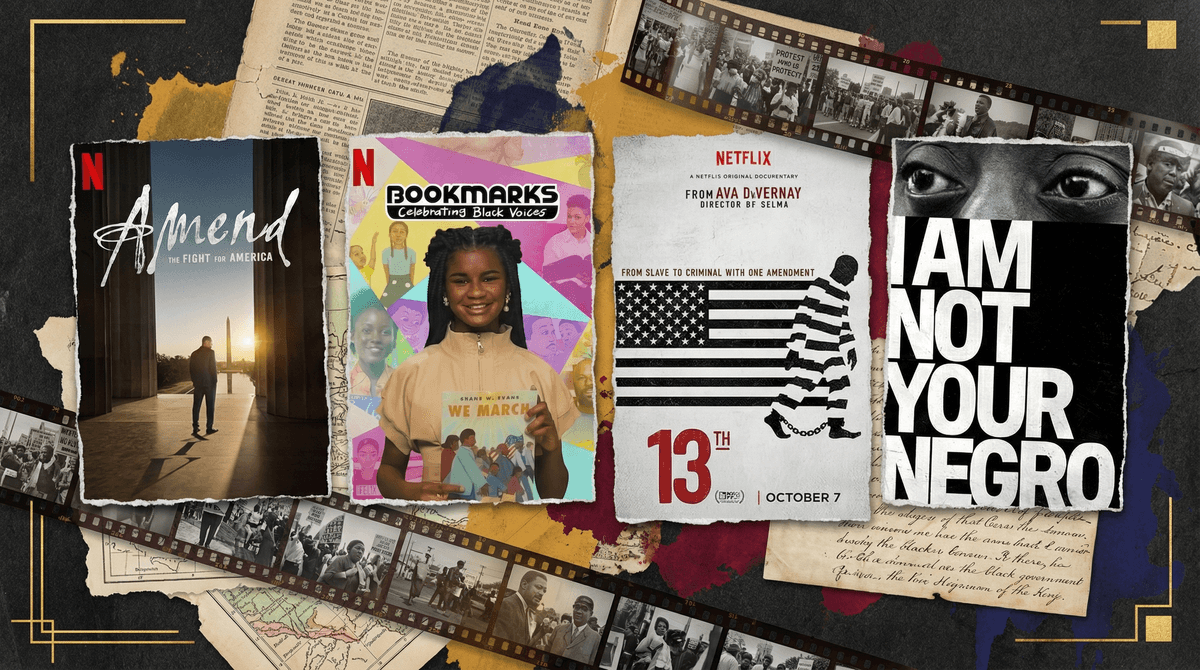
Try Bookmarks: Celebrating Black Voices on Netflix—it's a short-form series where Black celebrities read children's books by Black authors. Not strictly documentary, but a gentle entry point.
Ages 10-13: Introduce civil rights history with context
Middle schoolers can start engaging with more complex material about the Civil Rights Movement, but they need context and conversation. Don't just drop them in front of footage of police dogs and fire hoses without being available to process.
Amend: The Fight for America on Netflix is solid for this age—it explores the 14th Amendment and features Will Smith, but doesn't shy away from difficult truths. Each episode is about an hour, so plan to watch together.
Ages 14+: Time for the full picture
High schoolers can handle—and need—the unvarnished truth. This is when you can introduce documentaries about slavery, mass incarceration, police brutality, and systemic racism.
13th (Netflix) is essential viewing. Ava DuVernay's documentary about the prison industrial complex is powerful, well-researched, and will absolutely spark conversations. Fair warning: it's heavy. Watch it together.
I Am Not Your Negro (based on James Baldwin's unfinished manuscript) is brilliant and poetic, but requires some emotional maturity to process.
This will be uncomfortable. That's the point.
If you're a white parent, you're going to feel uncomfortable watching some of these documentaries. You might feel defensive, guilty, angry, or overwhelmed. That's normal. Sit with it. Don't center your discomfort in conversations with your kids—they're learning to grapple with hard truths, and they need you to model how to do that with grace.
You don't need to have all the answers.
"I don't know" is a perfectly acceptable response to tough questions. So is "Let's look that up together" or "That's a really important question—can we talk about it more after I've had time to think?"
Black families are not a monolith.
If you're asking Black friends or colleagues to recommend documentaries or explain concepts to you, remember that emotional labor is real. Buy the books. Do the research. Learn about anti-racism resources on your own time.
Schools often fail at this.
Even in 2026, many schools are actively restricting how race and history can be taught. Documentaries at home can supplement what kids aren't getting in the classroom—but they're not a replacement for systemic change.
Create a watch-together routine. Pick one documentary a month. Make it a family thing. Pause when needed. Talk during and after.
Follow up with conversation starters:
- What surprised you?
- What made you angry or sad?
- What connections do you see to things happening today?
- What questions do you still have?
Connect to current events. When something happens in the news, reference what you've learned together. "Remember what we watched about redlining? That's connected to this."
Support Black creators. Seek out documentaries made by Black filmmakers, not just about Black history. Check out streaming platforms that center Black voices.
Black history documentaries aren't optional "nice to have" content—they're essential education that our schools often fail to provide. Yes, they're sometimes difficult to watch. Yes, they'll spark hard conversations. That's exactly why they matter.
Start where your kids are developmentally, watch together, and be willing to sit with discomfort. The goal isn't to make your kids feel guilty—it's to help them understand history, develop empathy, and recognize that they have a role to play in creating a more just future.
And if you're wondering whether your kid is "ready" for this content? They're living in a world shaped by this history whether we talk about it or not. Better to give them the tools to understand it.