

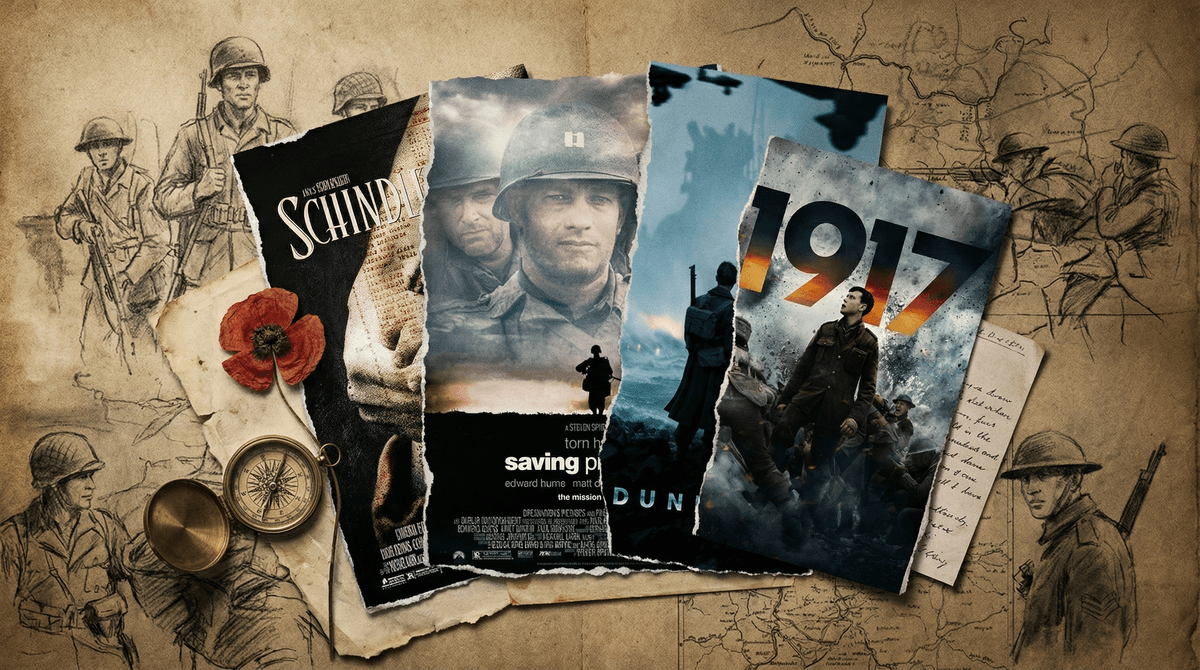
War drama films are the heavy hitters of cinema — movies that use historical conflicts to explore themes of courage, sacrifice, loss, and the brutal reality of combat. We're talking Saving Private Ryan, Dunkirk, 1917, Hacksaw Ridge, and classics like Schindler's List.
These aren't your typical action movies. Yes, there are battle sequences, but the focus is on what war does to people — the moral complexity, the trauma, the impossible choices. They're educational in the truest sense, showing history through a deeply human lens. But they're also intense, graphic, and emotionally devastating.
The question isn't whether these films have value (they absolutely do), but when is your kid ready for them?
Here's the thing: war drama films can teach lessons that textbooks simply can't. They make history visceral and real. They show that war isn't glorious — it's messy, tragic, and complicated. They honor sacrifice while never glorifying violence.
Saving Private Ryan teaches more about D-Day in its opening 27 minutes than a semester of history class. Dunkirk shows the terror of being trapped with the enemy closing in. Hacksaw Ridge tells the true story of a conscientious objector who saved 75 men without firing a weapon.
These are stories worth knowing. The question is timing and preparation.
Let's not sugarcoat this: war dramas earn their R ratings. We're talking:
- Graphic violence: Limbs blown off, blood, visceral death scenes
- Emotional trauma: Characters you care about dying suddenly and brutally
- Disturbing themes: War crimes, moral ambiguity, PTSD, genocide
- Language: Soldiers swear. A lot.
- Sustained tension: Some of these films (looking at you, Dunkirk) are 90+ minutes of anxiety
The Omaha Beach scene in Saving Private Ryan? It's considered one of the most realistic combat sequences ever filmed. Which means it's also one of the most disturbing. Grown adults have walked out of theaters during that scene.
Ages 10-12: Not Yet (With Rare Exceptions)
Most kids in this range aren't ready for full-on war dramas. The violence is too graphic, the themes too mature, the emotional weight too heavy. That said, if you have a history-obsessed 12-year-old who's emotionally mature and you're watching together, something like Dunkirk (which has less gore and more suspense) might work. But this is the exception, not the rule.
Better options for this age: Midway (2019) is PG-13 and focuses more on strategy than gore. Or start with documentaries like Ken Burns' The War series — still heavy, but less viscerally traumatic.
Ages 13-15: Proceed with Caution
This is where it gets interesting. Many teens are studying WWII in school, and these films can deepen that understanding significantly. But you need to:
- Watch it first yourself — seriously, don't skip this
- Watch it together — this isn't a "go watch in your room" situation
- Be ready to pause and discuss — especially if they're struggling
- Check in afterward — these films stick with you
Start with slightly less intense options like Dunkirk (minimal blood, maximum tension) or 1917 (still R-rated but slightly less graphic than Saving Private Ryan). Save Saving Private Ryan for 15+ and Schindler's List for when they're truly ready for Holocaust education in its most brutal form.
Ages 16+: Ready, With Context
By 16-17, most teens can handle these films intellectually and emotionally — especially if they've been prepared. They're likely learning about these conflicts in school anyway, and these films provide crucial context about the human cost of war.
But "can handle" doesn't mean "won't be affected." These films should affect them. That's the point. The goal is to watch together, create space for questions and emotions, and help them process what they're seeing.
These Films Aren't "Fun" Movie Nights
Don't throw on Saving Private Ryan on a Friday night expecting entertainment. These are educational experiences that happen to be films. Treat them more like a museum visit than a Marvel movie.
The Violence Serves a Purpose
Yes, it's graphic. But it's not gratuitous. Directors like Spielberg and Nolan made deliberate choices to show the true horror of war — specifically to prevent it from being glamorized. The discomfort is the point.
Different Wars, Different Themes
- WWII films (Saving Private Ryan, Dunkirk, Hacksaw Ridge): Focus on "the good war," clear moral lines, sacrifice for a just cause
- Vietnam films (Platoon, Full Metal Jacket): Moral ambiguity, the psychological toll, questioning authority
- Modern conflict films (American Sniper, The Hurt Locker): PTSD, the difficulty of returning home, asymmetric warfare
Choose based on what you're ready to discuss.
Watch for Signs They're Not Ready
If your kid is covering their eyes, leaving the room repeatedly, or having nightmares afterward, they weren't ready. And that's okay. These films will still be here in a year or two.
Before Watching:
- Explain what they're about to see and why it matters
- Set expectations: "This will be intense and that's intentional"
- Give them permission to take breaks or stop entirely
During Watching:
- Pause for questions
- Check in during particularly intense scenes
- Don't feel like you have to power through if it's too much
After Watching:
- Talk about what they saw and how they felt
- Connect it to what they're learning in school
- Discuss the broader themes (sacrifice, courage, the cost of freedom)
- Learn more about processing difficult media with kids

Lower Intensity (Still R-rated):
- Dunkirk — suspense over gore, minimal dialogue, incredible cinematography
- Midway (2019) — PG-13, more strategic than graphic
Medium Intensity:
- 1917 — follows two soldiers on a mission, one-shot cinematography creates immersion
- Hacksaw Ridge — inspiring true story, though the battle scenes are intense
High Intensity:
- Saving Private Ryan — the gold standard, but brutal opening sequence
- Schindler's List — essential Holocaust education, but emotionally devastating
War drama films have genuine educational and emotional value. They teach history, empathy, and the true cost of freedom in ways that sanitized textbooks never could. But they're also intense, graphic, and emotionally heavy.
The right age isn't a number — it's a combination of emotional maturity, historical context, and your family's values. A mature 14-year-old studying WWII might be ready for Dunkirk. A sheltered 17-year-old might not be ready for Saving Private Ryan.
The key is watching together, providing context, and creating space for processing. These aren't films to "get through" — they're experiences to learn from.
And honestly? If you watch Saving Private Ryan together and your teen is shaken by it, that's not a failure. That's the film working exactly as intended. The goal isn't to desensitize them to violence — it's to help them understand its true cost.
Not sure if your kid is ready? See if your kid is ready for war movies — we can talk through age, maturity level, and what they're learning in school to help you decide.