

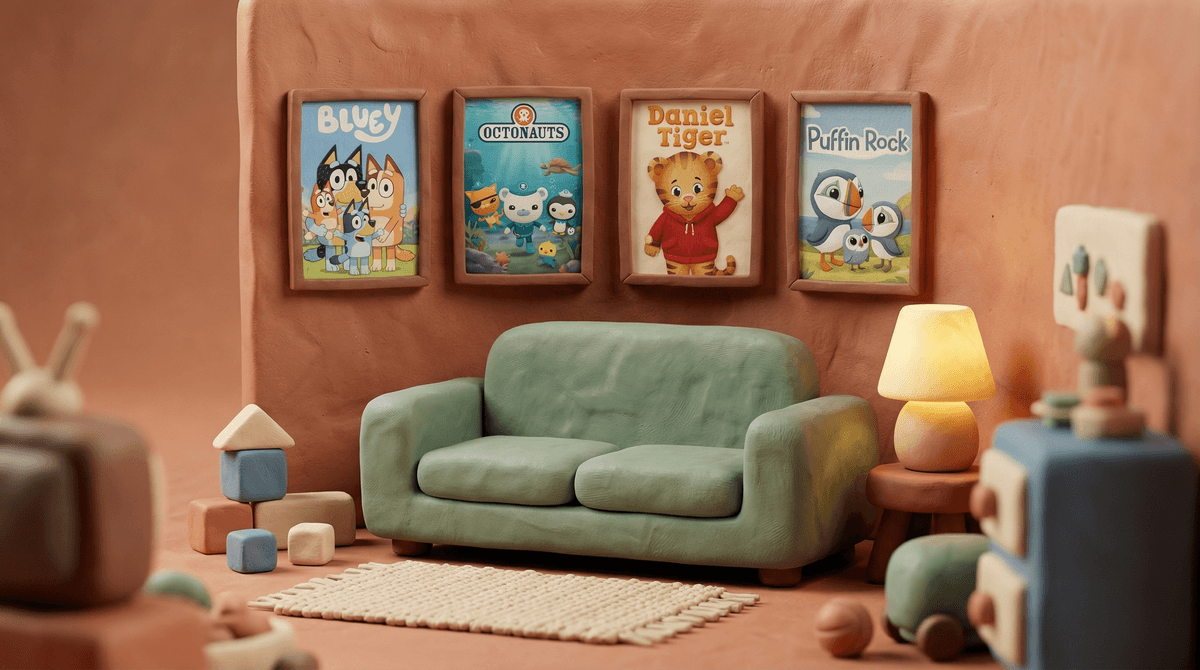
Look, we need to talk about TV for little kids. Not because screen time is inherently evil, but because there's a massive difference between 30 minutes of Bluey and 30 minutes of... whatever algorithmically-generated YouTube nonsense is currently hypnotizing your toddler.
The reality is that most young children will watch some TV. The question isn't whether they watch, but what they're watching and how much. And here's the thing: not all kids' shows are created equal. Some are genuinely thoughtful, developmentally appropriate, and even kind of enjoyable for adults. Others are basically digital sugar—bright, loud, and designed to keep eyeballs glued to screens without offering much substance.
Good shows for young children (roughly ages 2-5) should:
- Have slower pacing that matches how young brains process information
- Feature clear narratives with beginnings, middles, and ends
- Model positive social behaviors and emotional regulation
- Avoid aggressive or scary content that can be overwhelming
- Include educational elements woven naturally into stories
- Give parents something to actually talk about with their kids afterward
The Gold Standard: Bluey
Bluey is the show every parent discovers and immediately texts their group chat about. It's an Australian series about a Blue Heeler puppy family, and it's genuinely excellent. Ages 2-7 (honestly, ages 2-adult).
Why it works: The episodes are only 7 minutes long, the dad is actually engaged and playful, the scenarios reflect real family dynamics, and the show respects children's emotional experiences. Plus, it models the kind of creative, imaginative play that doesn't require buying anything.
Fair warning: You will cry during multiple episodes. "Sleepytime" will wreck you.
Daniel Tiger's Neighborhood
Daniel Tiger's Neighborhood is the spiritual successor to Mister Rogers' Neighborhood, and it's incredibly effective at teaching emotional regulation and social skills. Ages 2-5.
The show uses simple songs to help kids remember strategies: "When you feel so mad that you want to roar, take a deep breath and count to four." Are these songs annoyingly catchy? Yes. Will your child actually use them when they're upset? Also yes.
It's slow-paced, gentle, and explicitly educational about feelings and social situations. Some kids find it a bit young after age 4-5, but for toddlers and young preschoolers, it's gold.
Sesame Street
Sesame Street is still going strong after 50+ years, and there's a reason. Ages 2-5.
The modern version is faster-paced than the classic episodes (everything is now), but it maintains the educational focus on literacy, numeracy, and social-emotional learning. The celebrity cameos are fun for parents, and the show does an excellent job representing diverse families and experiences.
Pro tip: The older, slower episodes are available on HBO Max and might be better for younger toddlers who get overwhelmed by quick cuts.
Elinor Wonders Why
Elinor Wonders Why is a PBS show about a curious bunny who explores nature and science. Ages 3-6.
This is a great option if you want something that encourages observation and scientific thinking. Elinor models asking questions, making predictions, and testing ideas—basically the scientific method for preschoolers. It's gentle, thoughtful, and beautifully animated.
Puffin Rock
Puffin Rock is an Irish series narrated by Chris O'Dowd about a young puffin and her baby brother exploring their island home. Ages 2-5.
It's incredibly calming—slow-paced, gentle, with gorgeous animation and a soothing narrator. This is the show for winding down before nap or bedtime. Nothing scary happens, the sibling relationship is sweet, and it's full of nature content without being preachy.
Honorable Mentions
- Tumble Leaf (Ages 2-5): Stop-motion animation about a blue fox exploring cause and effect. Slow, beautiful, educational.
- Storybots (Ages 3-7): Answers kids' questions with music and humor. More energetic but genuinely educational.
- Octonauts (Ages 3-6): Adventure show about underwater rescue missions. More action-oriented but teaches about marine life.
Let's be real about the shows that aren't great for young children:
Cocomelon is controversial in parent circles, and honestly, the concerns are valid . The pacing is frenetic, the camera angles change constantly, and it's designed more for hypnotic engagement than actual learning. Many parents report their kids becoming more dysregulated after watching it.
Most YouTube Kids content is algorithmically optimized for watch time, not child development. The "surprise egg" videos, the weird Elsa-Spider-Man content, the unboxing channels—these aren't doing anything positive for your kid's brain.
Shows with heavy commercialization that are basically 22-minute toy commercials (looking at you, PAW Patrol) aren't necessarily harmful, but they're designed to create demand for products rather than serve children's developmental needs.
Ages 2-3: Stick with the slowest-paced options. Daniel Tiger, Puffin Rock, and Bluey are your best bets. Keep sessions short—15-20 minutes max. At this age, co-viewing is ideal when possible.
Ages 3-4: You can expand to slightly faster-paced shows like Sesame Street and Elinor Wonders Why. They can handle simple narratives and educational content. Screen time can extend to 30 minutes if needed, but shorter is still better.
Ages 4-5: Most of these shows still work, though some kids will start aging out of the younger content. Storybots and Octonauts might become more appealing. They can handle slightly more complex stories and humor.
Co-viewing matters: When you watch with your child and talk about what's happening, screen time becomes more valuable. Ask questions, make connections to their life, pause to discuss feelings or problems.
Use TV strategically: There's no shame in using TV to get through dinner prep or a work call. The issue is when it becomes the default activity or background noise. Be intentional about when and why screens come out.
Watch for regulation issues: If your child is consistently more wound up, aggressive, or difficult after watching certain shows, trust your instincts. Some kids are more sensitive to screen stimulation than others.
Quality over quantity: 20 minutes of Bluey is genuinely better than an hour of random YouTube content. Don't just count minutes—consider what those minutes contain.
Streaming gives you control: Unlike broadcast TV, streaming means no commercials and no autoplay to random content (if you disable it). This is actually a huge advantage for young children.
The best TV for young children is slow-paced, thoughtfully made, and respects both children's developmental needs and parents' sanity. Bluey, Daniel Tiger, and Sesame Street should be your starting lineup.
You don't need to eliminate screens entirely or feel guilty about using TV as a tool. But you also don't need to hand your toddler an iPad with YouTube autoplay and hope for the best. There's a middle ground where screens are one tool among many, used intentionally, with content that actually serves your child rather than just keeping them quiet.
The goal isn't perfect—it's good enough. And good enough means knowing the difference between shows that are made with care and shows that are made to maximize watch time. Your toddler deserves better than algorithmically-generated nonsense, and honestly, so do you.