

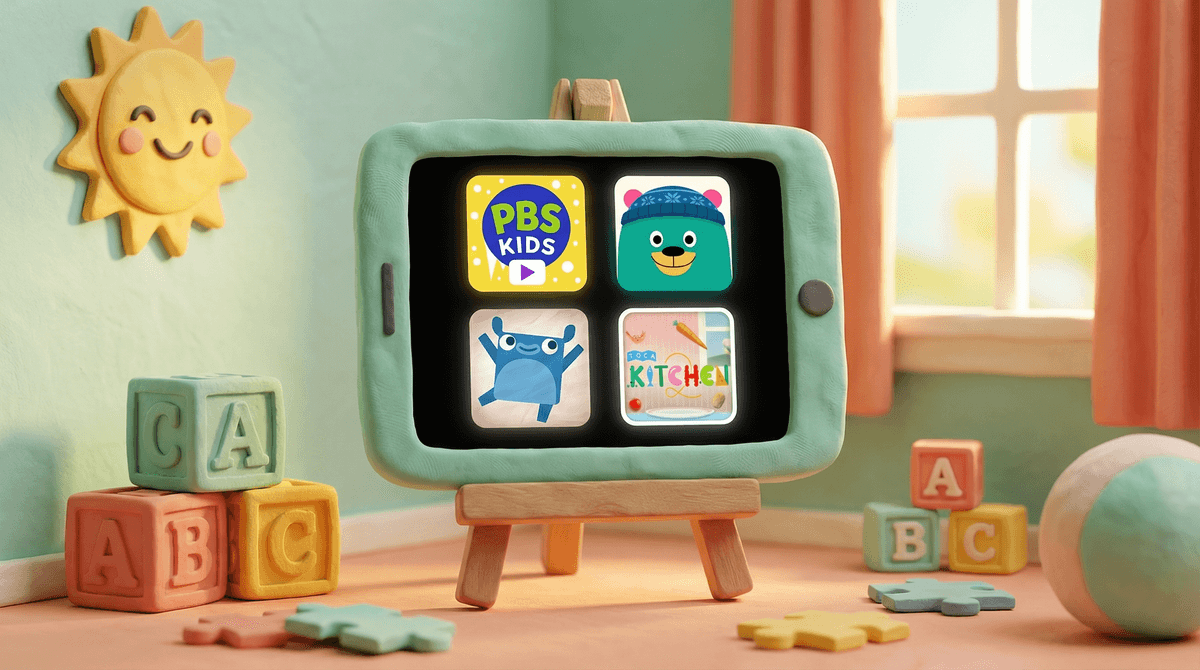
Look, we need to talk about toddler apps. Because the App Store will happily serve you 10,000 options that claim to teach your two-year-old Mandarin while you shower, but most of them are just glorified slot machines with cartoon animals.
Toddler-friendly apps should be simple, intuitive, and actually educational—not just bright colors and random sounds that make your kid tap like a lab rat. We're talking ages 2-4 here, where attention spans are measured in goldfish units and fine motor skills are still a work in progress.
The good news? There ARE apps worth downloading. Apps that teach cause-and-effect, basic problem-solving, early literacy, and creativity without ads popping up every 30 seconds asking you to upgrade to premium. Apps that won't make you want to throw your iPad into the ocean.
Here's the thing about toddler screen time: it's not inherently evil, but it's also not a substitute for playing with blocks or reading actual books. The American Academy of Pediatrics recommends limited, high-quality programming for this age group, ideally co-viewed with a parent.
But "high-quality" is doing a LOT of heavy lifting in that sentence. Because for every PBS Kids Video (genuinely good), there are 500 apps that are basically digital candy—engineered to keep little eyes glued to screens while teaching them absolutely nothing except how to beg for in-app purchases.
The apps on this list are the ones that actually respect your kid's developing brain AND your sanity.
Sago Mini World (Ages 2-5)
This is the gold standard. Sago Mini is a collection of adorable, open-ended play experiences—dress up characters, explore different worlds, build silly robots. No scores, no timers, no pressure. Just pure, gentle exploration that feels like digital play rather than digital training.
The catch? It's subscription-based ($7.99/month), but honestly, it's worth it if you're going to use it regularly. No ads, no in-app purchases, no surprise bills.
Endless Alphabet (Ages 2-5)
Your toddler drags letters around to spell words, then watches a short, genuinely funny animation that demonstrates the meaning. It's simple, it works, and kids actually learn vocabulary. The animations are charming without being overstimulating.
Parent tip: The free version has limited words, but the full version ($9.99 one-time) is a solid investment if your kid is into it.
Toca Kitchen 2 (Ages 3-5)
Toca Boca makes some of the best toddler apps, period. Toca Kitchen lets kids "cook" food for characters and see their reactions—blend a banana with ketchup, grill a watermelon, whatever. It's weird, creative, and consequence-free experimentation.
Why it works: No rules, no winning, no losing. Just cause-and-effect and giggles.
Khan Academy Kids (Ages 2-8)
This one's completely free (yes, actually free—no subscriptions, no ads, no catches). It covers early literacy, math, social-emotional learning, and more. The interface is colorful and engaging without being chaotic, and it adapts to your kid's level.
Real talk: It's more structured than the others on this list, so it feels a bit more "educational" and less "playtime." Some kids love it, some get bored. Worth trying since it costs nothing.
Daniel Tiger's Neighborhood (Ages 2-5)
If your toddler is already a Daniel Tiger fan, this app extends that world with games about emotions, routines, and social skills. It's gentle, it's kind, and it reinforces the show's lessons.
Bonus: PBS Kids apps are generally solid and ad-free, though some have limited free content.
Busy Shapes (Ages 2-4)
This one's all about problem-solving and spatial reasoning. Kids drag shapes through matching holes—simple concept, but it's surprisingly engaging and teaches persistence. No words needed, which is great for younger toddlers.
The vibe: Montessori-ish, calm, focused. Not flashy, but effective.
Let's be honest: most "educational" toddler apps are garbage. Here's what to watch out for:
- Apps with ads. Full stop. Toddlers will tap anything, and they shouldn't be exposed to advertising at this age.
- Apps with in-app purchases. Unless they're clearly gated behind parental controls, these are designed to trick kids into spending your money.
- Apps that require reading. If your toddler can't navigate it independently, it's not really for toddlers.
- Apps that are just YouTube in disguise. If it's auto-playing videos, it's not interactive—it's just a screen babysitter.
Here's the thing: even the best app is still screen time. So:
Co-view when you can. Sit with your toddler, talk about what's happening, ask questions. "Oh, you're making the character eat a shoe! What do you think will happen?"
Set time limits. 15-20 minutes is plenty for this age. Use your phone's Screen Time settings or app timers to enforce it.
Balance with other activities. Apps are a tool, not a solution. They work best as one option among many—books, puzzles, outdoor play, pretend play, staring at the ceiling fan (a toddler classic).
Don't feel guilty. Sometimes you need to make dinner or take a work call or just sit down for five minutes. A good app is better than Cocomelon on autoplay. Read more about managing screen time guilt.
The best toddler apps are the ones that feel like play, not like drilling flashcards. They're intuitive, ad-free, and designed with actual child development in mind—not just maximizing engagement metrics.
Start with Khan Academy Kids (because it's free and comprehensive), then explore Sago Mini World or Toca Kitchen 2 if you want something more open-ended and playful.
And remember: no app is going to "teach your toddler to read" or "prepare them for kindergarten" on its own. These are supplements, not substitutes. The best learning still happens through messy, hands-on, real-world play—and sometimes, yeah, through 15 minutes of dragging cartoon letters around while you drink your cold coffee in peace.
Want to dig deeper? Check out our guide to screen time for toddlers or explore alternatives to screen time for young kids. And if you're wondering whether your toddler's screen habits are typical, take our quick survey to see how your family compares to others in your community.