

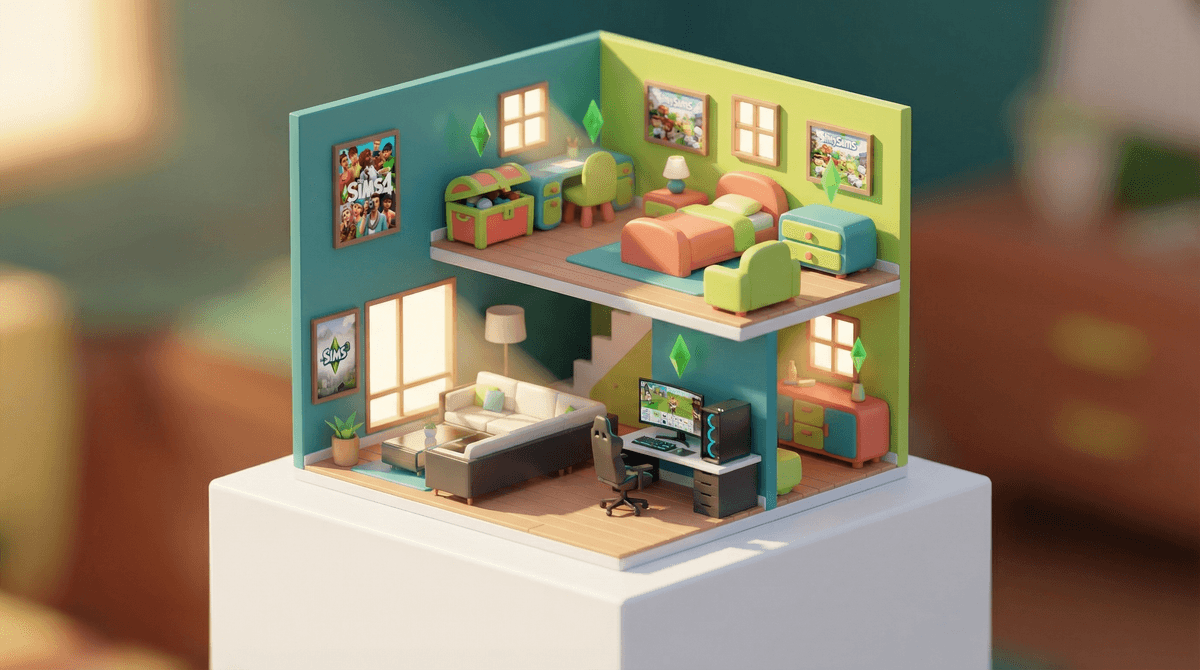
The Sims franchise is basically a digital dollhouse where you create people, build their homes, guide their lives, and watch chaos unfold. It's been around since 2000, and it's spawned multiple main games, spin-offs, and enough expansion packs to make your wallet weep.
At its core, The Sims is a life simulation game—your "Sims" (the little people you control) need to eat, sleep, socialize, work, fall in love, have kids, and occasionally catch their kitchen on fire. There's no winning or losing, just living. It's open-ended sandbox gameplay that appeals to a huge age range, but not all Sims games are created equal when it comes to age-appropriateness.
The main question parents ask: "My kid wants to play The Sims—which one should I let them play?" The answer depends entirely on their age and what you're comfortable with.
The Sims 4 (2014, still getting updates)
This is the current flagship game, rated T for Teen (13+). It's the most sophisticated, most mod-able, and most... let's say adult of the bunch. Your Sims can "WooHoo" (the game's euphemism for sex), get divorced, have affairs, die in bizarre ways, and generally live messy lives. The base game is actually free now, but EA will absolutely nickel-and-dime you with expansion packs ($40 each) and stuff packs ($10 each). It's available on PC, Mac, PlayStation, and Xbox.
The Sims Mobile & The Sims FreePlay (mobile games)
These are stripped-down mobile versions with—surprise—aggressive monetization. Lots of waiting timers, lots of pressure to spend real money. They're technically free but designed to frustrate you into paying. Not recommended unless you want to teach your kid about predatory game design.
The Sims 3 (2009)
Also rated T for Teen. This was the previous generation, and some die-hard fans still prefer it over Sims 4. It has an open world (you can follow your Sims anywhere in the neighborhood without loading screens), but it's older, clunkier, and harder to run on modern computers. Same mature themes as Sims 4.
MySims series (2007-2009, Nintendo platforms)
This is the kid-friendly alternative! MySims is a completely different vibe—cute, cartoony characters (think Animal Crossing aesthetic) rated E for Everyone. There's MySims, MySims Kingdom, MySims Racing, and a few others. They're more about building, helping townsfolk, and completing tasks than simulating realistic life. The downside? They're old games on old platforms (Wii, DS, 3DS). Hard to find and play today unless you still have those consoles lying around.
Ages 6-10: MySims (if you can find it)
The MySims games are genuinely great for this age group. They're wholesome, creative, and have that cozy community-building vibe. The problem is accessibility—these are 15+ year old games on discontinued platforms. If you have a Wii or 3DS collecting dust, they're worth tracking down used. Otherwise, you might want to look at alternatives to The Sims like Animal Crossing or Minecraft in creative mode.
Ages 11-12: The gray zone
This is where it gets tricky. The Sims 4 is rated T for Teen, and that rating exists for a reason. But plenty of tweens play it, and honestly? It's not the worst thing. The "inappropriate" content is pretty mild and cartoonish—Sims blur out when naked, "WooHoo" happens under covers with giggling sounds, and you can turn off certain features.
The bigger question is maturity level. Can your kid handle themes like relationship drama, death, and financial stress? Are they going to be traumatized when their Sim's house burns down? Some 11-year-olds will just build houses and ignore the life-sim aspects entirely. Others will create elaborate soap opera storylines.
If you go this route, play together first. Set it up on a family computer where you can see what they're doing. Talk about the difference between game choices and real-life values.
Ages 13+: The Sims 4 (with conversations)
At 13, this is age-appropriate per the rating. But you should still know what you're getting into. The Sims 4 community is HUGE on mods (user-created modifications), and some of those mods are extremely not kid-friendly. We're talking explicit adult content that would make you want to throw the computer out the window.
If your teen is playing on PC, have a conversation about mods. The base game and official expansion packs are fine. Custom content from the community can range from "cute new hairstyles" to "absolutely not." Learn more about Sims 4 mods and safety .
.
The Sims is creative play in digital form. Kids love that they can:
- Build and decorate without needing actual money or space
- Control everything in a way they can't in real life
- Experiment with identity—create Sims that look like them, or nothing like them
- Tell stories and create drama (honestly, some kids are running better soap operas than actual TV)
- Play without pressure—there's no game over, no competition, no skill ceiling
It's also hugely popular on YouTube and TikTok. Kids watch creators do "100 Baby Challenge" or "Rags to Riches" runs and want to recreate that experience.
The money trap is real. The Sims 4 base game is free, but EA's DLC strategy is aggressive. There are 50+ expansion packs, game packs, stuff packs, and kits, ranging from $5 to $40 each. Kids will want them. Set clear expectations about what you're willing to buy and when. Some families do "expansion pack as birthday gift" or "earn it through chores." Understand the Sims 4 DLC ecosystem.
It's a time sink. You can easily lose 4 hours building a house or playing through a Sim's life. This is a "set a timer" game for kids who struggle with transitions.
The game reflects values—yours and theirs. Pay attention to how your kid plays. Are they creating happy families? Torturing their Sims? (Some kids definitely go through a "trap them in a room with no door" phase—it's weird but pretty normal.) It can actually be a window into how they're thinking about relationships, money, and life choices.
Community content is a mixed bag. The Sims community creates amazing custom content, but also... not-amazing content. If your kid is downloading mods or custom content, you need to be involved in that process.
For younger kids (under 11): MySims is ideal but hard to find. Consider cozy alternatives instead.
For tweens (11-12): The Sims 4 can work with parental involvement, supervision, and clear boundaries about mods and screen time.
For teens (13+): The Sims 4 is age-appropriate, but have honest conversations about online content, mods, and spending.
For everyone: Set expectations about expansion pack spending before you start, because EA is coming for your credit card.
The Sims can genuinely be a creative, imaginative space for kids—or it can be a money pit of questionable content. The difference is how involved and informed you are as a parent. Welcome to digital parenting, where even dollhouse games require a strategy guide.
- Check out our full Sims 4 guide for detailed safety settings
- Explore alternatives to The Sims for younger kids
- Set up spending controls before your kid discovers expansion packs exist