

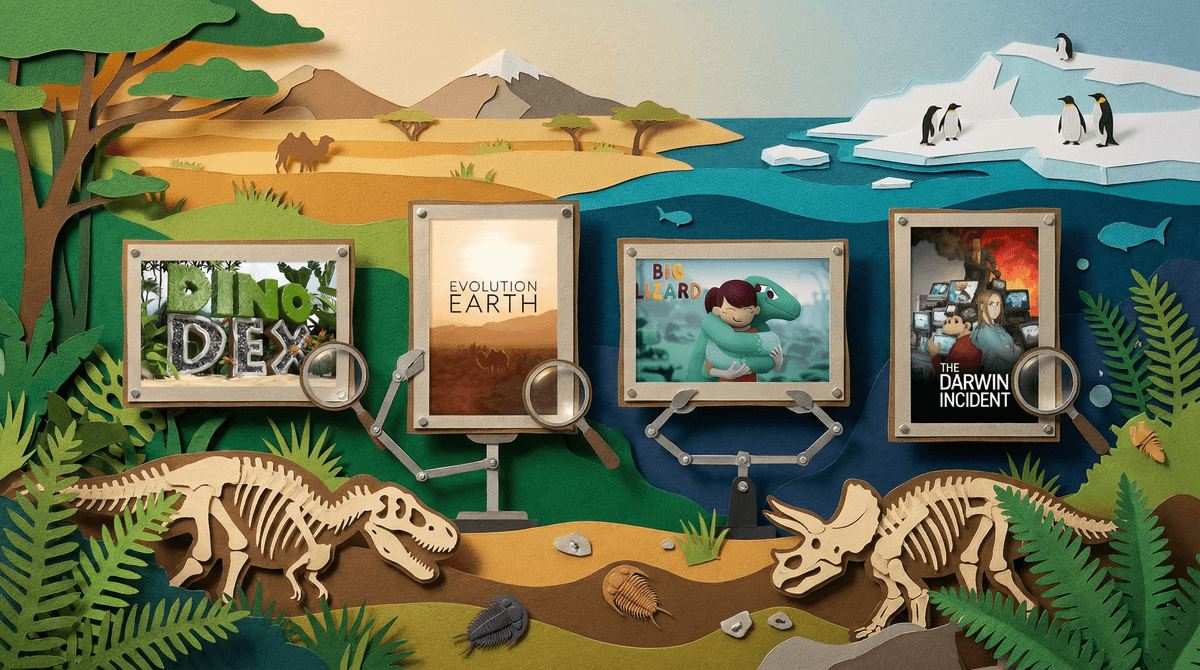
Evolution on Screen: Four New Shows That Make Natural Selection Click for 9-Year-Olds
TL;DR: Four fresh series from 2024-2025 bring evolution to life for elementary schoolers: Dino Dex (animated dino-summoning adventure), Evolution Earth (documentary showcasing real-time adaptation), Just So Darwin (bite-size "why" explainers), and Big Lizard (comedy with prehistoric science). Each hits a different sweet spot for learning style and attention span.
Finding quality evolution content for 9-year-olds used to mean rewatching Walking with Dinosaurs for the hundredth time or hoping your kid would sit through a David Attenborough special. Not anymore. The past year delivered a surprisingly strong lineup of shows that teach natural selection, adaptation, and scientific thinking—without the dry textbook vibe.
Here's what actually works for the fourth-grade crowd, fresh off the 2024-2025 production line.
Where to watch: Prime Video, Apple TV
Episode length: 10-12 minutes
Rating: TV-Y7 (Apple TV rates it 5+)
Best for: Kids who love dinosaurs and aren't ready to let go of that phase yet
This is the most directly aimed at 9-year-olds. The show follows Dex, a "paleontologist in training" who uses a magical field guide to summon real dinosaurs into modern settings. The hook? Dex constantly questions what we thought we knew about dinosaurs—how they looked, moved, behaved—and each episode weaves in genuine paleontology updates.
The animation is bright and fast-paced (think Wild Kratts energy), and the comedy lands without being annoying. More importantly, it sneaks in a crucial lesson about scientific thinking: our understanding of evolution changes as we gather new evidence. Kids see that scientists don't just "know stuff"—they revise their thinking based on fossils, DNA, and new discoveries.
The 10-12 minute runtime is perfect for after-school viewing without the "just one more episode" battle that comes with longer shows. And honestly? It's one of the few dino shows that doesn't treat feathered dinosaurs like a weird footnote.
Where to watch: PBS.org, PBS app (free), also available on Prime Video and Apple TV
Episode length: 55 minutes (five episodes total)
Rating: No explicit rating, but PBS's science block is generally suitable for ages 8+
Best for: Kids ready for documentary-style content and families who want something to watch together
If your kid is ready to graduate from animated explainers, this is the next step. Evolution Earth takes a global tour showing how animals are adapting—and in some cases actively evolving—in response to climate change right now.
The five-episode series delivers spectacular wildlife footage paired with clear explanations from actual scientists. You get concrete examples of natural selection in action: birds changing migration patterns, fish adapting to warmer waters, mammals shifting their ranges. It's not theoretical "millions of years ago" stuff—it's evolution happening on a timeline kids can grasp.
The hour-long episodes are a commitment, but they work beautifully for family viewing nights. And because it streams free on PBS, there's no subscription barrier. The production quality matches anything you'd find on Netflix or Disney+, but with the educational rigor PBS is known for.
Fair warning: some episodes touch on climate impacts that might spark bigger conversations. That's not a bad thing—it's actually a great entry point for talking about how humans fit into the evolution story—but be ready for questions about polar bears and coral reefs.
Where to watch: CBBC (BBC iPlayer in the UK)
Episode length: ~4 minutes
Rating: CBBC targets ages 7-12
Best for: Quick curiosity-spark sessions and kids who like straightforward answers
These bite-size clips answer classic "why" questions from an evolutionary perspective: Why does the giraffe have a long neck? Why do zebras have stripes? Why do birds sing?
Each 4-minute episode is essentially a mini-documentary. No filler, no side plots, just clear explanations of how natural selection shaped specific traits. The format works brilliantly for short attention spans or as a quick after-school "brain snack" before homework.
The CBBC production style is polished without being flashy—think educational YouTube content with a bigger budget. It's not going to hold a 9-year-old's attention for a marathon viewing session, but that's not the point. These are the perfect length for "let's watch one quick thing" moments that actually deliver educational value.
Accessibility note: BBC iPlayer requires a UK account, but the episodes occasionally pop up on YouTube or can be accessed through VPN services if you're outside the UK. Worth the workaround for families who want evolution content that respects kids' intelligence without talking down to them.
Where to watch: CBeebies (BBC iPlayer)
Episode length: Varies (sitcom-style format)
Rating: CBeebies targets younger kids but appeals up to age 9-10
Best for: Kids who want entertainment first, education second
This one leans more comedy than science, but it introduces prehistoric concepts and ancient ecosystems in a way that's genuinely fun. Think of it as the gateway drug to evolution content—light on theory, heavy on humor and imagination.
Big Lizard works best for kids who aren't naturally drawn to educational content. It packages basic ideas about adaptation and prehistoric life into sitcom-style adventures that happen to teach something along the way. The science isn't as rigorous as the other three shows, but sometimes you need the spoonful of sugar.
It's also a solid choice for mixed-age viewing if you have younger siblings in the house. The CBeebies brand ensures nothing will be too intense or complex for a 6-year-old, while still entertaining your 9-year-old who "gets" more of the jokes.
For the dino-obsessed kid: Start with Dino Dex. It meets them where they are and sneaks in the science.
For the budding scientist: Evolution Earth delivers real research and current examples they can understand.
For quick learning hits: Just So Darwin answers specific questions without the time commitment.
For reluctant learners: Big Lizard makes it fun first, educational second.
All four shows treat evolution as settled science (because it is). If you're looking for content that presents "both sides" or avoids the topic entirely, these aren't it. But if you want your kid to understand how the natural world actually works, this is the strongest lineup in years.
The educational depth varies significantly. Dino Dex and Evolution Earth deliver the most thorough content, while Big Lizard is really just using prehistoric settings as a backdrop for comedy. Know what you're getting into.
Platform reality check: Based on Screenwise community data, 80% of families use Netflix, 62% have Disney+, and 62% use Amazon Prime. The good news? Three of these four shows are on platforms you likely already have (Prime, Apple TV, PBS app). The BBC shows require a bit more effort to access in the US, but the free PBS option means every family can access at least one of these without adding another subscription.
About 92% of families in our community use TV/streaming in some capacity, so adding educational content to the rotation isn't about whether to use screens—it's about making intentional choices about what kids watch during that time.
Evolution education doesn't have to be boring, preachy, or saved for high school biology. These four shows prove that 9-year-olds can grasp natural selection, adaptation, and scientific thinking when it's presented with good storytelling and visual hooks.
The variety is actually helpful—different kids need different entry points. Some will click with Dino Dex's animated energy, others will be ready for Evolution Earth's documentary approach. Try one, see what lands, and adjust from there.
And if your kid gets hooked? That's your opening to explore books about evolution for kids, science podcasts, or even nature documentaries that build on these concepts. The goal isn't to turn every 9-year-old into a paleontologist—it's to help them understand how life on Earth actually works.
That's worth 10 minutes of screen time.